
Politico's 2028 tell: Democrats are betting the White House on governors
Politico's picks point to a governor-heavy Democratic field for 2028, and the reasons why shape money, policy, and the 2026 midterms.

Politico's 'Democratic Governors' 2028 picks' frames the Democratic presidential bench as a governors' race, with state executives rather than senators leading the party's post-2024 rebuild. For decision-makers, that means the 2026 governor elections, early-state staffing, and state-level policy fights are now the leading indicators of who runs in 2028.
Politico's headline says it plainly: "Democratic Governors' 2028 picks." Not senators. Not cabinet secretaries. Not a celebrity outsider. The party's post-2024 rebuilding has produced a presidential bench that runs through state capitals, and Politico's picks exercise is a signal of where Democratic talent, donor money, and policy energy are pooling. For anyone who tracks politics the way they track markets, that is the trade: the 2028 Democratic nomination is, by this framing, a governors' race to lose.
The timing is the point. Presidential campaigns no longer start in the year before the election. The invisible primary is already running, which means the relevant question for 2025 and 2026 is not who announces, but who is quietly building the infrastructure: early-state hires, donor retreats, policy shops, and the out-of-state travel schedules that function as soft launches. Politico's picks are a snapshot of that infrastructure race, and the answer it points to is a field shaped by governors.
Why governors? Structure, mostly. A senator spends years compiling a voting record that opponents can mine line by line. A governor spends those years making decisions and then defending them as results. Governors run something. They can point to a budget, a tax package, a disaster response, a school system. They also carry a built-in donor network: state-level business communities, hospital systems, utilities, and developers who have already learned to write checks. Historically, the governor-to-president path is well worn. Jimmy Carter, Ronald Reagan, Bill Clinton, and George W. Bush all came from statehouses. The Senate path exists, but it is harder, and it is narrower.
The calendar rewards them too. Democrats reordered their presidential primary calendar for 2024, putting South Carolina first, followed by Nevada and New Hampshire, then Georgia and Michigan, a lineup designed to elevate states with more diverse electorates and to reward candidates who build relationships outside the traditional Iowa bubble. That calendar is expected to carry into 2028. For a governor, that is an advantage: it is cheaper to compete seriously in five states than to buy a national media market, and it rewards the retail politics that governors practice at home, in diners and union halls, for a living.
The flip side is exposure. Every executive decision is a document. Emergency powers, school closures, clemency, energy permits, immigration enforcement cooperation, abortion access, and now AI regulation all become national litmus tests the moment a governor enters the conversation. A state budget is a voting record with a press office attached. And the gate is 2026: 36 governorships are on the ballot, and Democrats currently hold 23 of the country's 50. A rough midterm can end a national profile in a single night. A strong one can mint a frontrunner before a single primary vote is cast.
Then there is the money and the shadow primary. Modern presidential primaries are measured in the hundreds of millions, and the 2024 cycle ran into the billions across both parties. Governors start with an advantage in-state and a deficit nationally, which is why the tell is never the speech. It is the staffing: a national finance director, a super PAC quietly incorporated, a book with a serious publisher, a foreign policy adviser hired before there is a foreign policy. The same bench also feeds the running-mate conversation, which means governors are auditioning for two jobs at once, and the second one can be decided by a single nominee in a single week.
The context is a party still rebuilding. Democrats lost the White House and the Senate in 2024, and the DNC elected Ken Martin as chair in February 2025 to run the recovery. In that environment, governors have an advantage senators do not: they can govern while the national party argues with itself, and they can point to state-level wins on wages, housing, and energy while Washington stalls. The weakness is equally structural. Governors rarely arrive with foreign policy or national security credentials, which is why Senate and cabinet experience still matters in the general election, and why the eventual nominee will likely need to borrow that credibility from a running mate.
For readers, the practical takeaway is that the 2028 Democratic field is being priced right now, years before any votes. Watch the 2026 governor races as the real first primary. Watch which governors start showing up in South Carolina and Nevada, and which state policy fights get nationalized by donors and cable bookers. Politico's picks are a map, not a result. But maps are how you get ahead of the crowd, and this one says the road to the White House runs through a governor's mansion.
This story's Key Insights and Take-aways are locked.
Create a free account to unlock Executive Actions for one credit.
Register to UnlockAlways free for Executives Club members. Join the Club
More in Politics

Cybersecurity Was an Afterthought for Decades. AI Is Now Sending the Bill
The internet's vulnerable code was never fixed, and AI is finding it faster than anyone can patch it, turning decades of technical debt into a live balance-sheet risk.

Hannity vows to name GOP lawmakers skipping votes before the majority expires
A prime-time host is turning the House attendance sheet into a public scoreboard, and Speaker Mike Johnson is sitting right next to him while the Republican majority runs out of days.
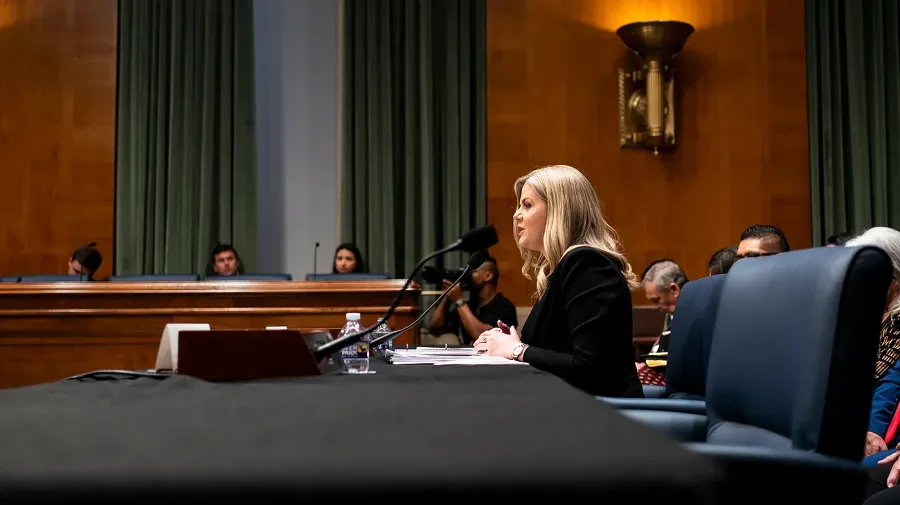
White House yanks FDA nominee, blindsiding senators and extending a six-month vacuum
Heidi Overton's abrupt withdrawal leaves the FDA without a confirmed commissioner six months after the last one resigned, and the Senate committee that would vet a replacement found out at the last minute.