
Putin hits Zelenskyy's hometown after Kerch Bridge strike, killing 2
Two dead in Kryvyi Rih as Moscow makes good on Putin's 'painful' response vow, and the escalation math now runs through the Black Sea.
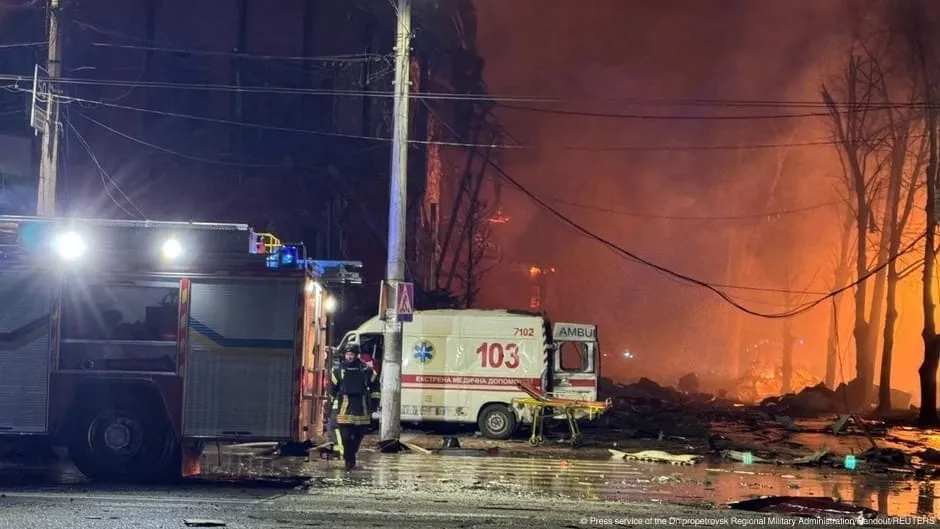
Russian strikes hit Kryvyi Rih, the hometown of Ukrainian President Volodymyr Zelenskyy, killing two people, days after Russian President Vladimir Putin vowed a 'painful' response to Ukrainian attacks this week on the Kerch Bridge linking Russian-occupied Crimea. The retaliation cycle now threatens to widen into a winter infrastructure campaign, with second-order costs landing on Black Sea shipping, grain markets, and Western air defense supply.
Russia struck Kryvyi Rih, the industrial city in central Ukraine where President Volodymyr Zelenskyy grew up, killing two people, Deutsche Welle reports. The attack follows Russian President Vladimir Putin's vow of a "painful" response to Ukrainian strikes this week on the Kerch Bridge, the road and rail link to Russian-occupied Crimea. So the retaliation Putin promised is no longer a threat delivered on television. It is a body count in the hometown of the man he is fighting, and it resets the escalation math for everyone with exposure to this war.
Start with the bridge, because that is where the logic of this week begins. The Kerch Bridge, opened in 2018, is roughly 19 kilometers of road and rail across the Kerch Strait, the longest span of its kind in Europe. Putin has treated it as a personal signature project since Russia annexed Crimea in 2014, and as a main supply artery for Russian forces on the peninsula. Ukraine has hit it before, in October 2022 and again in July 2023, and each time Moscow answered with missile and drone strikes on Ukrainian cities. This week's attacks on the bridge drew a public promise of a "painful" response. Kryvyi Rih is the first installment.
Kryvyi Rih matters beyond the symbolism. It is a steel and iron ore hub that was home to roughly 600,000 people before the war, a long industrial spine in central Ukraine that has already absorbed repeated strikes. Two people are dead, per the source, and the wider pattern is familiar: Russia says it targets military infrastructure, while Ukrainian officials and Western governments describe strikes on civilian areas. Both readings can be true at once, and the practical question for Kyiv is the same either way. Every missile that gets through is a missile its air defense network did not stop, and Ukraine's interceptors are a finite, Western-supplied resource.
Putin's word choice is the tell. "Painful" is not a military objective; it is a message aimed at morale, and historically Moscow's most painful responses have arrived in winter, when strikes on power generation and heating infrastructure hit households hardest. Ukraine has spent two winters hardening its grid, dispersing generation, and stockpiling spare equipment, but no grid is designed to absorb a sustained campaign. If this escalation follows the pattern of 2022 and 2023, the target set widens from the front line to the sockets and radiators of ordinary Ukrainians.
That is where the story stops being only about Ukraine. The Black Sea is a grain artery: Ukraine is among the world's largest exporters of wheat, corn, and sunflower oil, and the corridor that moves those cargoes has been a recurring flashpoint since the war began. Shipping insurance for Black Sea voyages is typically among the most expensive in the world, and every escalation headline feeds straight into war-risk premiums, freight rates, and the cost of moving food to import-dependent markets in North Africa and the Middle East. Grain traders and food processors do not need a blockade to feel this. They need only the credible fear of one.
The policy questions land fast. Western capitals have spent two years assembling air defense packages for Ukraine, and each new strike campaign tests whether those deliveries can keep pace with Russian production. Sanctions on Russia's defense industrial base, the debate over what to do with frozen Russian sovereign assets, and the long-run question of European rearmament all get repriced by weeks like this one. None of those decisions are made in Kryvyi Rih, but all of them are argued with reference to it.
For executives, the exposure is rarely direct and almost never obvious. It shows up in commodity hedges, in the insurance line of a shipping contract, in the energy costs of a European manufacturing footprint, in the defense order book, and in the country-risk models that quietly gate capital allocation. Boards that treat this war as a background variable have been wrong before. The Kerch Bridge has now been struck three times in three years, and each strike has produced a response that widened the conflict's footprint rather than narrowing it.
Watch three things. Whether the strikes on Ukrainian cities continue at this tempo or accelerate into a winter campaign against the grid. Whether Ukraine answers again on the bridge or elsewhere in occupied territory, which would restart the cycle. And whether Black Sea shipping costs move, because that is the fastest signal that this escalation has escaped the battlefield and reached the global economy. Putin promised pain. The question now is who ends up paying it.
This story's Key Insights and Take-aways are locked.
Create a free account to unlock Executive Actions for one credit.
Register to UnlockAlways free for Executives Club members. Join the Club
More in Politics

Cybersecurity Was an Afterthought for Decades. AI Is Now Sending the Bill
The internet's vulnerable code was never fixed, and AI is finding it faster than anyone can patch it, turning decades of technical debt into a live balance-sheet risk.

Hannity vows to name GOP lawmakers skipping votes before the majority expires
A prime-time host is turning the House attendance sheet into a public scoreboard, and Speaker Mike Johnson is sitting right next to him while the Republican majority runs out of days.
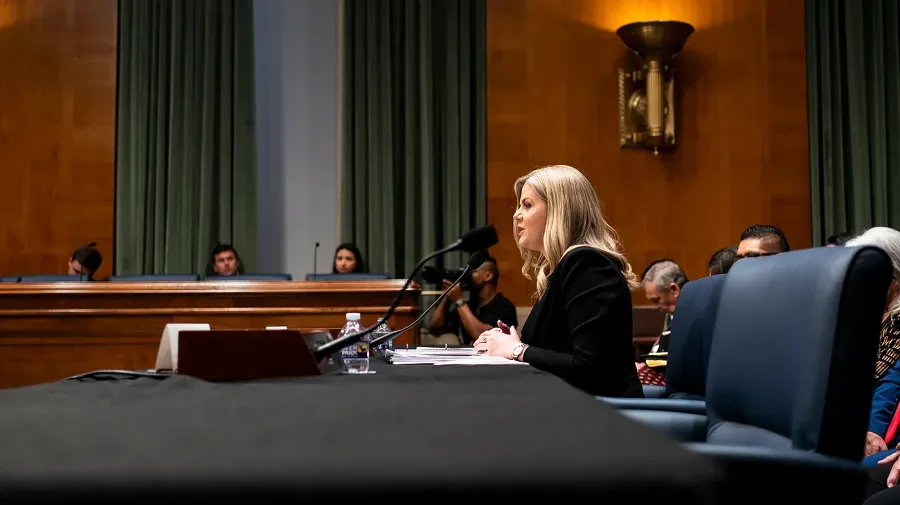
White House yanks FDA nominee, blindsiding senators and extending a six-month vacuum
Heidi Overton's abrupt withdrawal leaves the FDA without a confirmed commissioner six months after the last one resigned, and the Senate committee that would vet a replacement found out at the last minute.