
Reform weighs pact with Rupert Lowe's rival party as byelection tests its grip
Nigel Farage's party is exploring a deal with the hard-right outfit Rupert Lowe built after their falling out, and Thursday's Castle Bromwich byelection is the first real scoreboard.

Reform UK is considering an electoral pact with Restore Britain, the hard-right party Rupert Lowe set up after the MP fell out with Nigel Farage, with Thursday's byelection in the West Midlands village of Castle Bromwich serving as the immediate test. For anyone tracking UK political risk, the move signals that fragmentation on the right is now a seat-level problem, not just a polling curiosity.
Reform UK is weighing an electoral pact with Restore Britain, the hard-right party Rupert Lowe set up after the MP fell out with Nigel Farage, as Farage's outfit searches for a way to arrest a stalling performance in the polls. The first real scoreboard arrives on Thursday, when voters in the West Midlands village of Castle Bromwich go to the polls in a byelection that has drawn almost no national attention but is, according to the Guardian, the latest test for Reform at a moment when it is particularly vulnerable.
That the pact is even on the table is the story. Reform built its brand on refusing to be absorbed into Westminster's established machinery. Now it is doing the arithmetic every insurgent eventually does: a split vote on your own flank is the fastest way to lose seats you should win. Restore Britain is not a fringe curiosity in that calculation. It is the rival eating into Reform's support, and it exists because of a rupture at the very top of the movement.
Castle Bromwich is a reminder of how UK elections actually work. Byelections are typically low-turnout affairs where a few hundred motivated voters can swing a result, and under first-past-the-post there is no prize for second place. That structure punishes fragmentation. When two parties compete for the same pool of voters, the beneficiary is usually the third party that keeps its coalition intact. Here, the Conservatives are edging ahead in recent polls, which means votes taken from Reform by a rival on the same flank typically lower the threshold the Tories need to clear.
Rupert Lowe is the MP whose falling out with Farage produced Restore Britain. The details of the rift are not the point; the consequence is. A movement that once looked like a single vehicle for anti-establishment anger now has at least two, and the newer one is competing for the same donors, the same activists and the same protest vote. Lowe's departure gave that discontent a name and a vehicle of its own. That is the classic lifecycle of an insurgent wave: success attracts imitators, and imitators dilute the original.
Electoral pacts in the UK typically take one of two forms: a formal non-aggression deal in which each side stands candidates down in agreed seats, or a looser understanding about where money and manpower go. Both require something Reform has historically been reluctant to give: discipline, and the appearance of being part of the system rather than against it. The upside is obvious. Consolidate the right-of-centre vote and a stalling poll position converts into seats. The downside is just as obvious. A party whose entire pitch is that everyone else is a cartel has to explain why it is now cutting deals.
For the Conservatives, the calculus is uncomfortable in a different way. They are edging ahead in recent polls, and the cleanest path to protecting that lead is a divided opposition. A Reform-Restore pact would remove that comfort. It would also force the Tories onto a narrower battlefield, where the argument stops being about splitting the anti-incumbent vote and starts being about which version of the right actually governs. That is a harder fight to script than a simple anti-Farage message.
The second-order effects are where this gets interesting for anyone watching UK politics the way they watch a market. Donors dislike uncertainty and reward consolidation, so a credible pact would make the right-of-centre opposition easier to fund. Candidates and local associations, by contrast, resent being stood down, and any deal will be tested by whether activists in places like Castle Bromwich actually accept it. Restore Britain, meanwhile, would have to decide whether it wants to be a party or a bargaining chip. Those are very different businesses, with very different cost structures and very different appetites for compromise.
There is also a timing question. Byelections are the cheapest stress test in politics: small electorates, low turnout, and a result that lands within days rather than years. They are also notoriously unreliable as national forecasts, which is precisely why parties use them to justify decisions they have already half-made. A strong Reform showing buys Farage time to resist a pact. A weak one makes the arithmetic argument for him. None of this is settled by one vote in one West Midlands village, but the direction of travel is worth watching: whether Reform confirms talks, whether Restore Britain's share holds up under an actual ballot, and whether the Conservatives' recent polling edge survives contact with real voters. The answer to all three starts in Castle Bromwich on Thursday.
This story's Key Insights and Take-aways are locked.
Create a free account to unlock Executive Actions for one credit.
Register to UnlockAlways free for Executives Club members. Join the Club
More in Politics

Cybersecurity Was an Afterthought for Decades. AI Is Now Sending the Bill
The internet's vulnerable code was never fixed, and AI is finding it faster than anyone can patch it, turning decades of technical debt into a live balance-sheet risk.

Hannity vows to name GOP lawmakers skipping votes before the majority expires
A prime-time host is turning the House attendance sheet into a public scoreboard, and Speaker Mike Johnson is sitting right next to him while the Republican majority runs out of days.
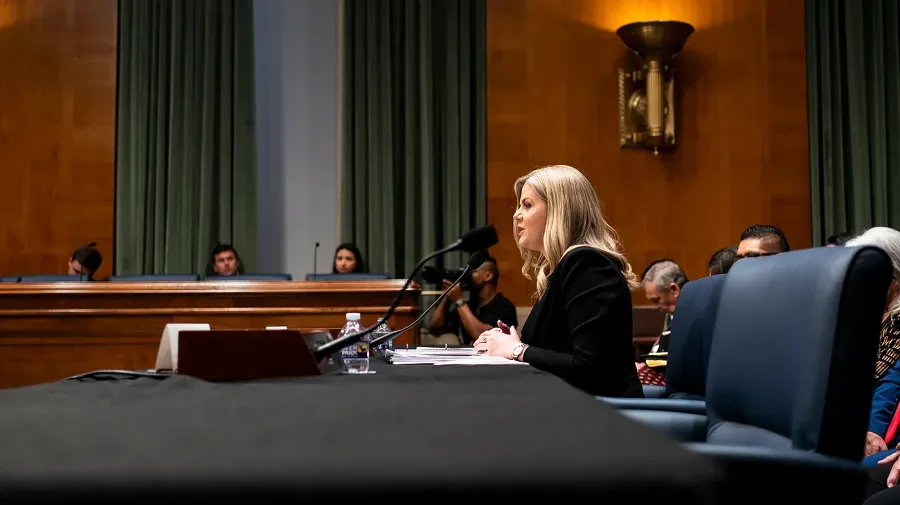
White House yanks FDA nominee, blindsiding senators and extending a six-month vacuum
Heidi Overton's abrupt withdrawal leaves the FDA without a confirmed commissioner six months after the last one resigned, and the Senate committee that would vet a replacement found out at the last minute.