
Sam Kinison Died at 38 in 1992. Buchwald Just Signed His AI Avatar.
The talent agency will build new business around the late comedian's name and likeness, with Uare.AI powering the avatar, a template every estate with an unused catalog is now watching.
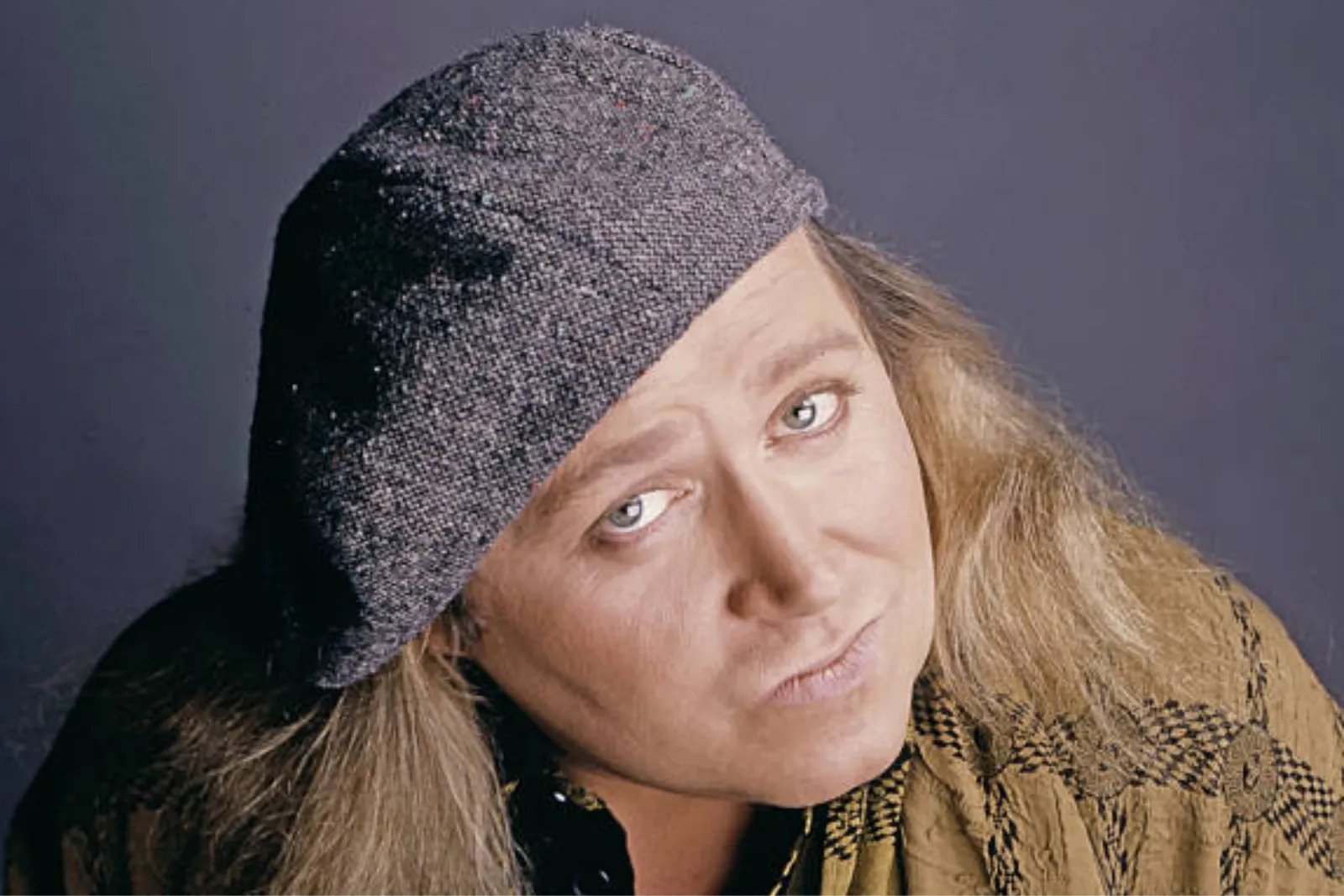
Buchwald has signed the estate of stand-up comedian Sam Kinison, who died at 38 in a 1992 car accident, to develop new business opportunities around his name and likeness, with an AI avatar of Kinison powered by the platform Uare.AI. For executives across media, talent representation, and brand licensing, the deal is a working test case for whether AI avatars can turn dormant celebrity IP into an active, licensable revenue line.
Buchwald has signed the estate of Sam Kinison, the stand-up comedian who died at 38 in a 1992 car accident, to develop new business opportunities around his name and likeness. The hook is the delivery mechanism: an AI avatar of Kinison, powered by the platform Uare.AI. Variety reported the signing exclusively. Three decades after his death, Kinison is now a licensable digital property with a talent agency behind him.
That distinction matters more than the novelty. Buchwald did not sign a person. It signed an estate, the legal wrapper that controls a name, a face, a voice, and a catalog of work. The stated mandate is business development around name and likeness, which in practice means putting the Kinison brand into rooms a living comedian would walk into: appearances, endorsements, branded content, live events, merchandise. The avatar is how he gets there without a body. Uare.AI, the AI platform behind the avatar, is tied in the source to LivePerson.
For anyone under 40, Kinison needs a one-line unlock. He was a former preacher who became one of the loudest, most confrontational comics of the 1980s stand-up boom, a performer whose stage persona ran on volume and provocation. He died at 38 in a 1992 car accident, which means his entire commercial afterlife has, until now, run on reruns, clips, and nostalgia. An avatar changes the unit economics of that afterlife. Instead of licensing old footage, an estate can license new appearances.
That is the real story, and it is bigger than one comic. The dead-celebrity business has historically been a slow, rights-heavy trade: posthumous albums, hologram tours, documentaries, estate-approved merchandise. Each of those required either archival material or a physical production. AI avatars collapse the cost of manufacturing a "new" appearance toward something closer to software. Once a likeness is digitized and a voice model is trained, the marginal cost of one more appearance is small and the asset never ages out of the demographic it was built for. Estates have spent decades sitting on catalogs they could not activate. This is the first credible mechanism for activating them at scale.
Why an agency, and why now. Talent representation has been drifting toward IP ownership and brand management for years, because the traditional model of taking a percentage of a living client's bookings is capped by that client's calendar. Estates have no calendar. They have no burnout, no touring fatigue, no scheduling conflicts, and no risk of the talent generating a fresh controversy mid-campaign. For an agency, an estate is a durable asset with a predictable licensing surface. Buchwald is not the first to notice, but signing a name as specific and as polarizing as Kinison signals an appetite for estates that come with an edge rather than a halo.
The legal ground underneath all of this is uneven, and that is the part boards should price in. In the United States, rights of publicity are governed state by state, and post-mortem protections vary widely: some states recognize a descendible right for a set term, others offer nothing at all. That patchwork means the same avatar can be fully protected in one market and largely unprotected in another. Layered on top is the disclosure question. Performers' unions have pushed hard on digital replicas and consent, and the emerging norm is that audiences should know when they are watching a synthetic performance. An estate that skips that disclosure is borrowing against trust it will need later.
Then there is the taste problem, which is a business problem. Kinison's comedy was built on confrontation, and confrontation is exactly what makes an avatar risky. A synthetic version of a confrontational comic can be deployed in contexts the real performer never consented to and cannot object to. That is a brand-safety question for any company licensing the likeness, and a reputational question for the estate. The upside is real, but so is the chance that the first badly judged placement does more damage than a decade of quiet licensing revenue.
The second-order effects run in several directions. Working comedians now compete for a finite pool of appearances against a synthetic performer with no fee floor and no rider. Estates with dormant catalogs suddenly have a valuation story to tell buyers and lenders. Brands get a new class of spokesperson that cannot age, scandal, or renegotiate. And audiences get a slow, steady normalization of watching dead people perform new material, which is a cultural shift that will arrive well before any regulator catches up to it.
What to watch is simple. Does the Kinison avatar perform archival material, or does it generate new material in his voice? Does the estate disclose the synthetic nature of every appearance? And do other agencies follow Buchwald into estate representation at pace? If the answers land the right way, the second act for dead comedians stops being a novelty and becomes a line item. If they land badly, it becomes the cautionary tale the next estate has to argue against.
This story's Key Insights and Take-aways are locked.
Create a free account to unlock Executive Actions for one credit.
Register to UnlockAlways free for Executives Club members. Join the Club
More in Entertainment

GTA 6 banks $3.8bn in one day, torching every launch record
One game just out-earned every video game launch and every single-day film box office haul in history, and the fallout lands on every media CEO's forecast.

GTA VI Racked Up $3.79 Billion in a Single Day, Topping Every Film Ever
A 13-year wait produced a $3.79 billion day, more than any movie has made in its entire run, and it resets the launch math for every studio, streamer, and brand chasing the same attention.

GTA 6 sells 32.5M pre-sales and $3.79B day one, torches 13-year record
Rockstar's sequel didn't just beat Grand Theft Auto V's 13-year-old benchmark; it reset what a launch can be, with 32.5 million pre-sale copies and $3.79 billion in a single day.