
Scientists Can't Agree on What Science Is. The Public Is More Unified
A new study finds researchers are more divided on what science actually is than laypeople are, which helps explain public frustration with shifting guidance and complicates how AI-generated discoveries get validated.

A new study reported by ScienceDaily finds that scientists disagree on what science actually is, and that their views are more divided than those of the general public. The finding matters to anyone relying on scientific authority to justify spending, regulation, or product claims, because a contested definition weakens the standard behind every funding, review, and validation decision.
The headline finding is a straight reversal of the usual story. A new study finds that scientists cannot agree on what science actually is, and that their views on the question are more divided than those of the general public. Read that again: the experts whose job is to define the enterprise are less aligned on its boundaries than the laypeople watching from outside. The gap is not a rounding error buried in an appendix. It is the finding the study puts front and center, and it lands at an awkward moment, when "follow the science" is used as a conversation-ender in classrooms, boardrooms, and capitol buildings. The study, reported by ScienceDaily, also suggests the divide could help explain public frustration with scientific uncertainty and raises questions about how artificial intelligence might reshape future discoveries.
Why does a definitional argument matter outside a philosophy seminar? Because the definition is load-bearing. What counts as science shapes who gets funded, what clears peer review, which claims survive a courtroom, what a regulator treats as admissible evidence, and what a school puts in front of a student. When the people inside the tent cannot agree on where the walls are, every one of those decisions gets softer and more contestable. Historically, science has been described less as a body of settled facts than as a method: observe, hypothesize, test, replicate, revise. That framing is elegant and it is also relentless, because it means today's answer is only ever the current best answer, subject to being overturned by the next good experiment. The study ties that instability directly to the public's unease.
The frustration is not irrational. In a crisis, the public typically wants a verdict, and science typically delivers a running update. Guidance shifts as evidence accumulates; that is the system working as designed, but it reads as flip-flopping to anyone who was told to simply trust the experts. If even the experts do not share a single definition of their own discipline, the communication problem gets harder still: you cannot run a clean public message off a contested foundation. The real contribution here is that the study puts a measurement behind an intuition many science communicators have carried for years, and it suggests the split runs in the opposite direction from the assumption that specialists converge while the public fragments. The specialists are the fragmented ones.
Then there is the AI question the findings raise. Machine learning systems are already being pointed at protein structures, materials, and drug candidates, and they increasingly surface hypotheses that no human sat down to imagine. That creates a question only a definition can settle: what counts as a discovery? If a model proposes a candidate and a lab confirms it, who did the science, and how should the result be validated, reported, and reviewed? A researcher who treats science as a method will want to know whether the machine's process is inspectable and reproducible. One who treats it as a body of knowledge will care whether the output holds up. One who treats it as a profession will ask who is accountable when it does not. Those are different tests, and they produce different answers about which AI-assisted results are real.
The cost shows up in diligence long before it shows up in a journal. An investor underwriting a deep-tech company, a pharma partner evaluating a trial, or a board weighing a health or climate claim is implicitly leaning on a shared standard for what counts as evidence. Where that standard is fuzzy, the discount rate goes up: deals take longer, warranties get tighter, and lawyers get more billable hours. Regulators and courts, which have historically had to draw lines around expert testimony and product claims, inherit the same ambiguity. A defendant cannot easily argue that the science is settled when the scientists cannot agree on what science is. That is an uncomfortable position for any industry whose marketing leans on the word "scientific."
For operators, the useful move is to stop treating "science" as a single seal of approval and start treating it as a set of procedures you can point to. Ask three questions of any claim that crosses your desk: what exactly was measured, how was it tested, and what result would change the conclusion. Put that in writing. Stage gates in R&D, claims review in marketing, and evidence clauses in partnership contracts all get cleaner when the definition is documented instead of assumed. The same discipline applies to AI tooling: require that model-generated findings be traceable, reproducible, and independently checked before they enter a pipeline or a pitch deck.
The study does not resolve the definition of science. It documents that there is no single one, even among the people who practice it. For leaders who borrow scientific authority to justify a decision, that is the takeaway worth internalizing: borrow the method, not just the label. Method survives scrutiny because it invites it. A label is only a claim about who is in the room, and it turns out the room is more divided than outsiders assumed.
This story's Key Insights and Take-aways are locked.
Create a free account to unlock Executive Actions for one credit.
Register to UnlockAlways free for Executives Club members. Join the Club
More in Science

AI that nails brain-activity tests may be solving them the wrong way
A new discovery suggests strong neural-prediction scores do not prove a model works like the brain, a warning for labs, neurotech investors, and anyone selling brain-like AI.
Scientists Want to Test Whether a Clock Can Run on Two Flows of Time
An atomic-clock experiment has been proposed to catch a never-observed quantum effect, a result that would redraw the boundary between time and gravity.
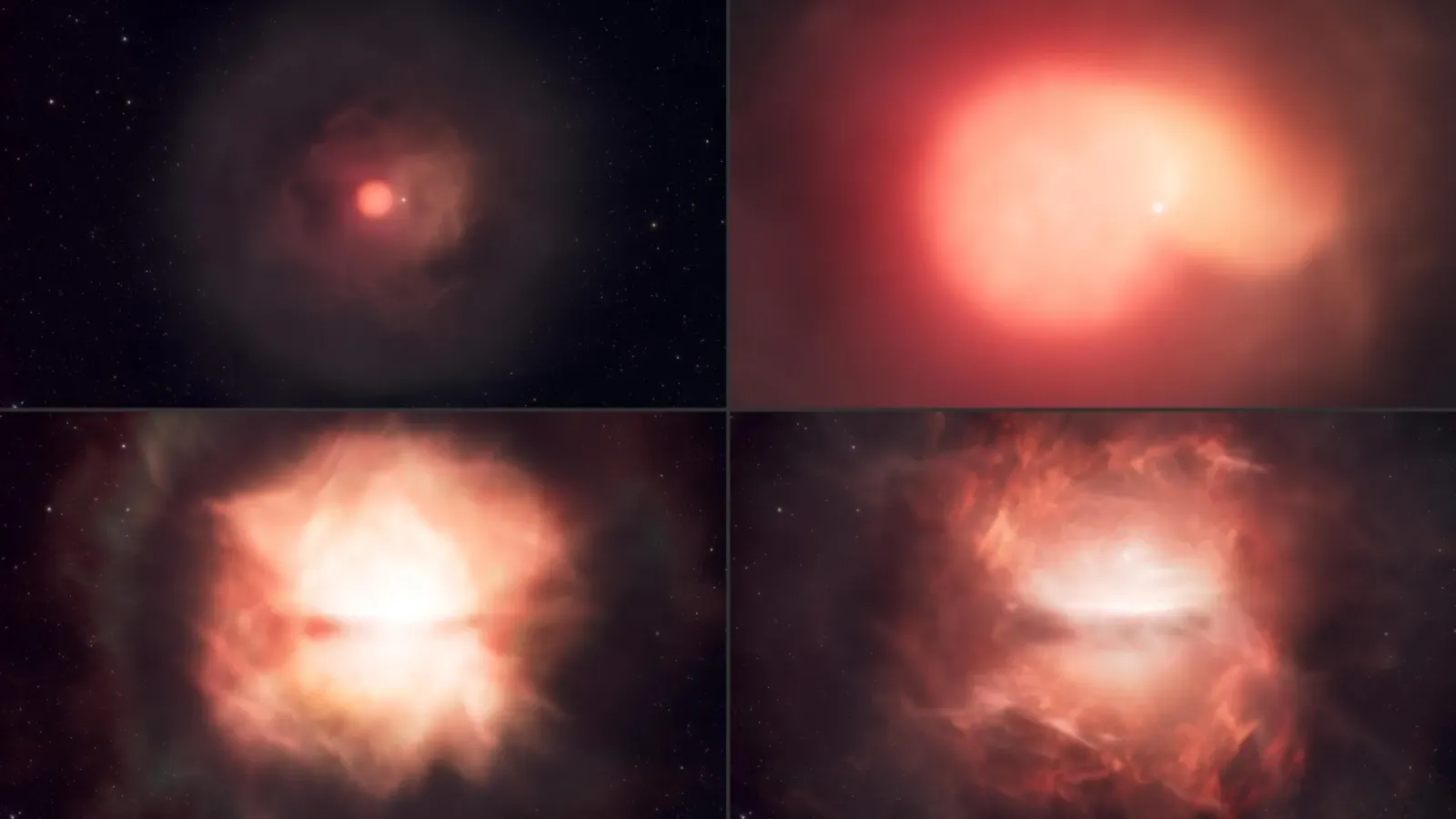
A star swallowed another star. Webb caught the aftermath in 47 days
Astronomers watched a small star spiral into a giant 18,000 times brighter than the Sun in Andromeda, and Webb's 47-day follow-up is rewriting how stellar mergers get studied.