
Scientists push a moon mining moratorium: 'That shouldn't be the Wild West'
Two researchers want binding rules before China, the U.S. and commercial miners turn the lunar surface into exclusive territory, arguing the scientific loss would be irreversible.
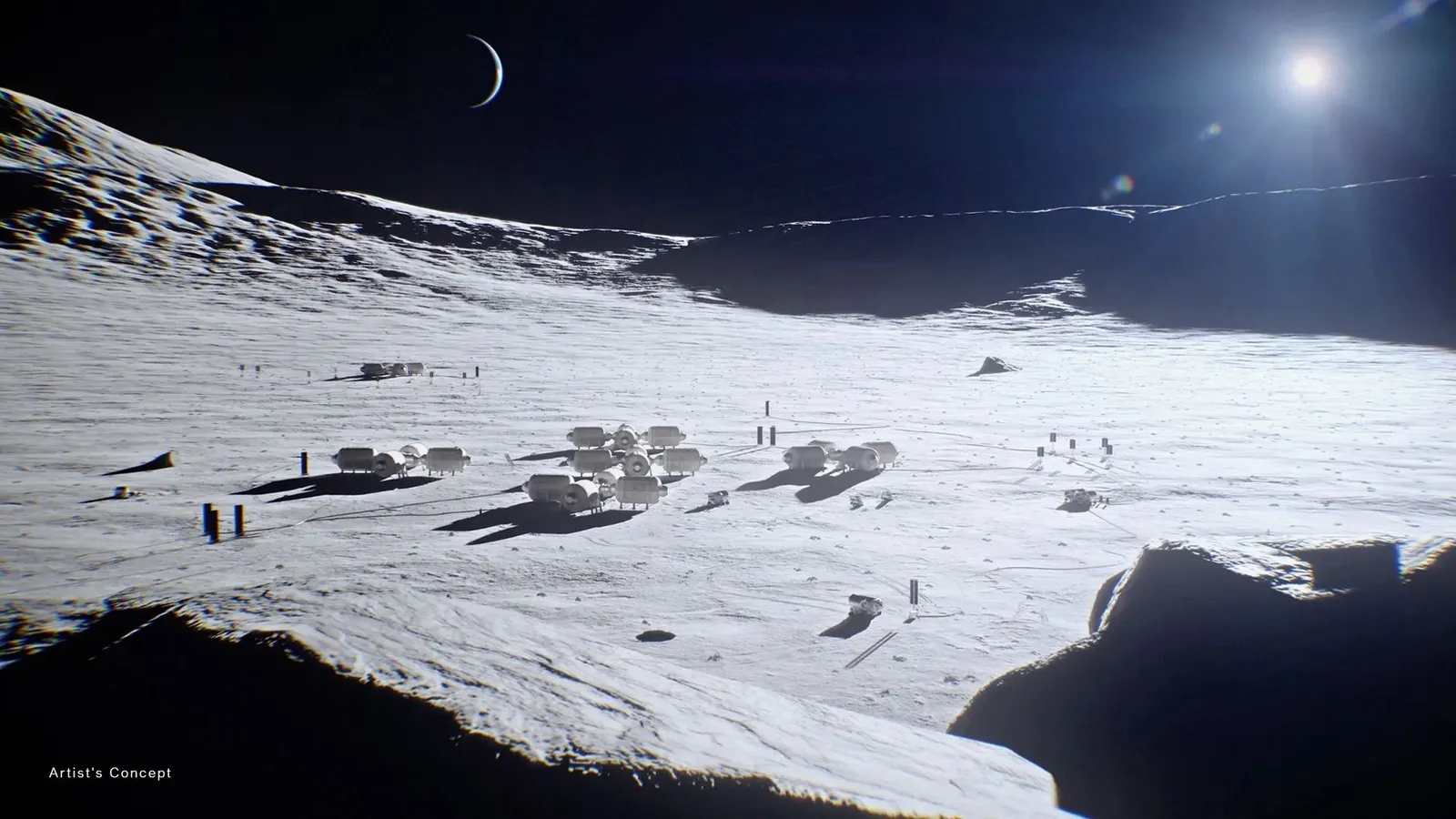
Florian Rabitz of Vilnius University and Xiao-Shan Yap of Utrecht University are calling for a moratorium on industrial exploitation of the moon in the journal Global Environmental Politics, warning that rapid development could cause irreversible environmental damage. For operators and investors, the fight sets the regulatory clock on lunar mining just as China and the U.S. target permanent settlements by the end of the next decade.
Two researchers want the world to hit pause on lunar industry before the first mining rig fires up. Florian Rabitz, a professor of climate and technology governance at Vilnius University in Lithuania, and Xiao-Shan Yap, an assistant professor of Earth-space sustainability at Utrecht University in the Netherlands, are calling for a moratorium on industrial exploitation of the moon. Writing last month in the journal Global Environmental Politics, the pair warn that rapid development could cause irreversible environmental damage and destroy invaluable scientific material. Rabitz's summary of the alternative is blunt: "That shouldn't be the Wild West."
The clock is what makes this urgent. Both China and the United States are pushing forward with plans to establish permanent human settlements on the moon by the end of the next decade. Behind those plans sits a commercial ecosystem in waiting: companies that want to build businesses supporting future explorers by mining for resources such as water, construction materials, industrial metals and rare earth minerals. Water is the headline prize, since it can be processed into oxygen and propellant, but the wider pitch is a lunar supply chain that serves the settlements instead of shipping everything up from Earth.
For context, the legal architecture here was written for a different era. The United Nations' Outer Space Treaty dates to 1967, when the moon was a destination for flags and footprints rather than a site for supply chains. It was not drafted with water extraction, rare earth mining or permanent commercial settlements in mind, which is exactly the gap the researchers are pointing at.
The scientists' objection is not only about scenery. The moon is a largely undisturbed natural environment, and that is precisely what makes it scientifically valuable. Industrial activity, from extraction to the infrastructure that supports it, threatens to overwrite material that cannot be recovered once it is disturbed. The researchers' framing is that the lunar environment may suffer irreversible damage if things move too fast, and that the loss would be measured in science that can never be redone.
Here is the regulatory hole. The 1967 Outer Space Treaty prevents individual nations from appropriating the moon. It does not settle what happens when those nations, or the companies they license, start pulling resources out of it. Rabitz pointed out that although the treaty blocks national ownership claims, the moon and its valuable resources are unlikely to remain truly neutral territory if their exploitation is led by a small number of powerful nations.
"With the moon it's absolutely clear that whoever is doing the big infrastructure work is going to be asserting their position, including by defining their own exclusive territories," Rabitz said in a statement. That is the second-order risk in plain English: the first mover does not just build a base, it sets the operating assumptions everyone else has to live with. Infrastructure becomes precedent, and precedent is very hard to unwind once capital has been sunk into it.
What the researchers want is process before permits. In their piece, they call for "robust international regulations" and "broad and inclusive deliberation" so the global community can carefully consider the impact of economic activities on the moon. The specific mechanism is a temporary ban on lunar industrialization, a cooling-off period designed to let regulations catch up and to limit what can be allowed, so that a moon rush does not destroy the pristine lunar environment. Read that as a sequencing argument: write the rules first, then hand out the licenses.
There is a political edge to it too. The researchers object to colonization of the moon by a small number of powerful players, namely China, the U.S. and their respective close allies. That is a governance argument as much as an environmental one. If a handful of states and their preferred contractors define the terms, everyone else, including smaller spacefaring nations and the companies that depend on access, inherits those terms rather than negotiating them.
For founders, investors and operators, the moratorium debate is a live business variable, not a philosophical one. Any lunar venture now sits between two clocks: the settlement timelines that China and the U.S. have set for the end of the next decade, and a regulatory conversation that has not produced binding international rules. That gap is where the risk lives. A company that raises against a 2030s extraction plan is effectively betting that rules will arrive late and light. A moratorium, if it ever gained traction, would not just delay a project; it would reset which players are positioned to move first when the gate opens. The scientists are not asking for a permanent ban. They are asking for time, and time is the one resource nobody has figured out how to mine.
This story's Key Insights and Take-aways are locked.
Create a free account to unlock Executive Actions for one credit.
Register to UnlockAlways free for Executives Club members. Join the Club
More in Science

Anthropic's I.P.O. Made Rank-and-File Researchers Worth Tens of Millions
Researchers who joined just a few years ago are now worth tens of millions, and the windfall resets the pay benchmark for every private A.I. lab still paying in paper.

Sea Lion Culling Strategy Fails: New Model Says Killing Them Won't Save Salmon
The latest research from AAAS overturn a long-held conservation assumption, forcing policymakers to rethink critical resource allocation in marine ecosystems.

Microplastics do more than pile up: they react with water to damage cells
Scientists have found that plastic particles can generate highly reactive molecules in water, a mechanism that could explain links to heart attacks, strokes, and neurological disorders.