
Sleuth finds 'impossible proteins' in hundreds of papers, triggering retractions
One investigator, hundreds of papers, and a correction process now grinding through the journals: a Nature investigation says the problem may be widespread, and everyone who cites the literature has skin in it.
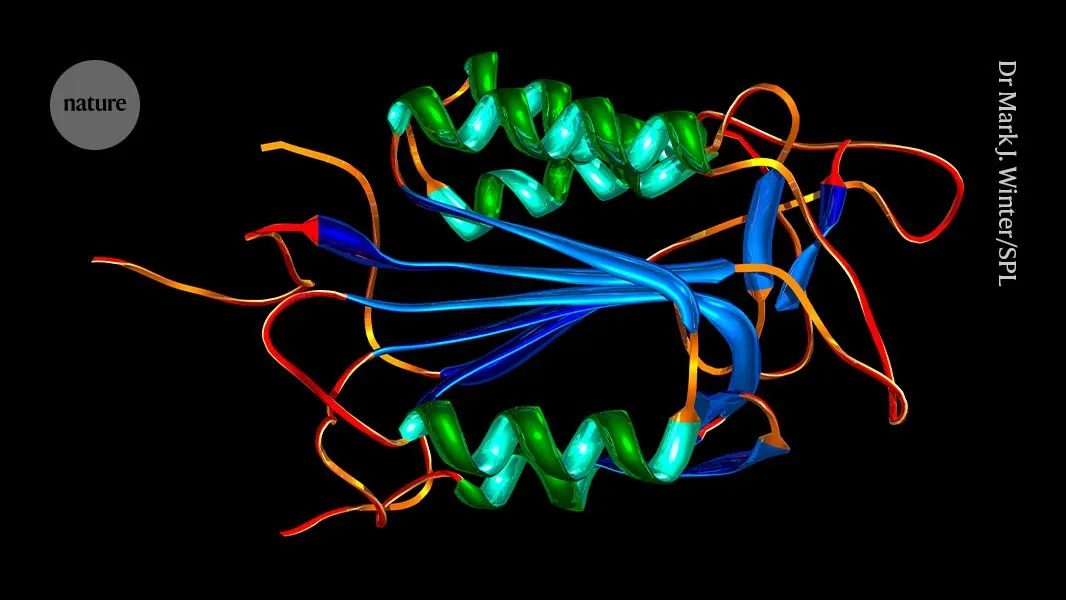
A lone sleuth has identified 'impossible proteins' across hundreds of research papers, a Nature investigation published on 20 November 2026 reports, prompting retractions and corrections and exposing what the journal calls a potentially widespread problem. For anyone whose money, roadmap, or diligence depends on published protein science, the case signals that detection now outpaces the machinery built to fix the record.
A single sleuth has found 'impossible proteins' in hundreds of research papers, according to a Nature investigation published online on 20 November 2026. Nature describes the finding as exposing a potentially widespread problem, and it has already prompted retractions and corrections across the literature. That is the whole of it: one investigator, hundreds of papers, and a correction process now grinding through journals. The scale is the story. Integrity cases usually surface one paper at a time, a single figure flagged in a single journal, and they are usually resolved quietly. Hundreds of papers is a different category of problem, closer to a systemic failure than an isolated lapse. The phrase 'impossible proteins' is doing a lot of work in that headline, and it is worth being precise about why: the claim is not that the science was sloppy, it is that what the papers depict could not exist.
In integrity investigations, the label 'impossible' typically attaches to a specific class of red flag. A protein shown at a molecular weight its own sequence cannot produce. The same band appearing in two experiments supposedly run months apart. A structure that breaks rules of biochemistry no living system gets to break. A protein localized to a compartment it cannot reach. Any one of those makes a figure suspect on its face, before anyone attempts replication. That is the appeal of the method: you do not need a lab, a grant, or a sample. You need the published images, the stated methods, and enough patience to compare them.
Nature attributes the find to a single sleuth, and that detail matters more than it looks. Peer review is built on the assumption that a handful of expert volunteers will catch what is wrong with a manuscript in the hours they can spare. Post-publication sleuthing works differently. One determined person with image-forensics tools and a public database of papers can audit thousands of figures, and the marginal cost of checking paper number 400 is close to zero. The asymmetry is structural: journals employ limited integrity staff, the literature keeps growing, and much of the sleuthing community works for free. Historically, that mismatch is exactly why high-volume cases tend to be found outside the journals rather than inside them.
The source states that the investigation prompted retractions and corrections, and the split between those two outcomes carries real weight. A correction signals an error that can be fixed while the underlying finding stands. A retraction signals that the finding itself is unreliable. For a reader of the literature, a corrected paper can still be cited; a retracted one cannot, or at least should not be. For the authors, the difference is a career event. For the journal, it is a reputational one. And for everyone downstream, it is a signal about how much of the record can be trusted at a glance.
Protein biology is not a niche. Protein findings feed drug targets, diagnostic assays, biotech pipelines, and licensing deals, and they are cited for years before anyone tries to reproduce them. For context, the gap between publication and correction is typically measured in years, which means work built on a flawed figure can accumulate citations, patents, and follow-on grants in the meantime. That is the second-order cost of a case like this: the papers are the visible part, and the invisible part is everything built on top of them. Executives in life sciences, and investors underwriting anything that cites protein-level mechanism, carry that tail whether or not they ever read the original paper.
The incentives that produce these cases are not mysterious. Publication volume drives funding, promotion, and institutional prestige, while the checking of that volume is underfunded and largely volunteer. Authors facing a query can lawyer up, and journals face defamation risk, author pushback, and the cost of an investigation that may run for months. Sleuths, meanwhile, work without institutional backing and often absorb personal pressure for flagging work by senior figures. The result is a system where detection has been outsourced to individuals and correction has to be negotiated one paper at a time, which is slow, expensive, and uneven.
For anyone whose decisions depend on published science, the practical lessons are unglamorous. Treat protein-level claims that carry commercial weight as diligence items rather than background reading, and ask whether the underlying figures have been independently examined. Track whether the journals involved issue corrections or retractions, because the choice tells you how seriously the record is being cleaned. Watch whether funders and institutions attach consequences, since a retraction with no institutional follow-through changes nothing about the incentive that produced it. And note the direction of travel: as image-generation tools improve and publication volume keeps climbing, detection gets harder while the payoff for faking gets no smaller.
One sleuth, hundreds of papers, and a correction process that will take far longer than the finding did. That is the shape of the problem Nature is describing, and it is why 'impossible proteins' reads less like a curiosity and more like a warning about how much of the scientific record is checked after the fact, by volunteers, if it is checked at all.
This story's Key Insights and Take-aways are locked.
Create a free account to unlock Executive Actions for one credit.
Register to UnlockAlways free for Executives Club members. Join the Club
More in Science

Anthropic's I.P.O. Made Rank-and-File Researchers Worth Tens of Millions
Researchers who joined just a few years ago are now worth tens of millions, and the windfall resets the pay benchmark for every private A.I. lab still paying in paper.

Sea Lion Culling Strategy Fails: New Model Says Killing Them Won't Save Salmon
The latest research from AAAS overturn a long-held conservation assumption, forcing policymakers to rethink critical resource allocation in marine ecosystems.

Microplastics do more than pile up: they react with water to damage cells
Scientists have found that plastic particles can generate highly reactive molecules in water, a mechanism that could explain links to heart attacks, strokes, and neurological disorders.