
SpaceX IPO closes up 19% after Friday debut above $135 price
What SpaceX’s first public pricing did in real time, and why decision-makers should care about the capital signal.
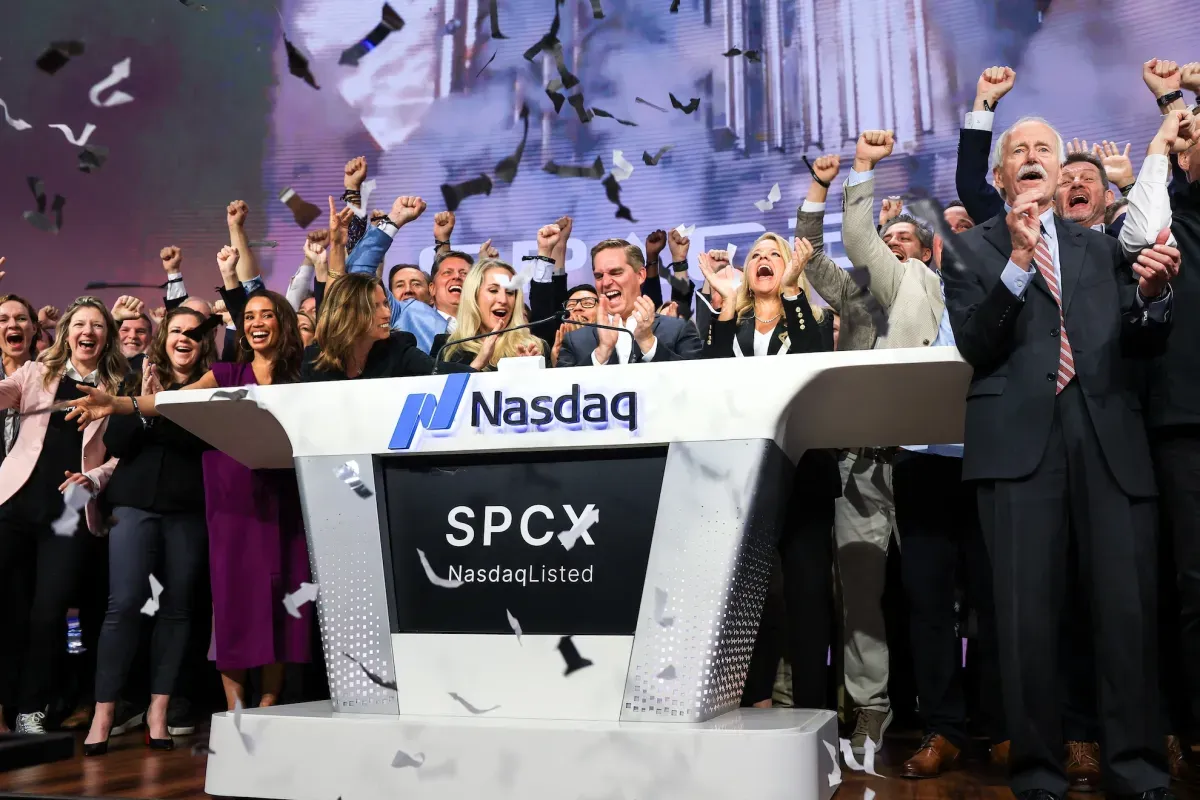
SpaceX made its anticipated debut on Friday, trading higher than its initial $135 IPO price. The stock’s 19% close jump matters because it sets a live market benchmark for how investors are pricing space hardware and launch risk.
SpaceX just did something that will be replayed in every boardroom deck for a while: its IPO closed up 19% after a Friday debut that priced its opening higher than its initial $135. In other words, the market did not treat the first trade as a formality. It treated it like a valuation referendum.
This matters because IPO pricing is usually a tug-of-war between what the company needs to raise and what the public market is willing to pay for the risk. According to the TechCrunch report, SpaceX started at an initial $135 and immediately traded higher on Friday. By the close, that move translated into a 19% gain. So the immediate payoff for anyone tracking the deal is simple: the debut didn’t limp out of the gate, it jumped.
Zoom out and you can see why that first-day performance carries more than just bragging rights. Space is expensive in every sense: development costs are large, timelines are long, and the industry has historically been sensitive to both regulatory friction and execution risk. An IPO is the moment those uncertainties get put on a spreadsheet in public. When a new issue trades above its initial price and then lands at a 19% closing gain the same day, it is telling you that at least one large slice of the market is comfortable underwriting the story right now, not years from now.
There’s also a structural reason this kind of trading action becomes a benchmark. When companies go public, their valuation becomes the reference point for how investors compare peers. Even if other space companies are at different stages, or have different revenue profiles, the market tends to use recent public prints as a mental yardstick. A debut like SpaceX’s, with trading higher than the initial $135 IPO price and a close up 19% on Friday, will likely pull attention toward what makes a company “worth” public capital in this vertical. That can change how investors talk, how boards negotiate, and how future issuers think about timing.
Then there is the regulatory backdrop that IPO investors always watch, even when the headline is about price. Space programs operate at the intersection of government policy, licensing, and risk management. While the source here does not detail specific regulatory steps, the broader point for decision-makers is that regulators and compliance requirements shape timelines and operational flexibility. Public markets reward clarity, and they penalize uncertainty. A strong first trading day does not magically erase regulatory friction, but it does suggest investors are not currently pricing that friction as a deal-breaker.
For executives and directors at other deep tech and infrastructure-heavy companies, the second-order implication is about positioning. IPOs are rarely only about one company. They are about the appetite of underwriters and public-market allocators for a whole category. When a heavily anticipated debut starts above the initial $135 price and ends the day up 19%, it signals that there is demand for this type of risk in public markets right now. That can influence deal calendars, investor communications, and even how quickly companies feel pressure to “open the taps” to fund long-term buildout.
And for the decision-makers who are not planning to IPO next, the strategic stake is still real. These moments affect the cost of capital across ecosystems. If a high-profile issuer like SpaceX can land a 19% close on its first day after trading higher than $135 on Friday, it tells the market that IPO liquidity and narrative strength can move together, at least at launch. That will matter when other founders decide whether to wait, when boards decide how much to pre-emptively de-risk before going public, and when CFOs think about how future fundraising windows might open or tighten.
This story's Key Insights and Take-aways are locked.
Create a free account to unlock Executive Actions for one credit.
Register to UnlockAlways free for Executives Club members. Join the Club
More in Business
Elon Musk became the world’s first trillionaire after SpaceX IPO lifted him past $1T
SpaceX shares jumped, and Musk’s $800B pre-IPO value crossed a trillion, reshaping how investors price “moonshots.”
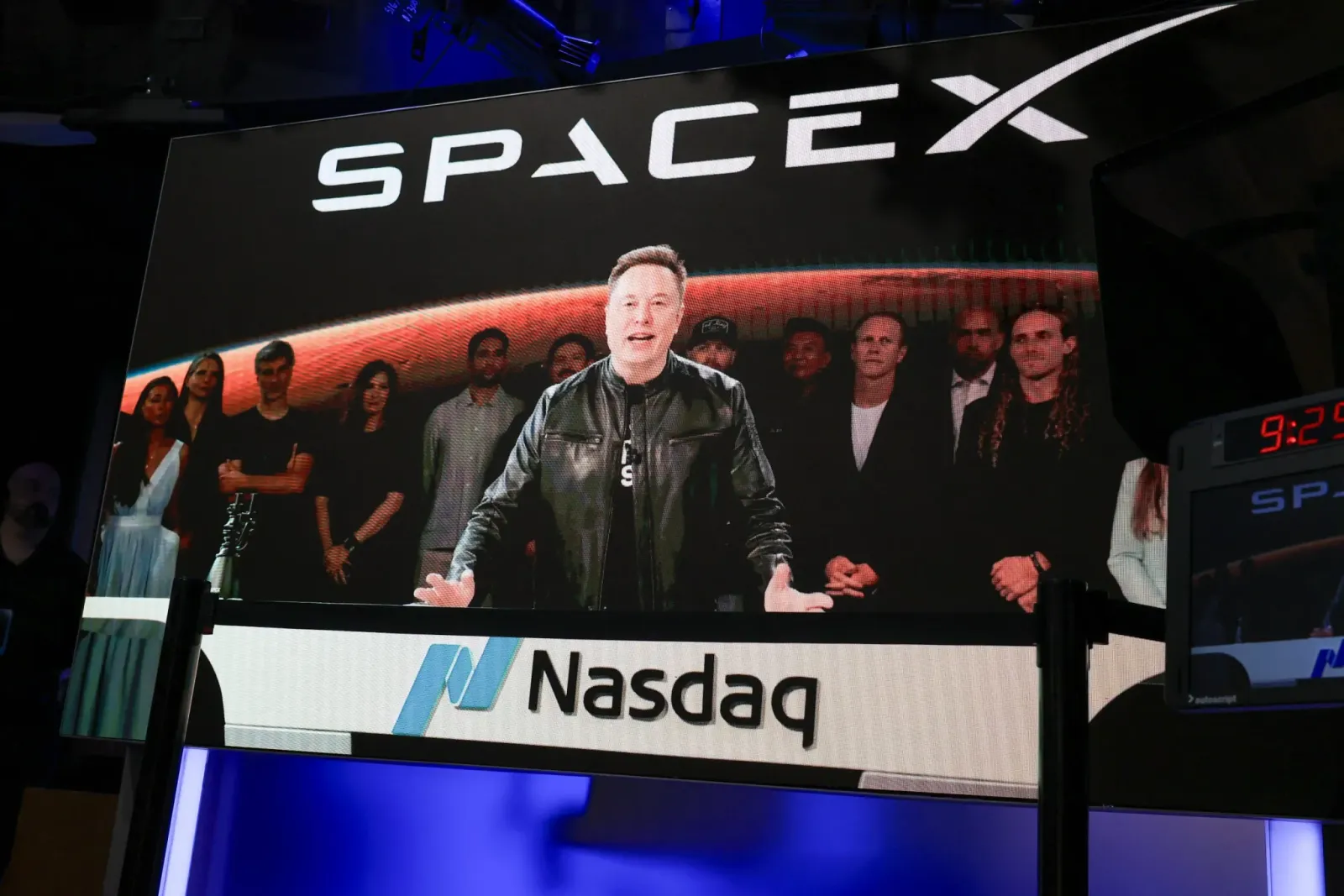
SpaceX stock closes at $161.11 after $2.1T debut valuation shatters expectations
The IPO priced at $135, surged on Nasdaq and Texas, and immediately rewired how executives think about mega-debuts.
SpaceX IPO priced June 12 at $135: Elon Musk crosses $1T as funds pick up the tab
The SpaceX IPO values the company around $1.77T and estimates Musk’s stake at $866.5B, with broad investor ripple effects.