
SpaceX is SpaceX’s $1.2B Bitcoin bet’s latest step, now 8th largest holder
SpaceX’s reported Bitcoin stash puts it ahead of Coinbase and forces a new look at corporate crypto treasury rules.
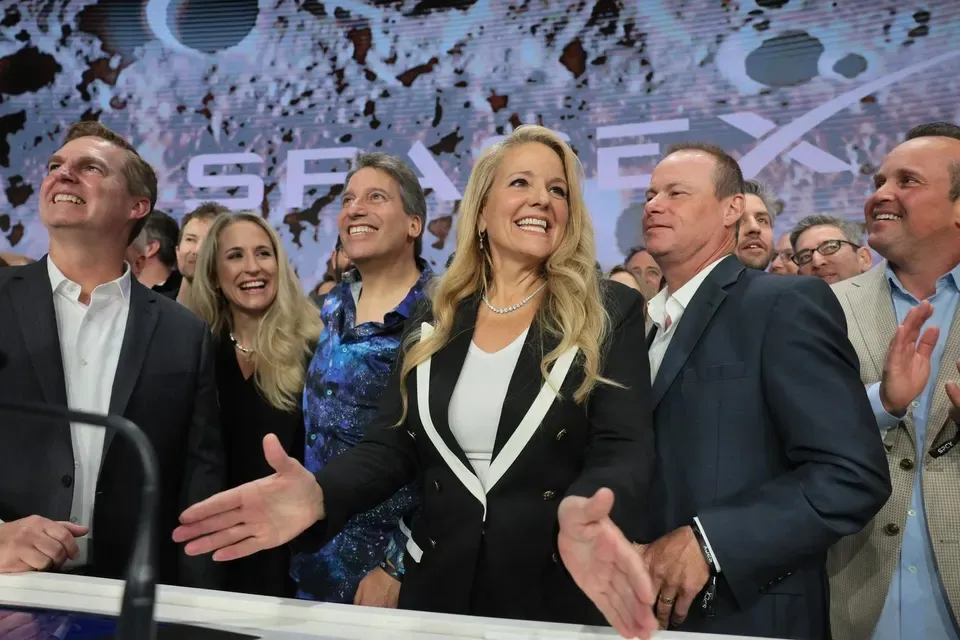
Forbes reports that Elon Musk’s mega-company, SpaceX, is now the 8th largest public Bitcoin holder, with about $1.2 billion worth of Bitcoin. The consequence for decision-makers: corporate treasury strategy and disclosure expectations may start shifting faster than many boards planned.
Elon Musk’s mega-company is no longer just “testing” Bitcoin in the background. Forbes reports that SpaceX is now the 8th largest public Bitcoin holder, with about $1.2 billion worth of Bitcoin. And here is the part that should make corporate finance teams sit up: SpaceX holds more Bitcoin than cryptocurrency broker Coinbase.
That comparison matters because Coinbase is a well-known proxy for mainstream crypto exposure. Yet SpaceX, a company better associated with rockets and contracts, now has a larger public Bitcoin position. In plain terms, if you are tracking where Bitcoin sits in the real economy, the answer is no longer only exchanges or crypto-native firms. It is also industrial-scale companies making treasury decisions that look increasingly similar to what hedge funds have done for years.
To understand why this is more than a headline number, you have to zoom out to how corporate Bitcoin positions tend to work. When companies buy Bitcoin for a treasury, they are not just placing a trade. They are committing capital to an asset whose price can swing sharply, which affects risk management, liquidity planning, and investor perception. Boards usually ask: Why Bitcoin? What is the time horizon? How will we explain it to shareholders and regulators if sentiment turns?
There is also a governance angle. “Public Bitcoin holder” status implies there is enough disclosure and reporting visibility for observers to rank companies. That means SpaceX is not hiding the ball. And in public markets, transparency has knock-on effects. Once one major company accumulates a material position, peers start benchmarking. CFOs and treasury heads often get pushed with questions that sound like: Are we leaving money on the table? Are we taking unpriced risk? Are we signaling something to the market?
Then there is the regulatory backdrop. Corporate crypto holdings operate in a world where financial oversight has been evolving. Even when companies are not directly regulated like exchanges, they still land in the orbit of rules around disclosures, reporting, and how financial statements reflect crypto assets. As more non-crypto companies treat Bitcoin as a balance sheet asset, regulators and standard-setters tend to face more pressure to clarify expectations, especially when holdings become large enough to matter to investors.
For SpaceX specifically, the second-order implication is brand and capital credibility. A large Bitcoin position can influence how markets interpret a company’s risk posture and financial sophistication. For example, companies traditionally seen as cyclical or project-based may be pressured to articulate whether Bitcoin is a hedge, a liquidity instrument, or simply a belief-driven treasury move. The more plainly a firm like SpaceX compares itself to a crypto company like Coinbase, the harder it is for peers to dismiss corporate Bitcoin as a niche activity.
For decision-makers at other public companies, this creates a practical problem: benchmarking is accelerating. If SpaceX is reported to be worth about $1.2 billion in Bitcoin and already ranks 8th among public holders, then the “small pilot” phase for corporate crypto may be shrinking in real time. Boards that have been waiting for more clarity can find the market moving ahead of their comfort level. The strategic stakes are simple: the companies that wait too long may miss either the upside participation or the chance to set the narrative before stakeholders decide it for them.
This story's Key Insights and Take-aways are locked.
Create a free account to unlock Executive Actions for one credit.
Register to UnlockAlways free for Executives Club members. Join the Club
More in Business
Elon Musk became the world’s first trillionaire after SpaceX IPO lifted him past $1T
SpaceX shares jumped, and Musk’s $800B pre-IPO value crossed a trillion, reshaping how investors price “moonshots.”
SpaceX IPO priced June 12 at $135: Elon Musk crosses $1T as funds pick up the tab
The SpaceX IPO values the company around $1.77T and estimates Musk’s stake at $866.5B, with broad investor ripple effects.

SpaceX IPO values it at $1.77tn, and Nasdaq fast-tracks its index entry
Forced buyers and tracker funds could amplify buying pressure as SpaceX joins the Nasdaq index on a rule tweak.