
Stonehenge's six-ton Altar Stone isn't Welsh. Scotland is now the prime suspect
Researchers have ruled out Wales and several other candidates, narrowing the Altar Stone's origin to northeastern Scotland, but with no exact match found, the Neolithic world's biggest logistics puzzle is still unsolved.
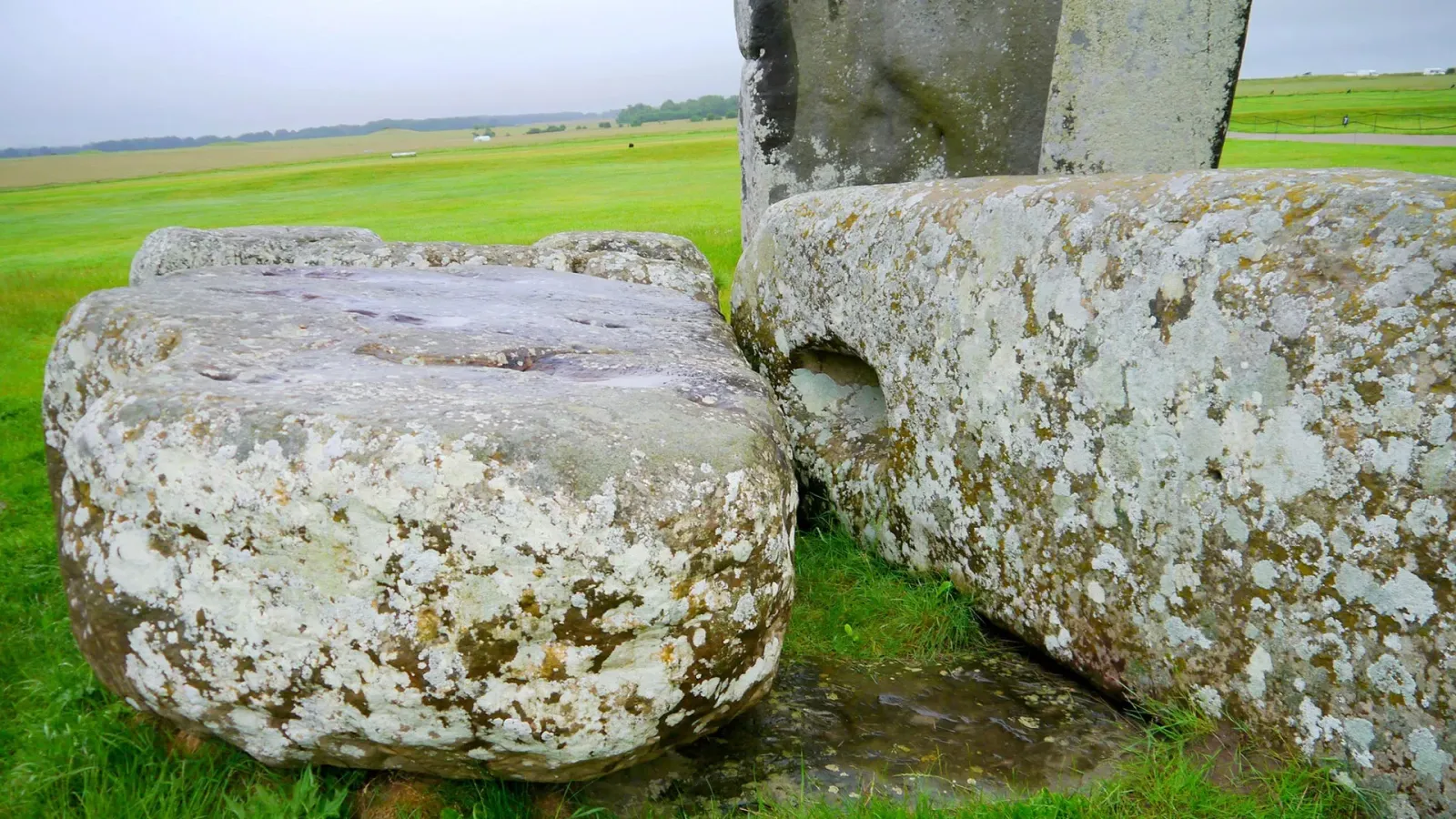
Researchers investigating Stonehenge's six-ton Altar Stone have ruled out Wales and several other suspected sources, narrowing the slab's origin to northeastern Scotland while still searching for an exact match. For decision-makers, the case is a live lesson in how elimination, not confirmation, is what actually shrinks a problem.
The six-ton slab at the center of Stonehenge is not Welsh. That is the headline from a major new investigation into the Altar Stone, the massive sandstone block that has sat inside the monument's stone circle for thousands of years. Once thought to have originated in Wales, the slab is now believed to have come from northeastern Scotland. The catch: researchers have yet to find an exact match. So the mystery has not been solved. It has been relocated, and that is a bigger deal than it sounds.
The investigation did two things at once. It uncovered fresh clues, and it ruled out several suspected sources. The second half of that sentence is the part most people skim past, and it is the part that matters. In provenance science, as in any serious investigation, you rarely get to the answer by proving it outright. You get there by shrinking the space where the answer can hide. Wales is out. Several other candidates are out. Northeastern Scotland is in, and the search area is now dramatically smaller than it was.
For context, Stonehenge has always been a monument built from elsewhere. The large sarsen stones that form the outer circle and the trilithons have long been linked to the Marlborough Downs area to the north. The smaller bluestones have long been linked to the Preseli Hills in southwest Wales, more than 100 miles to the west. The Altar Stone, a sandstone slab weighing about six tons, was the odd one out, assumed Welsh largely by association with the bluestones around it. That assumption is now gone, and with it goes a tidy story that had survived for a very long time.
Which brings us to the genuinely wild part. Northeastern Scotland is not a short haul from Salisbury Plain. It is hundreds of miles. Moving a six-ton block that distance in the Neolithic, without metal tools, without wheeled vehicles in any form we would recognize, and without draft animals as later civilizations used them, is an operational problem with no comfortable answer. Historians and archaeologists have argued for decades about how the bluestones made their journey at all, whether by human effort, by raft and coastline, or by some combination of the two. A Scottish origin for a six-ton slab does not make that debate easier. It makes it louder.
How do you even narrow a stone's origin? Typically by reading its internal signature. Sandstone carries a mineral fingerprint: the specific mix of grains, the ages of the crystals inside them, and the geochemical traces that vary from one sedimentary basin to the next. Match that fingerprint to an outcrop and you have your quarry. Fail to match it and you have learned something just as useful, which is where the stone did not come from. The new investigation appears to have done a great deal of the second kind of work. That is why the result reads as progress even though the final answer is still missing.
It is worth being precise about what "no exact match" means. It does not mean the Scotland hypothesis is weak. It means the search has not yet landed on a specific outcrop, a specific layer, a specific place where someone could theoretically put a pin. That is a normal stage in this kind of research, and it is often the longest one. The candidate region is now northeastern Scotland. The next step is finding the exact source within it, or ruling that out too and starting again somewhere else.
Here is why this matters beyond archaeology. Provenance is a business problem now. Supply chains, critical minerals, food labels, art authentication, carbon accounting: all of them run on the same logic this investigation is running on. You rarely get to prove origin directly. You build a case by eliminating alternatives until only one remains, and you document every elimination so the next person does not repeat your work. The teams that treat negative results as assets, rather than as failures to hide, are the ones that reach the answer first. The Altar Stone investigation is that discipline in its purest form, applied to a rock that has been sitting in a field for millennia.
So what should you actually take from this? Three things. First, the Welsh origin story is dead, and the Scottish one is the leading candidate, not a settled fact. Second, the real output of the investigation is a smaller search space, which is a genuine result even without a quarry. Third, the six-ton slab at the center of the world's most famous prehistoric monument is still, after all this, unexplained. That is not a failure of the research. That is the research working exactly as it should.
This story's Key Insights and Take-aways are locked.
Create a free account to unlock Executive Actions for one credit.
Register to UnlockAlways free for Executives Club members. Join the Club
More in Science

Anthropic's I.P.O. Made Rank-and-File Researchers Worth Tens of Millions
Researchers who joined just a few years ago are now worth tens of millions, and the windfall resets the pay benchmark for every private A.I. lab still paying in paper.

Sea Lion Culling Strategy Fails: New Model Says Killing Them Won't Save Salmon
The latest research from AAAS overturn a long-held conservation assumption, forcing policymakers to rethink critical resource allocation in marine ecosystems.

Microplastics do more than pile up: they react with water to damage cells
Scientists have found that plastic particles can generate highly reactive molecules in water, a mechanism that could explain links to heart attacks, strokes, and neurological disorders.