
Strobe lights, not psilocybin: UCLA lab chases drug-free psychedelic therapy
Nicco Reggente's UCLA lab found five minutes of flashing LEDs matched ten minutes of meditation for anxiety in 262 people, opening a drug-free path around psychedelic regulation.
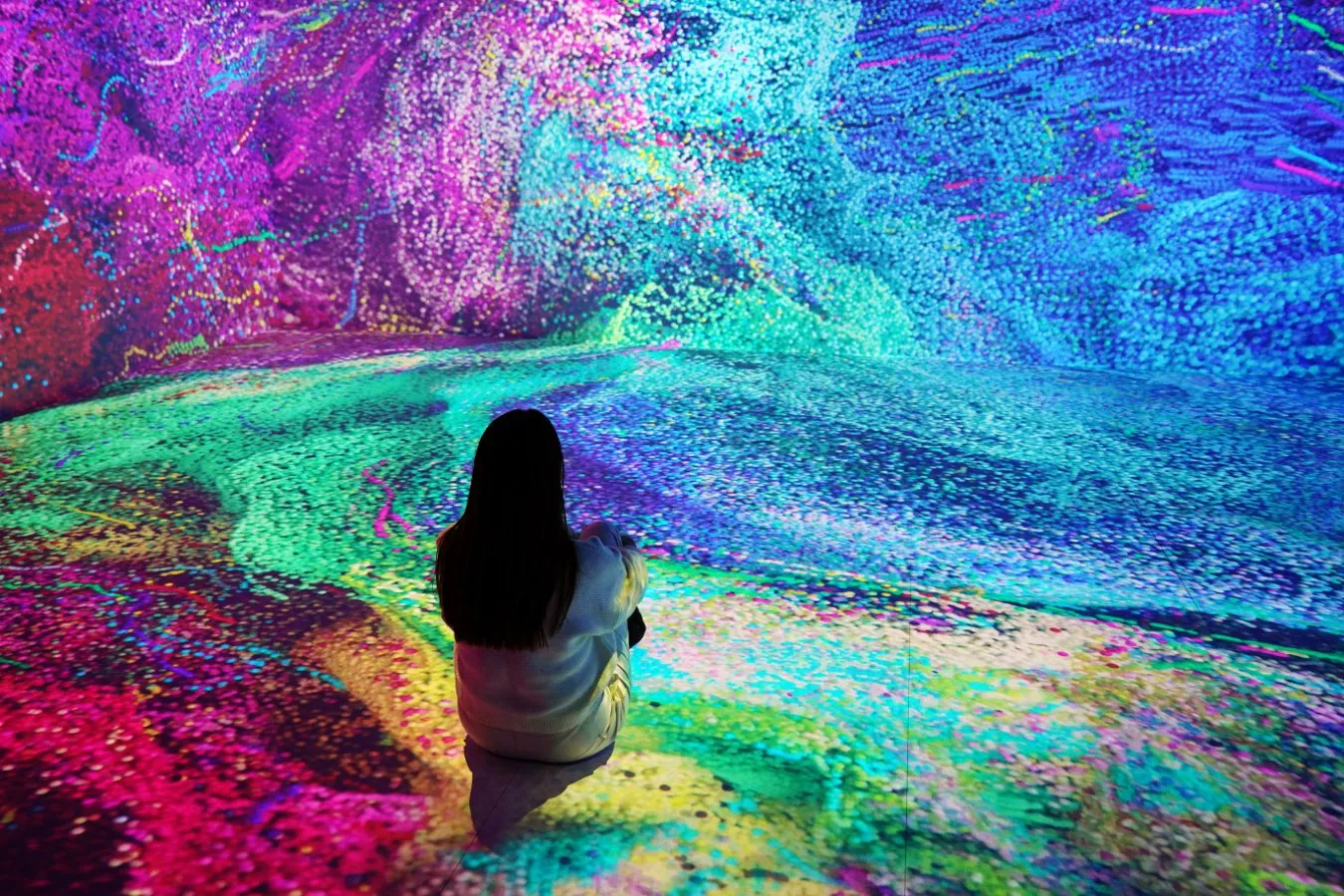
Nicco Reggente, a UCLA cognitive neuroscientist and director of the non-profit Institute for Advanced Consciousness Studies, is testing 'technodelics', light and sound rigs that mimic psychedelic altered states without drugs, with a 2024 study of 262 people showing stroboscopic stimulation matched breath-focused meditation for anxiety relief in half the time. For mental health operators and investors, the work points to a lower-cost, lower-regulatory route to the outcomes psychedelics promise, though the mechanisms and durability remain unproven.
In a lab a few miles inland from Santa Monica beach, Nicco Reggente, a cognitive neuroscientist at the University of California, Los Angeles and director of the non-profit Institute for Advanced Consciousness Studies, sits a visitor in a reclining armchair, positions a cell phone-sized array of LEDs a few centimetres from their face, and tells them to close their eyes. Within seconds, bright, rapidly flashing light beamed onto closed eyelids generates kaleidoscopic swirls, tunnels, grids and lattices. Reggente calls this "technodelics": the use of light, sound and other sensory manipulation to produce the altered states of consciousness more usually associated with a psychedelic trip.
The numbers behind the demo are why neuroscientists on both sides of the Atlantic are paying attention. In a 2024 study of 262 people, stroboscopic stimulation reduced anxiety and improved mood as effectively as breath-focused meditation. The difference is speed: meditation took 10 minutes to bring the calm, while the strobe device delivered in just over 5. Reggente's own pitch is narrower than the hype. "It's about opening a door of perception," he says. "Certain psychedelics are very good at opening the lock to that door, but there are other ways."
Why chase the door at all? Because psychedelics including psilocybin, ketamine and LSD are accumulating evidence as remarkably effective treatments for serious mental health issues, and nobody can fully explain why they work. The special sauce could be the drugs' radical disruption of brain chemistry and neural firing patterns, the mind-blowing experience of the trip itself, the therapy wrapped around it, or all three. Efforts to date have largely focused on engineering trip-free analogues of psychedelics, which in mice appear to reproduce some of the drugs' effects on neurons. A growing camp, Reggente included, is testing the opposite hypothesis: that the benefit lives in the intense change in perception, in the way psychedelics upend a person's sense of self and their place in the wider world. If that is true, drugs may be optional.
This is not a new idea so much as a returning one. Holotropic breathwork, a form of intentional hyperventilation, was invented in the 1970s as a way to reach altered states naturally after psychedelic drugs were outlawed. Meditation and sensory deprivation can also produce profound shifts in mental state. These interventions first drew scientific attention after psychedelic research in the 1950s and 60s, then faded through the 80s and 90s as Prozac and other SSRIs arrived and mental health research moved on. The current psychedelic resurgence has dragged altered states of consciousness back onto the agenda, and with many barriers to using psychedelics as standard treatment still standing, drug-free alternatives are back. This time, technology is the key component.
Stroboscopic light is the best-studied method so far. Unlike meditation, breathing practices and extended sensory deprivation, flashing lights reliably mimic hallucinations in seconds and require no training. The leading explanation is predictive processing: the neuroscience theory that the brain builds its understanding of self and world by generating predictions from prior experience and comparing them with incoming sensory information. When colours start moving in new, unexpected ways, the basis of that reality shakes, along with the implicit confidence that the world exists as you see it every day. That, in theory, opens the mind to new kinds of realities.
The evidence that this can be transformative, not just pleasant, is thinner but real. According to a recent review, a small percentage of people experience deeper altered states, including increased self-awareness, euphoria and feelings of unity with the wider world. There are even signs the lights can produce complex hallucinations such as magical beings or spirit guides. David Schwartzman, a neuroscientist at the Sussex Centre for Consciousness Science at the University of Sussex in the UK, was part of the team that collected data from a stroboscopic stimulation art installation. He tells of one visitor who hallucinated an emotionally laden conversation with his dead father. Such intense experiences are far more common with psychedelics, but there is evidence the two share effects on signal diversity, a measure of brain activity that rises from low consciousness states such as anaesthesia or sleep up to full wakefulness. Psychedelics push signal diversity beyond wakefulness; a new study from Schwartzman's group, not yet peer-reviewed, found similar increases with stroboscopics.
The honest caveat is that the mechanisms are probably not the same. Other research comparing psychedelic trips with hypnosis and meditation found all three affect communication between brain regions that specialise in sensory processing and those that interpret meaning, though the non-drug effects looked different from the psychedelic ones. Schwartzman expects something similar for stroboscopics: broad neurological overlap, plus real differences. "The mechanisms would be very different between strobe and psychedelics, but the question is, does that matter if you can get similar emotional breakthroughs?" he says. For the New Scientist writer who tried Reggente's rig, the experience was relaxing and happy, closer to a yoga class or massage than a mind-altering trip, though the good feeling lingered.
For operators and investors watching the mental health market, that question is the whole ballgame. Psychedelic-assisted therapy still faces regulatory, reimbursement and clinical hurdles that keep it far from a standard prescription. A device that delivers measurable anxiety relief in five minutes, needs no training, no therapist in the room and no controlled substance, sidesteps most of that. It also raises its own questions: how durable the effect is, who gets the deeper states and who just sees pretty colours, and whether a consumer gadget can carry the therapeutic relationship that many researchers suspect is doing much of the work. Reggente's lab, and Schwartzman's data, are early. But the direction of travel is clear. The next psychedelic breakthrough may not be a molecule at all.
This story's Key Insights and Take-aways are locked.
Create a free account to unlock Executive Actions for one credit.
Register to UnlockAlways free for Executives Club members. Join the Club
More in Science

Anthropic's I.P.O. Made Rank-and-File Researchers Worth Tens of Millions
Researchers who joined just a few years ago are now worth tens of millions, and the windfall resets the pay benchmark for every private A.I. lab still paying in paper.

Sea Lion Culling Strategy Fails: New Model Says Killing Them Won't Save Salmon
The latest research from AAAS overturn a long-held conservation assumption, forcing policymakers to rethink critical resource allocation in marine ecosystems.

Microplastics do more than pile up: they react with water to damage cells
Scientists have found that plastic particles can generate highly reactive molecules in water, a mechanism that could explain links to heart attacks, strokes, and neurological disorders.