
Taung Child may split one ancestor species into several, challenging a century of assumptions
A new study of the 3-million-year-old Taung Child says fossils long filed under a single species may belong to separate branches, and that dramatic climate swings, not steady progress, built the complexity.
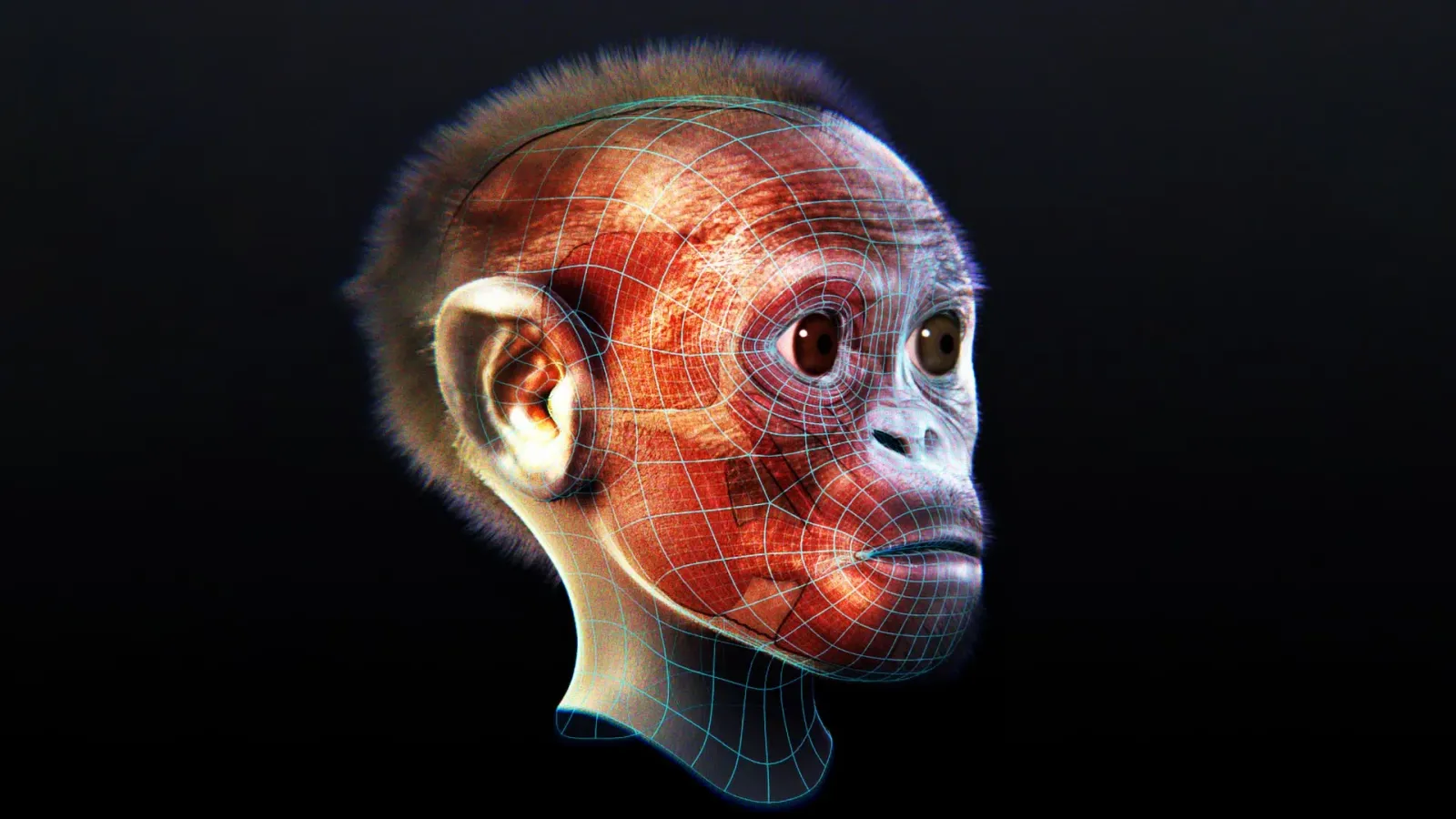
A new study of the 3-million-year-old Taung Child fossil concludes that ancient human ancestors long grouped into a single species may actually represent different branches of our evolutionary family tree, with dramatic climate change helping drive that complexity. For decision-makers, it is a live case study in how re-reading legacy evidence can overturn a century of consensus, and why disruption, not steady progress, is often the better default model.
The Taung Child has been dead for roughly 3 million years and has sat as a settled exhibit in the human-origins story for about a century. A new study of that fossil now argues that several ancient human ancestors long assumed to belong to the same species may actually represent different branches of our evolutionary family tree. That is not a footnote. It is a direct challenge to a century of assumptions about how our lineage branched, and it lands on one of the most famous skulls in science.
The specimen itself is a child's skull, recovered in South Africa in the 1920s and described by anatomist Raymond Dart, and it has anchored textbook accounts of early human ancestors for generations. Because it was found early, studied hard, and cited endlessly, it became a reference point, the kind of fossil later discoveries get measured against. The new research re-reads that reference point and concludes the picture it supported was too tidy.
Here is the plain-English version of what is at stake. When fossils are scarce, researchers group them. A handful of teeth, a jaw, a partial skull: the practical move is to sort them into species, and the safest sort is usually the broadest one. Several specimens that look roughly alike get filed under a single name. That works until someone looks again and finds that the variation inside the group is wider than the label can carry. The new study of the Taung Child points in exactly that direction. What looked like one species may be several branches, which means the family tree has more forks in it than the standard version shows.
The second half of the finding is about why. According to the study, dramatic climate changes helped shape a surprisingly complex story of human origins. That fits a pattern biologists observe across the natural world: when climates swing, habitats fragment, populations get separated, and separated populations tend to diverge. Historically, Africa's shifting environments have been treated as a backdrop to human evolution. This work pushes climate toward the center of the plot, casting it as an engine of diversification rather than scenery.
Paleoanthropology has a long-running argument between lumpers, who favor fewer species, and splitters, who favor more. The debate is not petty. Every species name is a hypothesis about who was related to whom and when lineages separated, and those hypotheses feed into questions about behavior, tool use, and migration. A study that pushes one famous fossil toward the splitter camp does not settle the argument, but it does shift where the burden of proof sits.
Overturning a century of consensus is slow, expensive, and socially awkward work. Institutions build exhibits, curricula, and careers on established classifications. Museums label specimens. Journals publish inside existing frameworks. Funding flows toward questions the field already agrees are questions. When a single fossil forces a re-sort, the cost is not only intellectual, it is logistical. Every downstream claim that depended on the old grouping has to be re-examined, and the fossil record is fragmentary enough that some of those claims may never be fully settled.
The practical consequences ripple outward. Collections that have sat in drawers for decades become newly valuable, because the fastest way to test a re-classification is to re-measure what is already on the shelf. Dating and anatomical comparison methods get stress-tested. And the public story of human origins, the one told in museums and documentaries, gets a rewrite that is far harder to narrate than the clean, linear version audiences are used to.
For leaders outside the field, the transferable lesson is uncomfortable and useful. Consensus is a snapshot of the evidence available when it was formed, not a verdict. The Taung Child sat in the record for a century before a re-reading changed what it meant. Most organizations are carrying their own version of that: legacy data, archived assumptions, a model everyone stopped questioning because it kept working. The study also makes a sharper point about disruption. If dramatic climate shifts, rather than steady incremental change, produced the complexity we see in our own lineage, then treating stability as the default is a modeling error. The teams that periodically re-open the settled file are the ones who find the branch everyone else missed.
This story's Key Insights and Take-aways are locked.
Create a free account to unlock Executive Actions for one credit.
Register to UnlockAlways free for Executives Club members. Join the Club
More in Science

Anthropic's I.P.O. Made Rank-and-File Researchers Worth Tens of Millions
Researchers who joined just a few years ago are now worth tens of millions, and the windfall resets the pay benchmark for every private A.I. lab still paying in paper.

Sea Lion Culling Strategy Fails: New Model Says Killing Them Won't Save Salmon
The latest research from AAAS overturn a long-held conservation assumption, forcing policymakers to rethink critical resource allocation in marine ecosystems.

Microplastics do more than pile up: they react with water to damage cells
Scientists have found that plastic particles can generate highly reactive molecules in water, a mechanism that could explain links to heart attacks, strokes, and neurological disorders.