
Taurus's brightest star is an impostor: 65 light-years away, not 150
Aldebaran poses as the eye of Taurus while sitting less than half as far from Earth as the Hyades, proof that the patterns you trust most are line-of-sight illusions.
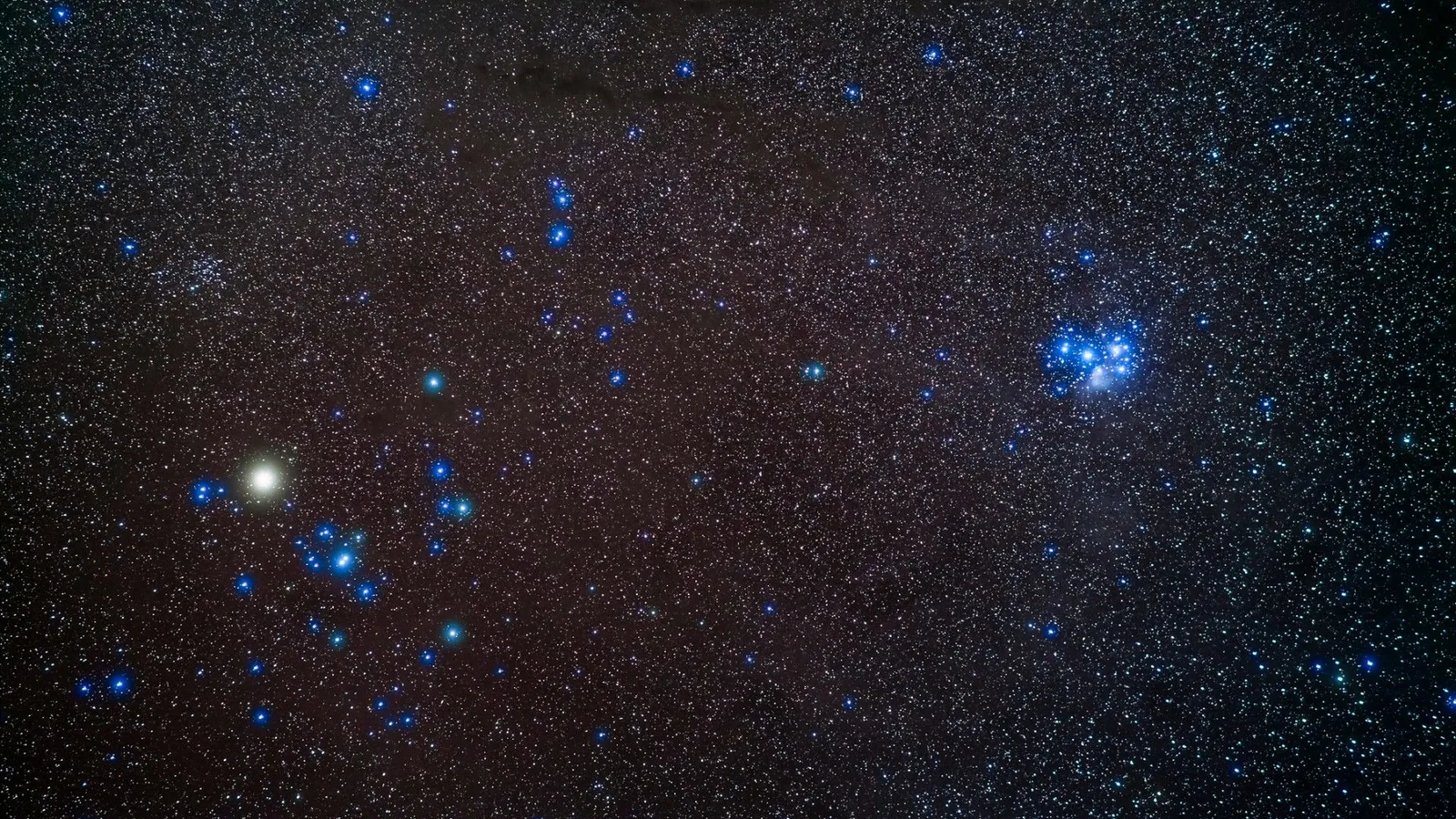
Aldebaran, the 14th-brightest star in the night sky, appears to anchor the Hyades cluster in Taurus but actually sits about 65 light-years away while the cluster sits roughly 150, making it a foreground impostor rather than a member. The consequence for decision-makers is a discipline lesson: the groupings that look most obvious are often artifacts of a single viewing angle, and membership has to be verified, not assumed.
The brightest star in Taurus is not a member of the cluster it appears to lead. Aldebaran, the 14th-brightest star in the night sky, sits roughly 65 light-years from Earth. The Hyades, the big V-shaped cluster that forms the bull's face, sits about 150 light-years away, or roughly 153 by the tighter figure astronomers use. That means the orange star parked on one arm of the V is a foreground object that happens to lie almost exactly along our line of sight toward the cluster. It is not the Hyades' brightest member. It is an impostor, and the gap between those two numbers is the entire story.
The reason the deception holds is depth. When we look into space, depth is the one dimension our eyes judge poorly. The night sky reads as flat, and our brains are extremely willing to believe it. Aldebaran looks completely at home among the Hyades stars, and knowing the truth does not fix the picture. The arrangement is a line-of-sight phenomenon, a 2D pattern produced by a 3D reality. Constellations are not objects in the same sense as a planet or a star cluster. They are views.
The Hyades is the real thing: an open cluster, a genuine physical group of stars that formed together in the same nebula and moves through the galaxy together. At about 153 light-years, it is the nearest open star cluster to Earth. Its stars are of a similar age and mostly sun-like, which is how astronomers can tell they share an origin. The name means "the rainmakers," because their rising and setting times in the ancient Greek sky coincided with wet weather.
Aldebaran's name comes from the Arabic Al Dabaran, meaning "the follower," because it appears to trail the Pleiades across the sky. Taurus is now easy to find from the Northern Hemisphere in the evening. Once it is dark, look east for a small, tight knot of stars, the Pleiades open cluster (M45), then look nearby for a much larger V-shaped arrangement. That V is the Hyades, with unmistakably orange Aldebaran apparently sitting on one arm. If you could view the neighborhood from another part of the Milky Way, the familiar arrangement would fall apart. Aldebaran would no longer sit conveniently in the bull's face, and Taurus itself would stop looking like a bull.
Strip away the astronomy and this is a pattern-recognition problem that shows up everywhere decisions get made. A dashboard, a market map, a competitive landscape: each is a projection, and projections collapse depth. Two companies can sit side by side in a category chart while operating in completely different orbits, one a genuine member of the group and one a foreground object that merely lines up. The Hyades test is simple. Ask whether the thing that looks like it belongs actually shares the group's origin, its age, its physics, or whether it just happens to sit along your line of sight. Membership is not proximity.
Seeing the sky in 3D takes practice, and the practice runs on imagination rather than equipment. Start with Aldebaran and the Hyades using only unaided eyes. Once you have the V, hold the distances in mind, roughly 65 light-years for Aldebaran and 150 for the cluster, and try to pull the orange star toward you while leaving the rest behind. It is harder than it sounds. Even seasoned stargazers are hard-wired to find patterns and rarely practice seeing stars at their correct distances. Binoculars help with the Hyades because the cluster is broad and low magnification suits it, but magnification is not the point. Knowing what you are looking at changes the observation more than magnification does. Do it one constellation at a time, and you will start to distrust every pattern you trace, Orion, Cassiopeia and Auriga included.
This week, the moon dominates. It is already waxing and becomes the full Beaver Moon, a supermoon, on Nov. 24, which means progressively brighter evening skies and worsening conditions for faint galaxies, nebulae and other low-contrast objects. Aldebaran and the main Hyades stars are bright enough to see from suburban skies even under strong moonlight, so no dark-sky trip is required. The exception is the few nights around full moon, particularly Nov. 23, when the waxing gibbous moon moves close to the Pleiades and its light cuts the number of faint stars visible around them. Binoculars will still pull out some of the cluster's hundreds of stars.
If you want a second target, look to Cepheus, which sits high in the northern sky on November evenings. It is named after a king of Ethiopia, husband of Cassiopeia and father of Andromeda, all three close together in the north right now. Look west after dark, away from the bright moon, for the Summer Triangle, Vega, Deneb and Altair, now sinking west. From Deneb, look north for a five-star pattern resembling a child's drawing of a house, a square base with a pointed roof. That is Cepheus. Its brightest star, Alderamin, is about 49 light-years away and marks one corner of the house. Learning constellations gets you around the sky in a basic sense. Learning how to dismantle them and put them back together is when you begin to know the night sky as it really is, and, if the habit transfers, when you begin to know your own maps as they really are.
This story's Key Insights and Take-aways are locked.
Create a free account to unlock Executive Actions for one credit.
Register to UnlockAlways free for Executives Club members. Join the Club
More in Science

AI that nails brain-activity tests may be solving them the wrong way
A new discovery suggests strong neural-prediction scores do not prove a model works like the brain, a warning for labs, neurotech investors, and anyone selling brain-like AI.

Scientists Want to Test Whether a Clock Can Run on Two Flows of Time
An atomic-clock experiment has been proposed to catch a never-observed quantum effect, a result that would redraw the boundary between time and gravity.
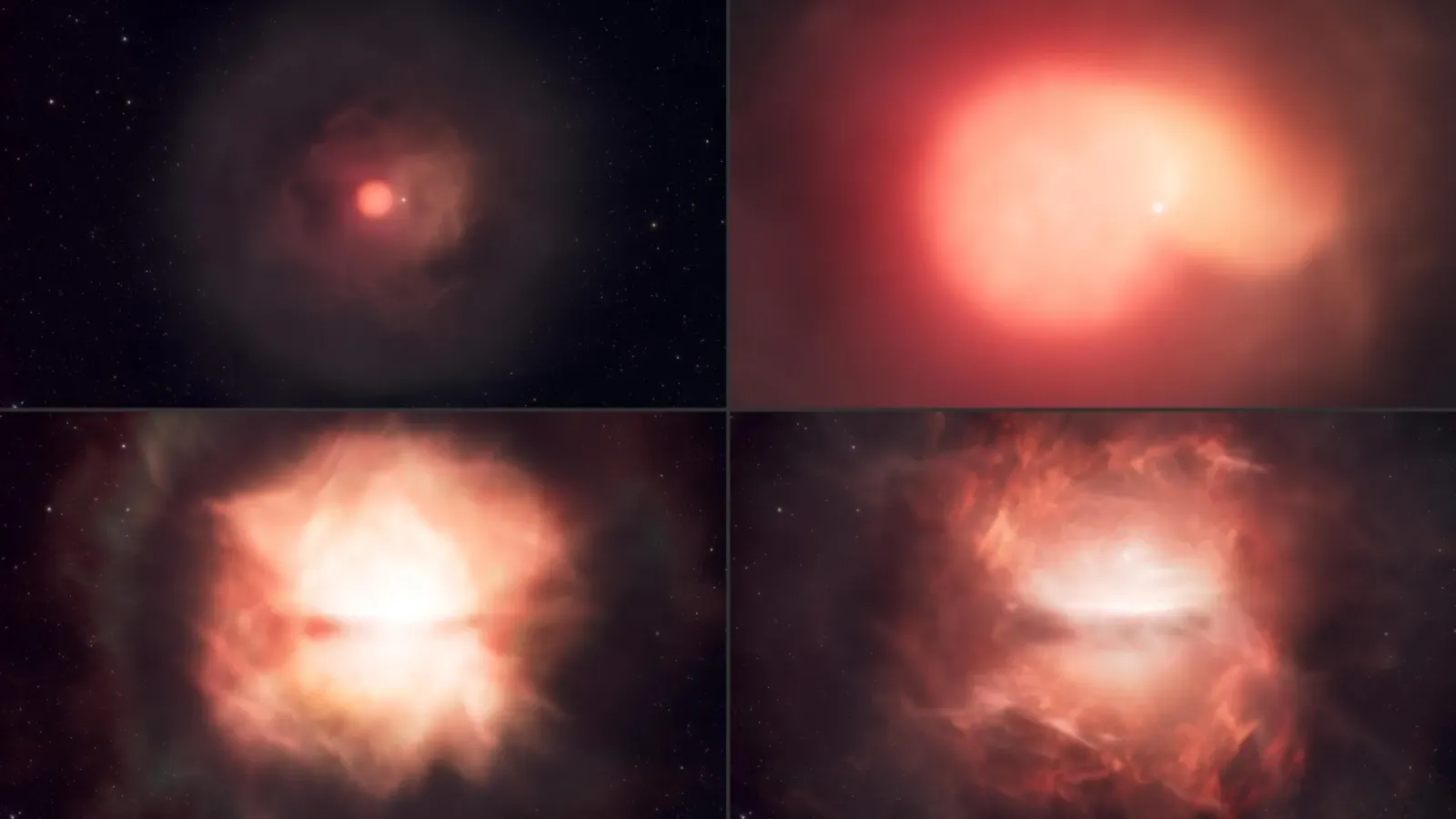
A star swallowed another star. Webb caught the aftermath in 47 days
Astronomers watched a small star spiral into a giant 18,000 times brighter than the Sun in Andromeda, and Webb's 47-day follow-up is rewriting how stellar mergers get studied.