
Taylor Swift Ends a 13-Year CMA Absence With Two Songs and a Career Bookend
The CMAs get a genuine event out of a 13-year wait, and Swift gets a stage that frames her earliest country song and her newest one as a single arc.
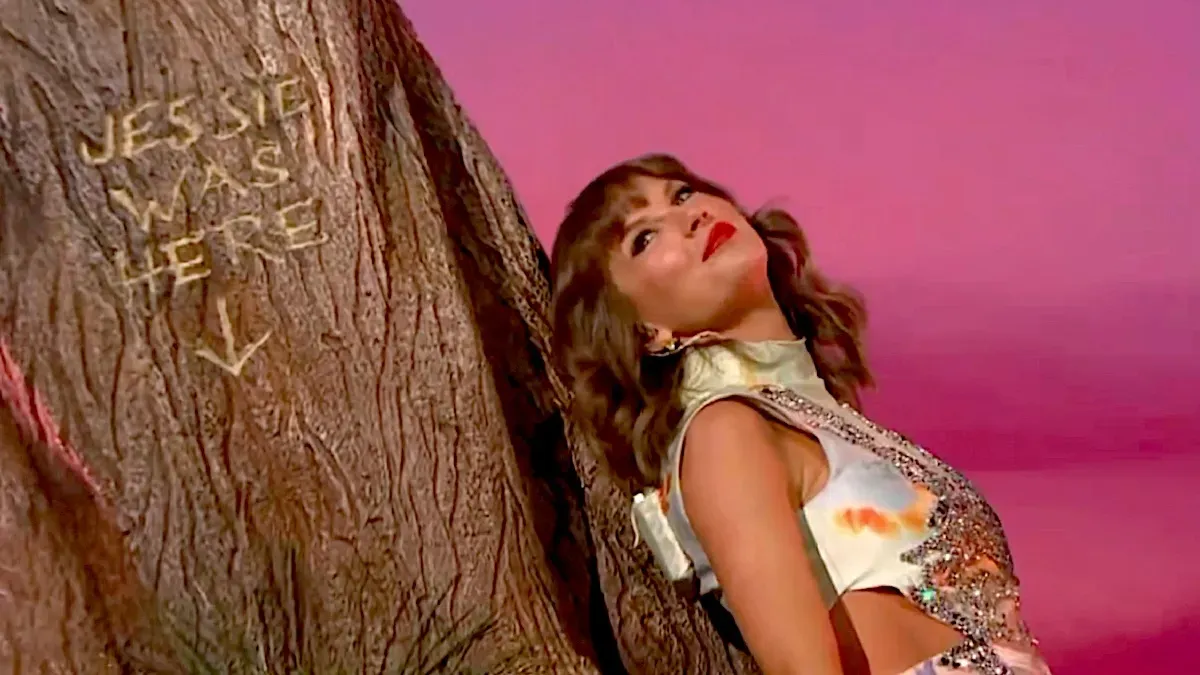
Taylor Swift returned to the CMA Awards stage on Wednesday night for the first time in 13 years, performing "I Knew It, I Knew You" and "Our Song" from opposite ends of her career. For executives in music, media, and live entertainment, the appearance is a case study in how scarcity, staging, and catalog framing turn one booking into a durable asset.
Taylor Swift walked back onto the CMA Awards stage on Wednesday night for the first time in 13 years, and she did not spend the moment on a single song. She performed one track from each end of her career: "I Knew It, I Knew You" and "Our Song." She opened the performance backstage at Nashville's Bridgestone Arena with "I Knew It, I Knew You," then moved into "Our Song," the early track that sits at the other end of her catalog.
The gap she just closed is the real headline. Swift first appeared at the CMAs in 2006, a teenager with a debut record and everything to prove. She went on to win Entertainer of the Year twice, the ceremony's top honor, and in 2013 the CMA gave her the Pinnacle Award, a career-recognition prize. Then she stopped appearing at the show. Wednesday night ended a 13-year absence, which is a long time in any format and close to an eternity in a genre that turns over its roster every few years. Awards shows are built on repetition, and the acts that anchor them usually come back on a predictable cycle. Breaking that cycle is what made this one land.
The staging carried its own message. Opening backstage rather than under the main-stage lights is a production decision, and it buys a specific effect: the audience watches her walk into the room instead of simply appearing in it. Awards-show performances are normally built to be consumed as a three-minute clip. This one was built to be consumed as a narrative, with a beginning, a middle, and a payoff that only lands if you know where she started. That is a harder thing to produce and a much easier thing to remember.
Pairing "I Knew It, I Knew You" with "Our Song" does the same work in miniature. One song represents the present, the other the beginning, and playing them back to back collapses two decades into a single arc. For an artist, that is not just sentiment. It is catalog maintenance at scale: a reminder to a mass audience that the early material still exists, that the new material belongs to the same body of work, and that both are worth revisiting. For any performer whose long-term leverage rests on the durability of a catalog, that framing has real commercial value, and it costs nothing but a set list.
For the CMAs, the booking is the win. Awards shows compete for attention against streaming libraries and short-form video, and a scheduled appearance by a major artist is worth far less than a genuine event. A 13-year absence ending on your stage is an event. It generates the clips, the reaction posts, and the second-day coverage that a broadcast cannot buy directly, and it does so at a moment when every awards show is fighting for the same scarce resource: the audience's willingness to watch live. That is the trade every ceremony makes. Give a star a platform, and borrow their audience for the night.
There is a Nashville dimension too. The CMAs are the country format's flagship night, staged in the city's home arena, and the genre has spent years managing a crossover economy in which its biggest stars drift toward pop while the awards show still depends on them for relevance. Swift's return is a reminder of how porous that boundary has always been. She came up through country, moved to a broader audience, and can still walk back in and command the room. That is a useful data point for every label and manager in town weighing how far an artist can stretch without losing the base that launched them.
The second-order lesson is about scarcity. In a media environment where artists are expected to be constantly available, a 13-year gap turns a single appearance into an asset. The value was not created on Wednesday night; it was accumulated during the years she stayed away. Executives who manage talent, brands, or platforms should read that correctly. Restraint is a strategy, and the return is where it gets monetized. The same logic applies well beyond music, to any founder or executive sitting on a product, a partnership, or a public moment that could be timed rather than spent.
The strategic stakes for peers are straightforward. Live moments are now the scarcest inventory in entertainment, and the artists who control when and how they appear hold the pricing power. Swift just demonstrated the mechanics in front of a national audience: pick the venue, control the framing, and make the return itself the story. The CMAs got their moment. She got a stage that framed her entire career as one continuous, still-running project. Both sides walked away with something neither could have manufactured alone.
This story's Key Insights and Take-aways are locked.
Create a free account to unlock Executive Actions for one credit.
Register to UnlockAlways free for Executives Club members. Join the Club
More in Entertainment

GTA 6 banks $3.8bn in one day, torching every launch record
One game just out-earned every video game launch and every single-day film box office haul in history, and the fallout lands on every media CEO's forecast.

GTA VI Racked Up $3.79 Billion in a Single Day, Topping Every Film Ever
A 13-year wait produced a $3.79 billion day, more than any movie has made in its entire run, and it resets the launch math for every studio, streamer, and brand chasing the same attention.

GTA 6 sells 32.5M pre-sales and $3.79B day one, torches 13-year record
Rockstar's sequel didn't just beat Grand Theft Auto V's 13-year-old benchmark; it reset what a launch can be, with 32.5 million pre-sale copies and $3.79 billion in a single day.