
Ted Hendricks rode a horse into Raiders practice. Madden barely blinked.
As David O. Russell's Madden biopic lands, Ted Hendricks, 79, explains why the coach's unfazed reaction to a horse at the 50-yard line is a management lesson worth stealing.
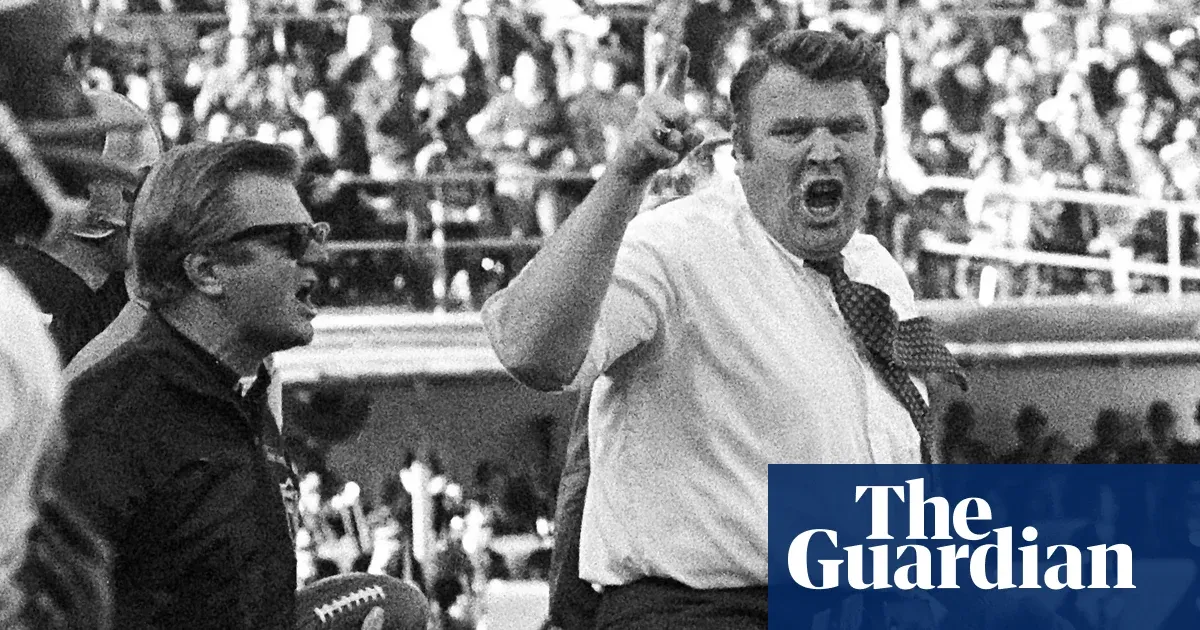
A new David O. Russell biopic centers John Madden, the Raiders coach who became a commentator and then a gaming icon, and Ted Hendricks, 79, remembers riding a borrowed roan horse into a training session in full uniform. Madden's reply, 'All right guys, Ted's here, let's get started,' is a case study for leaders deciding whether to punish a stunt or bank the release it creates.
Ted Hendricks, 79, did not walk into the Oakland Raiders training session. He rode in. Full Raiders uniform, helmet on, an orange traffic cone gripped like a lance, a roan horse borrowed from a nearby stable underneath him, and he pulled up at the 50-yard line. A lot of American football coaches would have met that with a fine, a screaming match, or both. John Madden looked at the man on the horse and said: 'All right guys, Ted's here, let's get started.'
That single line is the whole story, and it is the story Hendricks tells now that a new David O. Russell biopic about Madden has arrived. 'We needed some relief from the intense grind,' Hendricks says of the stunt. 'It was a spur of the moment idea, but put a smile on everyone's face. All Coach said once I dismounted was, "All right guys, Ted's here, let's get started." But I know he got a kick out of it too - just from the look on his face and the comments he made later in interviews.'
Strip out the horse and you have the reason the film exists. The arc here is a three-act career: coach, commentator, gaming icon. Very few people get one act. Madden got three, and the through-line was not polish. It was the unfiltered thing - a man who reacted to a horse at the 50-yard line with a shrug and a practice schedule.
Most executives would fail that test. The horse is a status problem: someone just made himself the center of your meeting, in your workplace, on a borrowed animal. The instinct, drilled into managers for a century, is to reassert the hierarchy immediately. Madden did the opposite and lost nothing. He said the player's name, acknowledged the entrance, and moved to the work. The stunt became a memory instead of an infraction, and the team got the pressure valve it needed.
Hendricks is specific about why that valve mattered: 'We needed some relief from the intense grind.' That phrase is the whole business case. Every high-performing team runs on a tension budget, and the ones that never spend it do not get more disciplined, they get brittle. The manager's real skill is knowing which rule-break is a threat and which is a release. Madden read that in about two seconds, on a field, in front of everyone.
Now the harder part, and the thing that makes a biopic of this man tricky. The asset being packaged is spontaneity. Madden's value, in the telling of people like Hendricks, was that he did not perform a persona; the look on his face and the comments he made later were the same guy. That is the easiest thing in the world to describe and one of the hardest to dramatize, because the moment you script an unscripted man, you have made him into something he was not. The film's bet is that the charm survives the recreation. The horse story is the test case: get that scene right and the audience understands why a football coach became a broadcast fixture and then a gaming icon.
There is a commercial logic underneath the nostalgia. Personalities that refuse to be smoothed down are the ones that scale into franchises: they travel from the sideline to the booth to the console because the voice stays recognizable in every format. Polished, media-trained, risk-managed voices do not make that jump. They are interchangeable, and interchangeable things do not compound. The blunt, unedited character does, which is why the businesses built on Madden's name were buying a temperament as much as a résumé.
The flip side is what any board should hear. A brand anchored to one person's temperament is a single point of failure, and no amount of licensing changes that. The valuable question, for an operator or an investor, is what survives the person. In Madden's case the answer was a gaming business that outlived the coaching and the commentary. In most cases it is nothing, because the temperament was never systematized: it sat in one head, in one voice, and went out with him.
Which is why the horse is worth more than a laugh. It shows the mechanism. Madden's authority did not come from enforcing distance; it came from being legible. Players knew exactly where they stood with him because he reacted like a person rather than a policy. That kind of legibility is the rarest asset in leadership and the only one that survives being handed down, because it can be copied by anyone who watched it happen.
Hendricks, at 79, still remembers the look on the coach's face. That is the whole return on an unfiltered life: the people in the room can quote you decades later, and the quote is not a slogan.
This story's Key Insights and Take-aways are locked.
Create a free account to unlock Executive Actions for one credit.
Register to UnlockAlways free for Executives Club members. Join the Club
More in Entertainment

GTA 6 banks $3.8bn in one day, torching every launch record
One game just out-earned every video game launch and every single-day film box office haul in history, and the fallout lands on every media CEO's forecast.

GTA VI Racked Up $3.79 Billion in a Single Day, Topping Every Film Ever
A 13-year wait produced a $3.79 billion day, more than any movie has made in its entire run, and it resets the launch math for every studio, streamer, and brand chasing the same attention.

GTA 6 sells 32.5M pre-sales and $3.79B day one, torches 13-year record
Rockstar's sequel didn't just beat Grand Theft Auto V's 13-year-old benchmark; it reset what a launch can be, with 32.5 million pre-sale copies and $3.79 billion in a single day.