
Teeth in two Chinese caves push Homo erectus 215,000 years past its extinction date
Nine teeth dated to 184,000 years ago place Homo erectus in a Chinese rainforest alongside the Denisovans, and the proteins sealed inside them may redraw the human family tree.
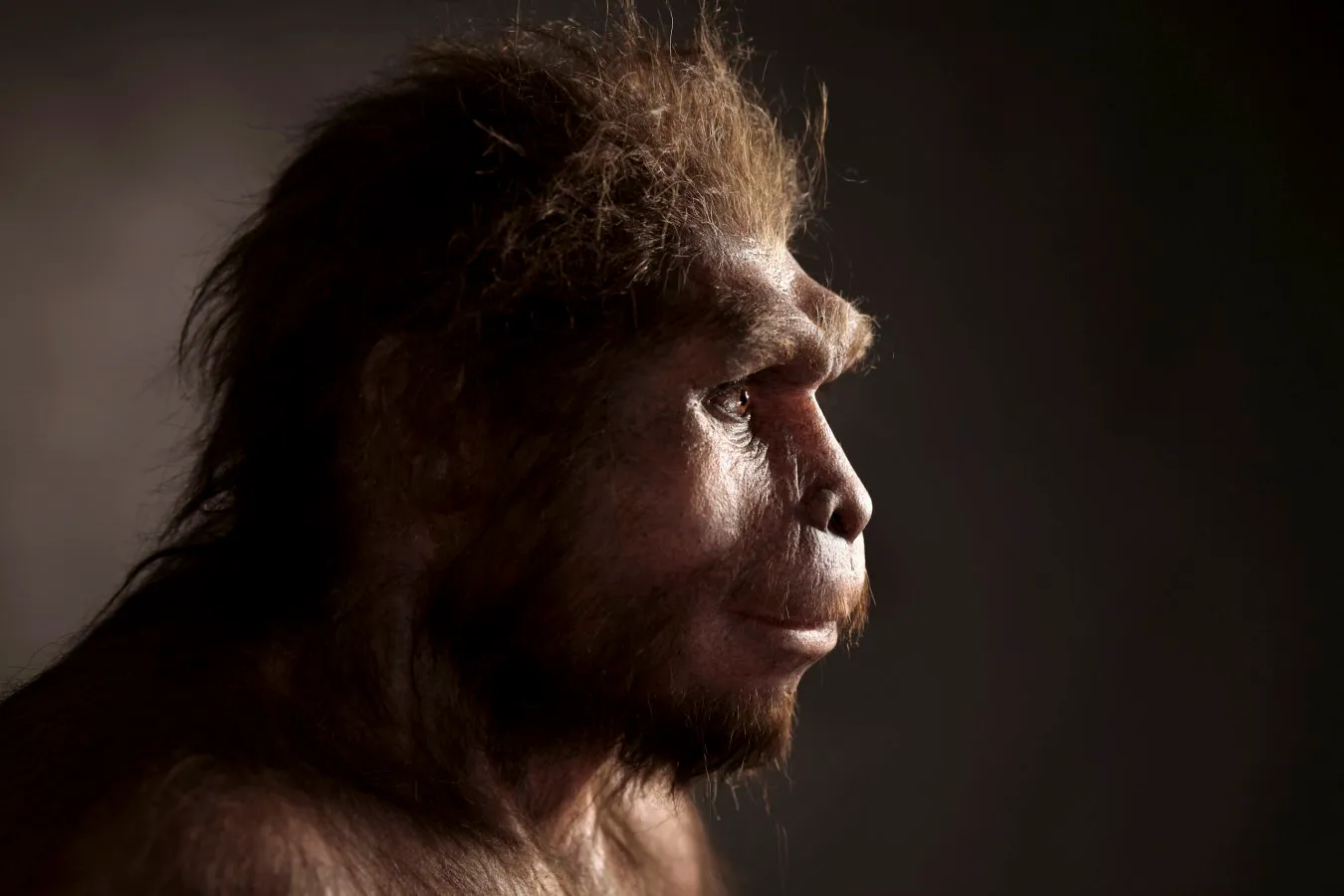
Geochronologist Kira Westaway at Macquarie University and molecular palaeontologist Frido Welker at the University of Copenhagen led work published in Nature showing Homo erectus teeth from two southern Chinese caves date to between 324,000 and 184,000 years ago, 215,000 years later than the species' assumed mainland extinction. The find drops erectus into a tropical rainforest and into the Denisovan window, which means any model of human origins built on clean replacement now needs a coexistence scenario.
Nine teeth pulled from two limestone caves in southern China have pushed Homo erectus 215,000 years past the date the field had quietly assigned it. The teeth, excavated from Baxian and Naxian caves about 15 kilometres apart, date to between 324,000 and 184,000 years ago, according to two papers in Nature. That means the species was still living on mainland Asia as recently as 184,000 years ago, not 400,000 as the fossil record had suggested. "We've got this late surviving population, and we've got this rich story of how they were living," says geochronologist Kira Westaway at Macquarie University in Sydney, one of the leads on the work.
The number that matters most is not the date but the overlap it creates. H. erectus, the first hominin we know for certain walked out of Africa, now shares a stretch of the Asian map with the Denisovans, the enigmatic group that emerged in East Asia around the moment the old timeline had erectus checking out. The prior logic was tidy: erectus disappears around 400,000 years ago, Denisovans show up, one becomes the other. "The assumption would have been that erectus is basically no longer there, because they have evolved into a Denisovan population," says molecular palaeontologist Frido Welker at the University of Copenhagen. That assumption just lost its footing.
The caves were excavated by Chinese teams led by Yingqi Zhang at the Institute of Vertebrate Paleontology and Paleoanthropology in Beijing and Wei Wang at Shandong University. Across both sites they recovered more than 18,000 mammal fossils, among them nine hominin teeth, six from Naxian and three from Baxian. Size, shape and CT scans of internal structure put eight of the nine in H. erectus. To confirm it, the team went after proteins preserved in the dentine, a technique that until recently had worked on only a handful of H. erectus specimens, primarily those described in a study published in May. This time they recovered proteins from five teeth.
The target was ameloblastin. The four teeth identified as H. erectus carried a signature previously seen only in other Asian H. erectus fossils and never in other ancient hominins, which hardened the identification. But the same protein carried an unusual signature elsewhere, one absent from other groups, pointing to a genetically distinct population probably split off by geographic distance. "I can absolutely see how they came to the conclusion that this is a different population," says Sheela Athreya at Texas A&M University. "They were careful to compare it to the entire database they could get a hold of."
The ninth tooth, the one from Baxian that morphology could not pin down, stayed mysterious even after the protein work. Its ameloblastin did not match any known hominin, though the team is careful about what that means, since most hominin fossils have never yielded preserved proteins at all. "We really cannot say at this stage what it is," Welker says. Read that as a live thread rather than a conclusion.
Dating the find took three separate clocks. The researchers dated the teeth directly, the sediments they came out of, and mineral formations in the caves. "They all date different events in the cave, and as long as you understand the events, they do all correlate really well with each other," Westaway says. The convergence put the teeth between 324,000 and 184,000 years old. For context, the most recent H. erectus fossils known anywhere are from Java and are between 117,000 and 108,000 years old, so mainland Asia's last stand now sits just a geological blink before the species' final known appearance on the islands.
The setting is its own surprise. At the time, these caves sat in tropical rainforest, an environment where H. erectus had not previously been found. The animal bones alongside the teeth came from rainforest dwellers, including extinct species of rhinoceros and elephant. Carbon isotopes in the teeth point to a food chain built on trees rather than grasses, and other isotopic evidence points to humid tropical conditions. Strontium isotopes, which record where an individual lived while its teeth were still forming, do not match the ground the teeth were found in. "Their strontium levels do not match the area where they were found," Westaway says, which suggests the group ranged considerable distances through the forest. "It speaks to the ecological flexibility of Homo erectus," says Karen Baab, a palaeoanthropologist at Midwestern University in Arizona. The species lasted roughly 1.9 million years and spread from Africa to Java: "They seemed quite adaptable and flexible in general, because of the incredible range of niches they were occupying."
The broader lesson is about how extinction dates get made. A species' last known appearance is a function of where people have dug and what has survived, not a hard boundary, and H. erectus has now been granted an extra 215,000 years by nine teeth in two caves. Every overlap like this one complicates the clean replacement story of human origins, and it raises the odds that erectus and Denisovans shared more than a continent. The next move is the same one that cracked this case: hunt for ancient proteins in fossils already collected and shelved, because molecular evidence is now doing work that bone shape alone cannot.
This story's Key Insights and Take-aways are locked.
Create a free account to unlock Executive Actions for one credit.
Register to UnlockAlways free for Executives Club members. Join the Club
More in Science

Anthropic's I.P.O. Made Rank-and-File Researchers Worth Tens of Millions
Researchers who joined just a few years ago are now worth tens of millions, and the windfall resets the pay benchmark for every private A.I. lab still paying in paper.

Sea Lion Culling Strategy Fails: New Model Says Killing Them Won't Save Salmon
The latest research from AAAS overturn a long-held conservation assumption, forcing policymakers to rethink critical resource allocation in marine ecosystems.

Microplastics do more than pile up: they react with water to damage cells
Scientists have found that plastic particles can generate highly reactive molecules in water, a mechanism that could explain links to heart attacks, strokes, and neurological disorders.