
The billion-dollar problem: Warren Spector hopes GTA 6 is the last of its kind
Rockstar's record budget proves what a game becomes when it gets unlimited time and money, Spector says, and that is exactly why he argues no one else should try to copy it.
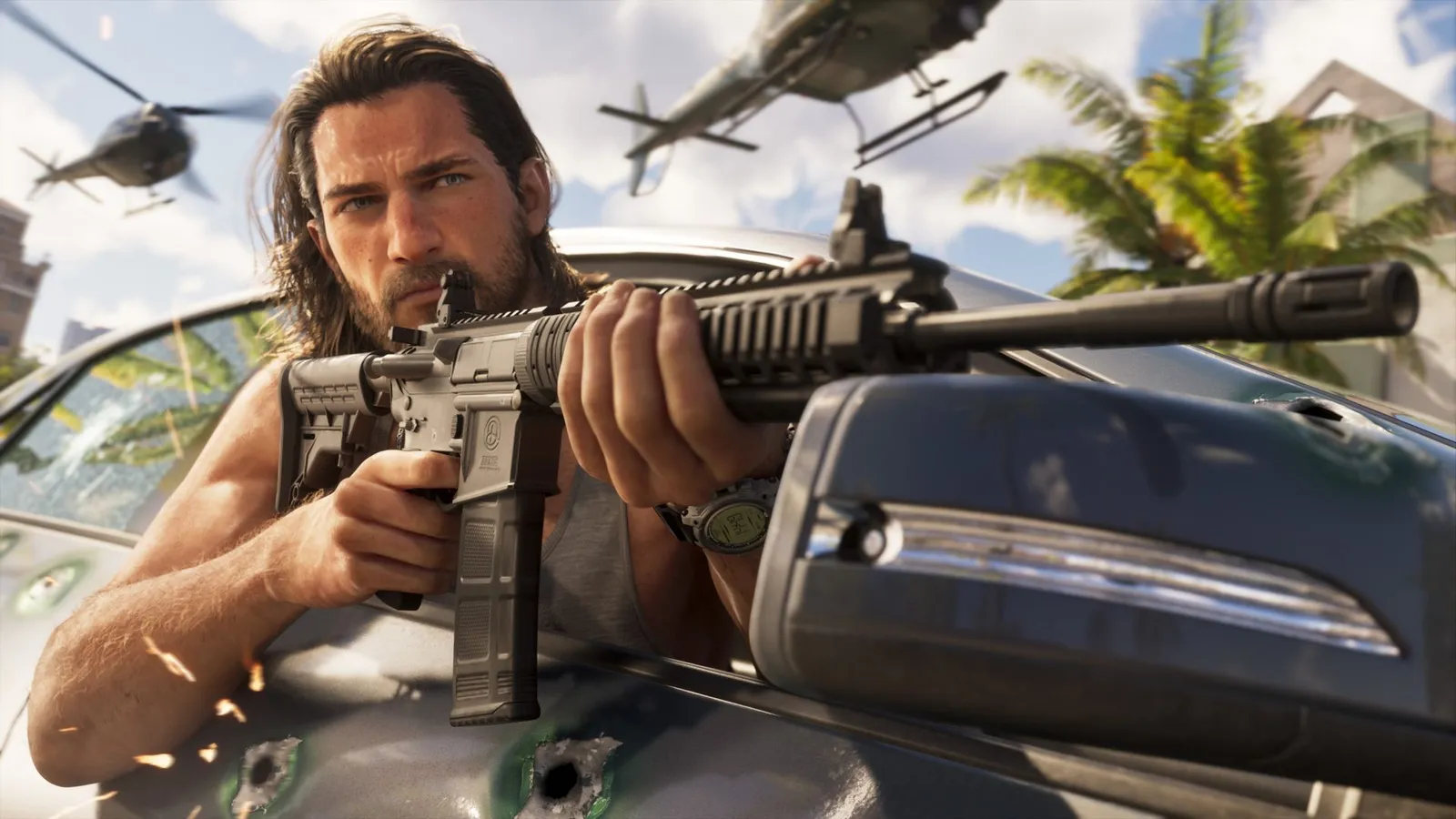
Warren Spector, the game industry legend who retired in August, publicly congratulated Rockstar on Grand Theft Auto 6 while warning that its billion-dollar development cost is not a model other studios can or should emulate. His argument, that a billion dollars funds many games and many salaries while thousands of developers are out of work, lands as publishers consolidate around a shrinking set of proven blockbusters.
Warren Spector, the game industry legend who retired in August, has a message for Rockstar Games about Grand Theft Auto 6, and it is more complicated than congratulations. In a post on LinkedIn, he opens by telling the dev team the game "looks like it will be a high point of sorts for our medium and our business." Then he gets to the part that stings. "Its billion-dollar development cost and an undoubtedly crazy marketing budget don't represent a business model anyone else can or probably should emulate," he wrote. That is the whole argument in one sentence: the biggest game in the world is also the least repeatable.
His case is a headcount case, not an aesthetic one. "That's especially true when thousands of developers are out of work," Spector wrote. "A billion dollars pays for a lot of games and a lot of salaries." Then comes the line that reframes the entire post: "Personally I'd rather have hundreds of games and full employment than one game no matter how amazing it is." Read it slowly, because it is not a complaint about GTA 6's quality. It is a complaint about what a single billion-dollar bet does to the rest of the ledger. One game, however extraordinary, hires a few hundred people for a few years. A billion dollars spread across dozens of projects hires thousands.
Spector is not arguing against ambition, and he is careful to say so. The same post credits GTA 6 with proving a principle he has pushed before: "Give a game the time and money to prove its potential (key word, potential) and you have a chance of making something great. Underfund a game or force it out the door before it's ready guaranteed failure no matter how much potential it has." That is the uncomfortable double edge of his position. Rockstar got the time and the money, and the result looks like a landmark. Almost no one else gets either.
It is hard to read that passage without hearing an autopsy of his own last project. Spector was chief creative officer and creative director at Otherside Entertainment before he retired, and its stealth game Thick as Thieves had a rough path: announced as a PvPvE game, then reworked and scaled back ahead of its early access release, and eventually, as PC Gamer put it, out of money, time, and steam. Same medium, same year, opposite end of the funding curve.
Which is why the ambivalence is not really about one game. Spector is describing an industry shaped like a barbell, where a select crop of proven winners like GTA 6, made by a tiny number of studios, are given whatever resources they need to flourish, and everyone else scrabbles for crumbs. He has been loud about the losing end of that. He blew up in October over the closure of BioWare, then took a few weeks to think about it and came back angrier. The GTA 6 post is the same argument with better manners.
He does not have to make the consolidation point alone. Trick Weekes, a former BioWare stalwart, predicted in September that Electronic Arts would be reduced to "guns and football" following its acquisition by Saudi Arabia's PIF, the kingdom's sovereign wealth fund. So far, per PC Gamer, he does not appear to be wrong. That is the same logic Spector is pointing at, just with a different accent: when capital gets cautious, it pays for the sure thing and the licensed thing, and the strange original thing waits outside.
This pattern is not unique to games. In film, streaming, and publishing, capital has historically crowded toward pre-sold franchises and proven names, because a known quantity is easier to underwrite than a maybe. The cost shows up years later, in a thinner bench of people who ever got to run a project, and in a narrower range of things that get made at all. Games simply make the trade-off unusually visible, because the budgets and the layoffs both arrive with names attached.
Spector closes with the line that gives the whole argument its edge. "Again, congratulations. Ambition and innovation are necessary for the medium to reach its potential," he wrote. "I just hope GTA 6 is the last of its kind even if it's the best we have to offer." For the people running studios and signing the checks, that is the question worth carrying into the next slate review: if the industry's ceiling keeps rising while its floor keeps falling out, what is the actual plan for everyone who is not Rockstar?
This story's Key Insights and Take-aways are locked.
Create a free account to unlock Executive Actions for one credit.
Register to UnlockAlways free for Executives Club members. Join the Club
More in Entertainment

GTA 6 banks $3.8bn in one day, torching every launch record
One game just out-earned every video game launch and every single-day film box office haul in history, and the fallout lands on every media CEO's forecast.

GTA VI Racked Up $3.79 Billion in a Single Day, Topping Every Film Ever
A 13-year wait produced a $3.79 billion day, more than any movie has made in its entire run, and it resets the launch math for every studio, streamer, and brand chasing the same attention.

GTA 6 sells 32.5M pre-sales and $3.79B day one, torches 13-year record
Rockstar's sequel didn't just beat Grand Theft Auto V's 13-year-old benchmark; it reset what a launch can be, with 32.5 million pre-sale copies and $3.79 billion in a single day.