
Ubisoft Credits Nolan's Odyssey for a Sales Bump on an 8-Year-Old Game
Ubisoft's latest financial report says Assassin's Creed Odyssey 'materially benefited' from a major summer movie, and the 90% engagement jump that followed is a playbook for anyone sitting on a dormant catalog.
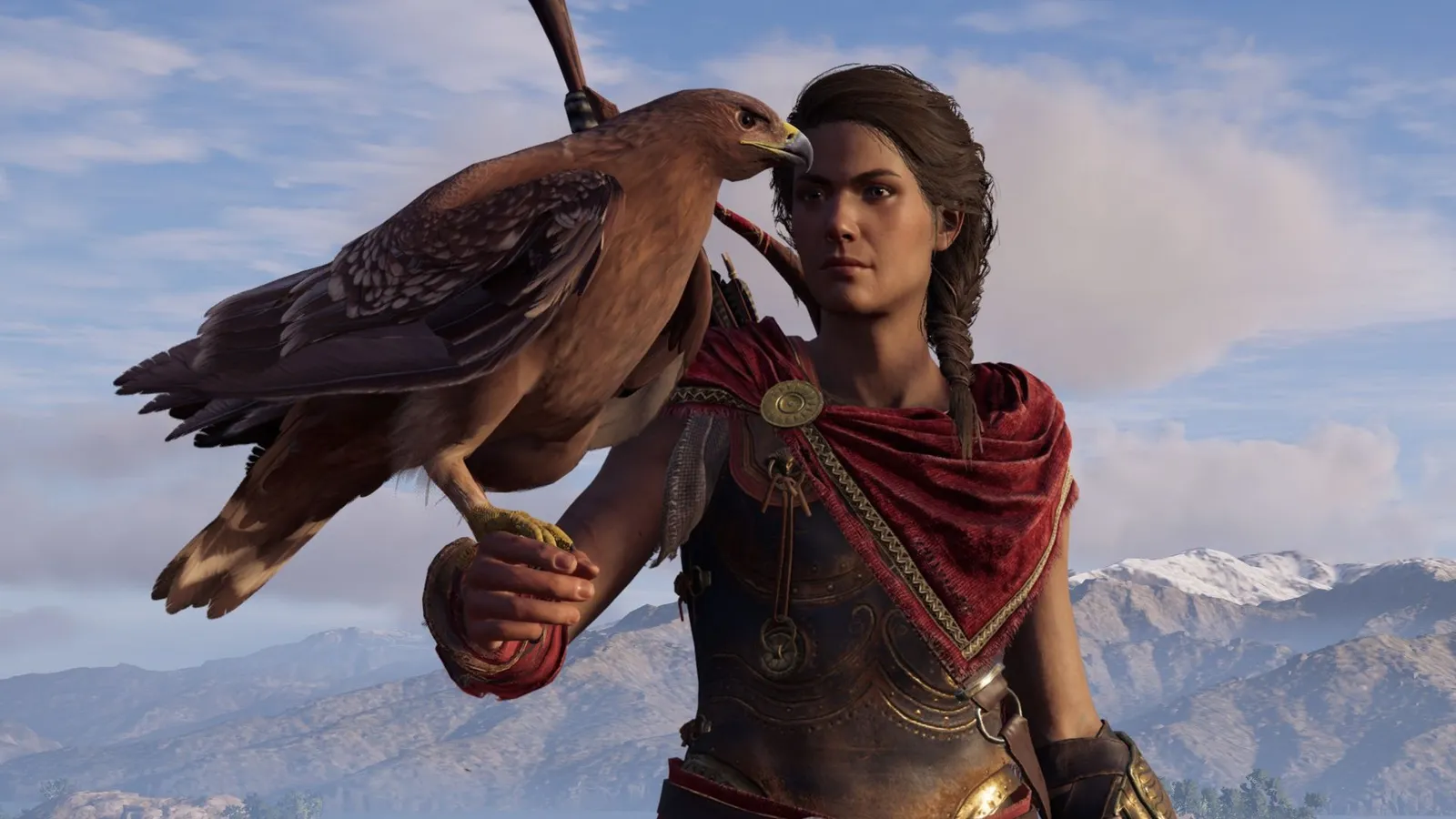
Ubisoft's latest financial report credits 'a major summer movie,' Christopher Nolan's The Odyssey, with materially benefiting sales of its 2018 game Assassin's Creed Odyssey, while confirming Assassin's Creed Valhalla passed 40 million players. For executives, the disclosure reframes back catalogs as assets that can be reactivated by cultural timing rather than new production spend.
Ubisoft has confirmed what players and analysts clocked months ago: Christopher Nolan's The Odyssey sold video games. In its latest financial report, the publisher says Assassin's Creed Odyssey "materially benefited from the release of a major summer movie," a line that never names the film outright but points squarely at Nolan's Greek-set blockbuster. The two share a setting, a title, and now, according to Ubisoft, a measurable commercial relationship. It is a rare thing for a publisher to credit a movie for moving units of a game that shipped years earlier, and rarer still to do it inside an earnings document.
The numbers behind that sentence are the interesting part. Alinea Analytics reported a 90% jump in player engagement in July, following the film's release. Odyssey also became the highest-rated game in the Assassin's Creed series on Steam on the back of the summer bump. For an eight-year-old single-player RPG with no new content, no live-service season, and no sequel to promote, those are unusual figures. Ubisoft stacked a second milestone on top: Assassin's Creed Valhalla has now passed 40 million players. The company also noted that "the rest of the Assassin's Creed catalog also performed strongly, supported by effective promotional campaigns."
That last line is the tell. Game catalogs historically behave like depreciating assets: they sell hard at launch, taper, then sit quietly until a remaster or a deep discount revives them. What Ubisoft is describing is closer to a demand shock imported from another medium entirely. A film release is, in effect, a free global marketing campaign aimed at exactly the audience a publisher wants, and it costs the publisher nothing. The only requirements are that the game already exists, already works, and already occupies the right genre and setting.
Ubisoft is not being shy about the timing. "The franchise will celebrate its 20th anniversary next year," the report says. "This is a major milestone for the brand, which is preparing a year of reveals, updates, rewards, and community moments." Read those two disclosures together and the strategy is legible: a catalog that can still generate revenue on the back of someone else's blockbuster is a catalog worth celebrating loudly, and an anniversary year is the cheapest possible moment to convert film-driven curiosity into franchise loyalty.
The pattern is not unique to Ubisoft. GamesRadar+ noted that the Assassin's Creed Odyssey and Marvel's Spider-Man resurgence "proves that games don't always need new content - sometimes they just need Hollywood." That is a real shift in how back catalogs get valued. For years, the industry's answer to a quiet title was more content: DLC, seasons, remasters, remakes. The cheaper answer, increasingly, is timing. Slot your existing library against a cultural moment that shares its DNA and let the audience do the discovery work.
For executives outside gaming, the lesson travels. Any company sitting on a deep library of content, software, or IP should be asking whether its release calendar is mapped against the cultural calendar, not just its own. Film slates, streaming premieres, sports moments, and even news cycles create demand spikes that a well-positioned catalog can absorb at near-zero marginal cost. The constraint is not production capacity. It is knowing what you own and when the world will suddenly care about it.
There is a caveat, and it matters. The film did not make a bad game sell. It made a good one sell again. GamesRadar+'s 2018 review gave Assassin's Creed Odyssey a 5/5 and wrote: "No-one's made an open-world RPG with this much depth and brilliance since The Witcher 3." Quality is the precondition; the movie is the accelerant. A publisher with a mediocre catalog and a lucky release-date collision gets a spike in curiosity and a wave of refunds. A publisher with a strong one gets a second life.
That is the strategic stake for anyone running a portfolio business right now. The report offers a small, concrete data point: an eight-year-old game, no new content, a 90% engagement jump, and a top Steam rating, all triggered by a film Ubisoft had no hand in making. The playbook is not "make more content." It is "own something good, then be ready when the culture comes looking for it."
This story's Key Insights and Take-aways are locked.
Create a free account to unlock Executive Actions for one credit.
Register to UnlockAlways free for Executives Club members. Join the Club
More in Entertainment

GTA 6 banks $3.8bn in one day, torching every launch record
One game just out-earned every video game launch and every single-day film box office haul in history, and the fallout lands on every media CEO's forecast.

GTA VI Racked Up $3.79 Billion in a Single Day, Topping Every Film Ever
A 13-year wait produced a $3.79 billion day, more than any movie has made in its entire run, and it resets the launch math for every studio, streamer, and brand chasing the same attention.

GTA 6 sells 32.5M pre-sales and $3.79B day one, torches 13-year record
Rockstar's sequel didn't just beat Grand Theft Auto V's 13-year-old benchmark; it reset what a launch can be, with 32.5 million pre-sale copies and $3.79 billion in a single day.