
US Loses Measles Elimination Status After 26 Years. RFK Jr's Problem Now
America is officially endemic for measles again, and the reversal lands on Health Secretary Robert F. Kennedy Jr just as newly elected Democrats make health a priority.
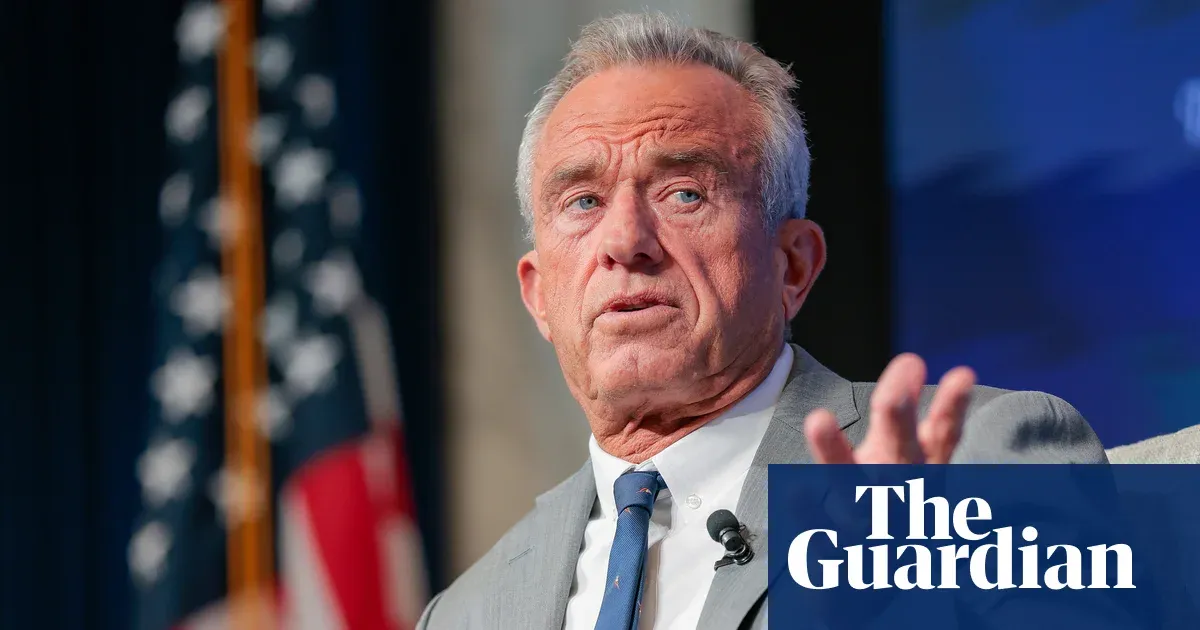
The United States has lost its measles elimination status after 26 years, an official recognition that the disease is endemic in the country again, arriving at an already difficult moment for Health Secretary Robert F. Kennedy Jr and his Make America Healthy Again movement. For decision-makers, the reversal converts a scientific milestone into a political and operational problem: oversight fights, state-level outbreak costs, and fresh scrutiny of the federal health apparatus.
The United States has lost its measles elimination status, the Guardian reported this week, an official recognition that the disease is now endemic in the country after 26 years of being considered eliminated. That phrase, "elimination status," sounds bureaucratic. It is not. It is the public health equivalent of a clean bill of health: a country has gone long enough without continuous transmission that the virus is no longer circulating on its own soil. Losing it means measles is no longer a visitor. It is a resident. Guardian US health reporter Jessica Glenza walked host Ian Sample through what that means in practical terms for Americans, and the short version is that a disease most adults under 40 have never had to think about is now part of the baseline.
The timing could hardly be worse for Health Secretary Robert F. Kennedy Jr. The Guardian frames the loss as arriving at an already difficult moment for him and for his Make America Healthy Again movement, the banner under which he has driven the federal health conversation. A movement whose premise is making Americans healthier now has to account for a vaccine-preventable disease re-establishing itself in a country that had declared it gone. The pressure is not coming from one direction either. Newly elected Democrats, according to the Guardian's reporting, are preparing to make health a central focus, which turns a scientific milestone into a live political fight.
Some definitions matter here, because "eliminated" and "eradicated" are not the same thing, and the gap between them is where this story lives. Elimination means a disease is no longer spreading continuously within a given country, even though it still exists elsewhere in the world and can be reintroduced by travel. Eradication means the pathogen is gone globally, which has happened once in human history, with smallpox. The US was declared to have eliminated measles around the turn of the millennium, and the 26 years the Guardian cites is that run. Endemic status is the reversal: sustained transmission inside the borders, no longer dependent on imported cases to keep going.
Why measles specifically? Because it is among the most contagious viruses known to medicine, and that changes the math on everything. Outbreaks do not need a large unvaccinated population to take hold; they need a clustered one. Historically, public health officials have described the immunity threshold required to stop measles from spreading as very high, higher than for almost any other routine childhood disease, which means small drops in coverage can produce outsized consequences. That is the mechanism behind what the Guardian is describing: not a sudden collapse, but a slow accumulation of gaps that eventually lets a virus back in and lets it stay.
For Kennedy, the political exposure is structural. MAHA has spent its capital arguing that the country's health problems are bigger than any single intervention, and that chronic disease, nutrition, and environmental exposure deserve the spotlight. Measles does not negotiate with that framing. It is a textbook case of a disease that responds to one thing: population immunity. The Guardian's reporting places the elimination loss squarely in the context of a difficult stretch for the secretary, and it is easy to see why. Every outbreak cluster becomes a data point in an argument he did not choose to have.
In practical terms for citizens, endemic measles typically means a few things. Clinicians have to keep it on the differential diagnosis again, which matters because early measles resembles a lot of other viral illnesses and is most contagious before the rash appears. Schools, daycares, and universities become frontline settings, since they concentrate exactly the populations where transmission moves fastest. Households with infants too young to be fully vaccinated, people on immunosuppressive treatment, and anyone who cannot be vaccinated for medical reasons carry the sharpest risk. And travel, both domestic and international, becomes a vector rather than an abstraction.
What to watch next is where the story gets concrete. Newly elected Democrats have signaled health as a priority, and oversight of the federal health apparatus is the most obvious lever: hearings, document requests, and funding fights that force the department to defend its posture in public. State and local health departments, which do the actual outbreak response, are typically the ones absorbing the operational cost. Watch whether elimination status becomes a recurring line of questioning, and whether it reshapes the political coalition around MAHA heading into the next election cycle.
The strategic stakes reach past Washington. Hospital systems and insurers price risk on the assumption that certain diseases are historical. Employers with large frontline or hourly workforces face absenteeism and liability questions when a highly contagious illness circulates. Global health partners watch US status because American outbreaks feed international transmission chains. And for any leader running an institution on a health or science promise, the lesson is blunt: credibility is built on outcomes, and outcomes are measurable. Twenty-six years of elimination was one of American public health's quietest wins. Losing it is a loud one.
This story's Key Insights and Take-aways are locked.
Create a free account to unlock Executive Actions for one credit.
Register to UnlockAlways free for Executives Club members. Join the Club
More in Science

AI that nails brain-activity tests may be solving them the wrong way
A new discovery suggests strong neural-prediction scores do not prove a model works like the brain, a warning for labs, neurotech investors, and anyone selling brain-like AI.

Scientists Want to Test Whether a Clock Can Run on Two Flows of Time
An atomic-clock experiment has been proposed to catch a never-observed quantum effect, a result that would redraw the boundary between time and gravity.

A star swallowed another star. Webb caught the aftermath in 47 days
Astronomers watched a small star spiral into a giant 18,000 times brighter than the Sun in Andromeda, and Webb's 47-day follow-up is rewriting how stellar mergers get studied.