
Van Gogh's last-year canvas sells for record $190.4m after Nazi-history row
A record price for the artist, and proof that a contested ownership history is now a line item in what the world's best art is worth.
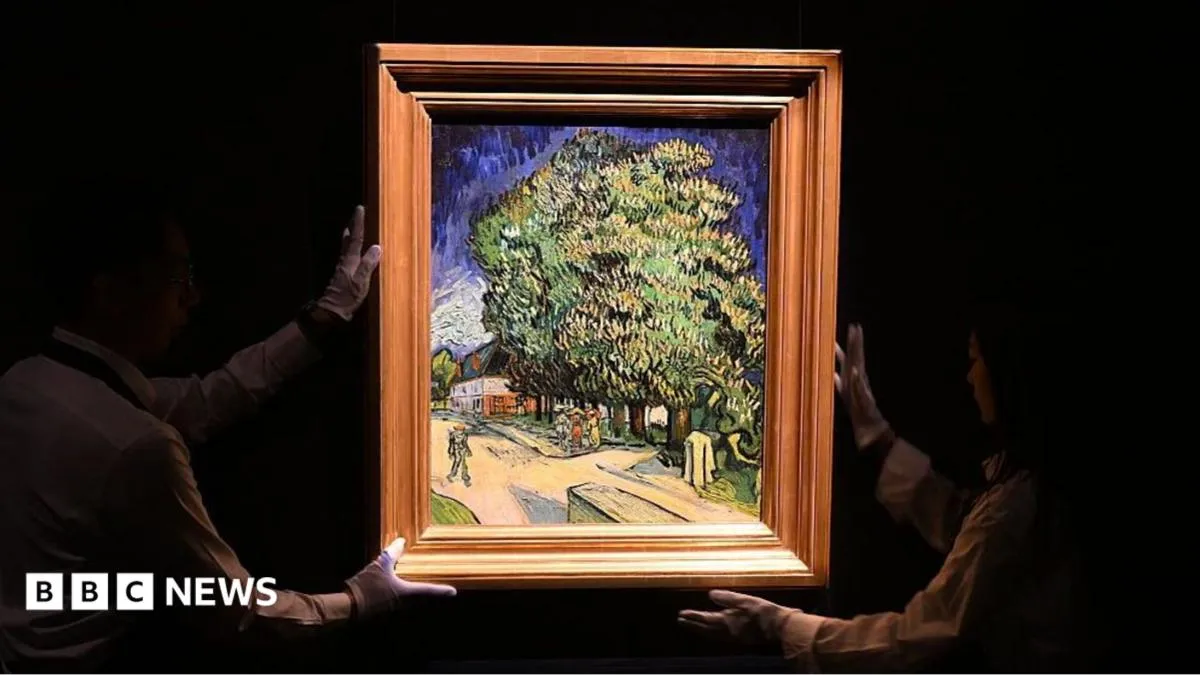
Vincent van Gogh's Chataigniers en fleurs, painted in 1890 during the final two months of his life, has sold for $190.4m, a record for the artist, after a row over its Nazi-era history. For collectors, museums and their advisers, the sale confirms that provenance risk is now priced into the top of the art market rather than resolved before it.
Vincent van Gogh's Chataigniers en fleurs has sold for $190.4m, a record for the artist, and the number arrived with a fight attached. The 1890 canvas, painted in the final two months of van Gogh's life, changed hands only after a row over its Nazi-era history, the BBC reports. Read that again in market terms: a record price for a van Gogh, and a provenance dispute sitting directly underneath it. The two facts are not in tension. They are the same fact. At the very top of the art market, the story of who owned a painting, and under what pressure they let it go, is now part of what the painting is worth.
Chataigniers en fleurs, chestnut trees in blossom, dates from 1890, the year van Gogh died. The paintings from those final months are the ones collectors chase hardest, because they come from a stretch when the artist was producing at a rate and intensity he had never sustained before. Scarcity does the rest. Van Gogh's best-known canvases are effectively locked up in museums, so when a late work reaches the open market, the buyer pool is not limited to people who love the picture. It includes institutions, private collectors and family offices treating the work as a store of value that happens to hang on a wall.
The row over the painting's Nazi-era history is the part that matters most for anyone who signs off on acquisitions. Between 1933 and 1945, Jewish owners across Europe were forced to sell, flee, or lose art outright, and the resulting gaps in ownership records have shadowed the market ever since. The Washington Principles, agreed by dozens of countries in 1998, set out a non-binding expectation that governments and institutions would identify looted art, publicise what they found, and seek just and fair solutions with the families involved. Auction houses and museums typically respond by researching provenance back through the war years before a work is offered or accepted. The BBC report does not detail how this particular dispute was resolved, only that it existed and that the sale went ahead.
Strip out the history and the mechanics are familiar. The top of the art market is a thin, trophy tier where a handful of works a year clear nine figures, and where the identity of the buyer is often never disclosed. Deals at this level typically involve guarantees, an arrangement in which the auction house or a third party promises the seller a minimum price in exchange for a cut of any upside, which is one reason headline numbers can be announced with confidence. For the seller, a record is a record. For everyone watching, the interesting question is what the buyer had to accept on the way in: a contested provenance, a public argument, and a title that will follow the painting into every catalogue, loan request and insurance policy for as long as it exists.
For museum boards, the lesson is blunter. A gift or a purchase with a contested provenance is not just an ethical question, it is a balance-sheet and reputational one. Trustees who accept a work without a documented ownership chain can find themselves defending a restitution claim years later, with legal costs, press coverage and donor relationships on the line. That is why provenance research has moved from a curatorial nicety to a governance item, and why some institutions now walk away from works they would once have fought for. The van Gogh sale suggests the market has learned to price the risk rather than avoid it.
For private buyers and the advisers who run their money, the takeaway is that provenance is now a valuation input, not a footnote. A clean ownership history supports a premium; a contested one can narrow the buyer pool, complicate resale, and turn a trophy into a talking point. Family offices that hold art alongside equities and property should expect the same questions they apply elsewhere: who owned this before, on what terms did they part with it, and what happens if a claim surfaces in ten years. The $190.4m answer here is that a buyer was willing to take that risk at a record price.
That is the real signal in the van Gogh sale. The art market's ceiling keeps rising, and the paperwork underneath it keeps getting heavier. Anyone who treats a masterpiece as a simple asset is now underwriting a legal history as well as a canvas. The record belongs to van Gogh. The cautionary tale belongs to whoever buys the next one.
This story's Key Insights and Take-aways are locked.
Create a free account to unlock Executive Actions for one credit.
Register to UnlockAlways free for Executives Club members. Join the Club
More in Entertainment

GTA 6 banks $3.8bn in one day, torching every launch record
One game just out-earned every video game launch and every single-day film box office haul in history, and the fallout lands on every media CEO's forecast.

GTA VI Racked Up $3.79 Billion in a Single Day, Topping Every Film Ever
A 13-year wait produced a $3.79 billion day, more than any movie has made in its entire run, and it resets the launch math for every studio, streamer, and brand chasing the same attention.

GTA 6 sells 32.5M pre-sales and $3.79B day one, torches 13-year record
Rockstar's sequel didn't just beat Grand Theft Auto V's 13-year-old benchmark; it reset what a launch can be, with 32.5 million pre-sale copies and $3.79 billion in a single day.