
Vance Won't Say the Iran War Was Worth It. That Refusal Is the Story
Asked point-blank whether the Iran war was worth it, the vice president handed the verdict to the president and kept the job of supporter, a dodge that leaves the conflict's political outcome unresolved.

Vice President JD Vance declined to say whether the Iran war was worth it, telling an interviewer that "The president is the one who makes the decision... and my job is to support the president." For executives and boards, the non-answer is a political-risk signal: when a senior official will not underwrite a verdict, the policy path stays open and the uncertainty premium stays priced in.
Vice President JD Vance was asked whether the Iran war was worth it. He would not say. Instead of a yes or a no, he offered a division of labor: "The president is the one who makes the decision... and my job is to support the president." That is the whole of it. No caveat, no qualification, no retrospective verdict on a conflict the administration is bound up in. The refusal is the news, and it is a refusal that tells you more than a scripted answer would have.
Start with what the sentence actually does. It performs two moves in one breath. First, it relocates the question: the decision, Vance says, belongs to the president, not to him. Second, it claims a role: supporter, not judge. Both moves are deliberate. "Was it worth it" is not a policy question, it is a verdict question. Answer yes and you bind the administration to a retrospective judgment it may not want to defend in six months. Answer no and you have broken with your own principal on the record. The only move that costs nothing today is the one Vance made.
That instinct is baked into the office. The modern vice presidency is constitutionally thin, a presiding officer's chair with a tie-breaking vote, and politically enormous, because the job is defined almost entirely by proximity to the president. Historically, that has made the vice president the administration's most disciplined messenger: the last person in the room and the first person sent out to defend what the room decided. Vice presidents have typically been asked to absorb the hardest questions so the president does not have to. On that score, Vance's answer is textbook. He took the question and returned it to its sender.
But message discipline has a tell, and this is it. In politics, the absence of a yes is frequently read as a no. A flat affirmative would be one sentence long and would cost a vice president nothing if he believed it. What Vance delivered instead was a jurisdictional answer to a moral and strategic question. Read one way, that is loyalty. Read another, it is distance, carefully worded so that it can never be quoted as disloyalty. Both readings are available, and the fact that both are available is precisely why the exchange traveled.
For anyone with capital exposed to the region, the ambiguity matters more than the quote. Wars are priced. Conflict risk shows up in crude benchmarks, in shipping and war-risk insurance premiums, in defense procurement timelines, in sanctions compliance costs, and in the discount rate a board applies to any project with a supply chain running through the Middle East. Executives allocating capital need two variables above all others: how long, and how does it end. Political systems that will not render a verdict on a war keep both variables fuzzy, and fuzzy variables get priced as a premium. A vice president who declines to say the war was worth it is, functionally, telling the market that the political verdict is still open. Open verdicts can be reversed. Reversible policy is expensive policy.
There is a second-order read that matters just as much. Vice presidents are typically viewed as heirs apparent, and heirs apparent carry a specific burden: they inherit the record they helped build. A deputy who keeps a contested verdict at arm's length preserves optionality. He can defend the decision as a matter of process, which is what Vance did, without personally underwriting the outcome. That is not a small thing. It is the difference between owning a war and staffing one.
The playbook Vance reached for is not unique to politics. "My job is to support the president" is the same sentence every chief operating officer, every deputy secretary, and every division head has used when a decision above their pay grade starts to look expensive. It works, right up until it does not. The shelf life expires the moment the principal needs the deputy to own the call and the deputy will only own the process. At that point the gap between decision and defense becomes the story, and everyone downstream notices. Boards should read a deputy's non-answer as a signal about the decision itself, not as a communications slip.
What to watch from here is narrow and specific. Does Vance repeat the formulation under pressure, or does he eventually supply the verdict he withheld? Does the White House supply it for him? And does the question keep getting asked, because in Washington a question that keeps getting asked is a question that has not been settled. Vance answered the question about who decides. He did not answer the question about whether it was worth it. That second question is still open, and it is the one that will follow him.
This story's Key Insights and Take-aways are locked.
Create a free account to unlock Executive Actions for one credit.
Register to UnlockAlways free for Executives Club members. Join the Club
More in Politics
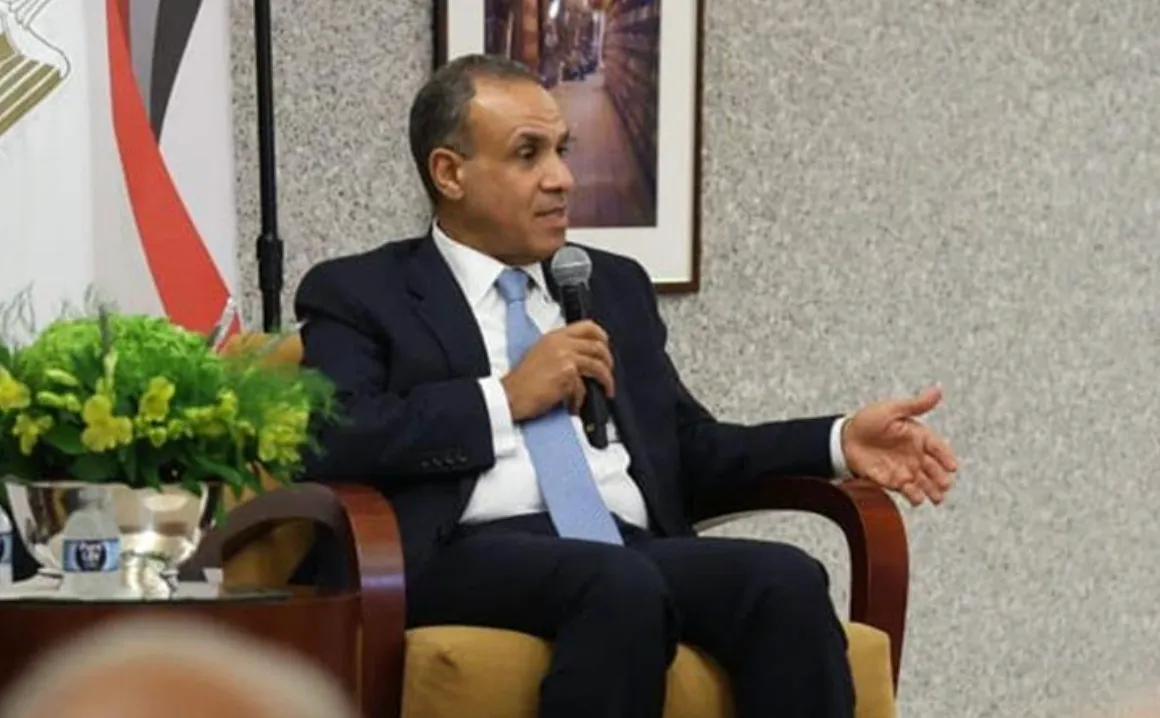
Egypt's foreign minister: Hamas must hand over weapons for Gaza phase two
Badr Abdelatty tells Asharq Al-Awsat that Cairo is pressing Palestinian factions to implement weapons understandings, and that phase two of Trump's Gaza plan hinges on every party, Israel included, meeting its commitments.

Emilija Morrison escaped Neet life. Her new job is just as precarious
A Glasgow graduate with an NCTJ diploma welcomes the government's youth jobs plans, but warns that a paycheque without security is not an exit from Neet life.
Ministers lift gagging clauses at UK data watchdog ahead of culture probe
Staff at the Information Commission can now describe their workplace without contractual silence, and ministers are due to publish the review's terms next week.