
Voyager 1 hit one light-day from Earth. Then its data went dark
NASA's 49-year-old probe is now 16 billion miles out and the first human object to reach one light-day, but a Nov. 14 telemetry failure means every fix takes two days just to diagnose.
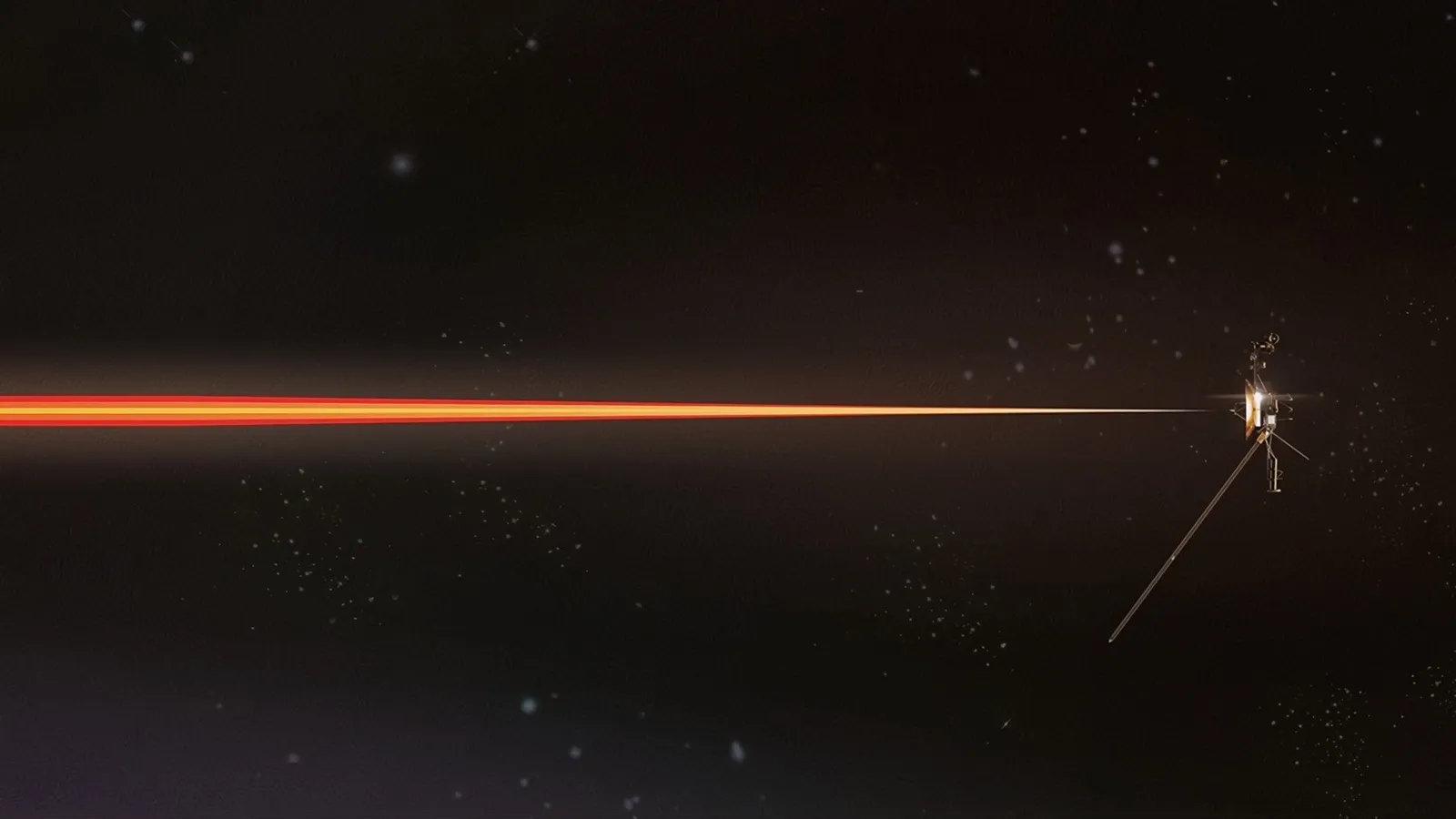
Voyager project manager Suzanne Dodd and NASA's Jet Propulsion Laboratory team celebrated Voyager 1 becoming the first human-made object to reach one light-day from Earth on Nov. 18, even as the probe stopped returning science and engineering data on Nov. 14. For leaders running long-lived, remote, or irreplaceable assets, the episode is a case study in operating hardware you cannot touch, where every diagnosis takes two days and the contingency plan matters more than the fix.
At 5:16 a.m. EST (1016 GMT) on Wednesday, Nov. 18, Voyager 1 became the first human-made object to reach one light-day from Earth. That is the distance a photon travels in a single day, roughly 16 billion miles (26 billion kilometers), and it means a signal now takes a full 24 hours to reach the probe and another 24 hours to come back. Then came the reversal. On Saturday, Nov. 14, Voyager 1 stopped transmitting science and engineering data, JPL spokesperson Raquel Villanueva told the room at NASA's Jet Propulsion Laboratory in Pasadena, California. The team is still talking to the spacecraft. It just cannot hear what the spacecraft is saying.
"We listen to each spacecraft every day," Voyager project manager Suzanne Dodd told Space.com at the event. "We have an anomaly that is not something unseen before. We do have a very strong carrier signal. We currently don't have a frame sync, so we're not getting the science or engineering data currently." The carrier signal is the heartbeat; the frame sync is the chart. Dodd's diagnosis window is brutal by design: "one light-day is very far from us. [It takes] 24 hours to get the signal to the spacecraft, 24 hours for the signal to come down, so it takes two days to diagnose anything on the spacecraft... So we can't do anything fast, and the data rates are very low." She is nonetheless confident. "I'm confident that it won't be too long, and it will send us data back."
The milestone itself was worth the tears. The Thursday press conference at the Von Karman auditorium was the first Voyager event of its kind since 1989, when Voyager 1's twin, Voyager 2, flew past Neptune. "I remember in 1977 I was standing at the Cape watching Voyager launch, and I never thought I would be here today, 49 years later, to celebrate Voyager's one light-day. What an incredible milestone," Voyager project scientist Linda Spilker said during the event.
Dodd frames the glitch as ordinary entropy rather than crisis. "These spacecraft are old," she said. "All of us old people have our aches and pains, and you know, sometimes it takes longer to stretch out your muscles and remember things, and so we are in a realm where we're going to see more anomalies with Voyager just due to the distance and the age." The twin is holding up better: "Voyager 2 is very healthy. It's continuing its mission. It has three scientific instruments on it," Dodd said. "Each spacecraft is basically setting a record every day for longevity or distance."
The celebration went global. Landmarks lit up gold in honor of the mission's Golden Record, and footage of children cheering rolled in from around the world. Nicky Fox, NASA's associate administrator for the Science Mission Directorate, nearly lost it. "I actually thought I was going to start sobbing," Fox joked to Space.com. "I think just hearing children's voices and people saying 'We love you, Voyager,' 'Go Voyager' - it just was amazing." Fox had started early: she and writer/producer Ann Druyan, wife of the late astronomer Carl Sagan, whose work helped create the Golden Record and who brought the "pale blue dot" image of Earth to the public, lit the Empire State Building gold on Tuesday evening, Nov. 17. Fox wore golden Voyager-inspired nail polish crafted by her daughter.
NASA astronaut Jessica Watkins beamed a message down from the International Space Station, 250 miles (400 kilometers) above Earth. "While you have been traveling into the unknown for nearly half a century, helping pave our path, together, our two journeys tell a single story of exploration," Watkins said, noting the station has hosted continuous crew for 26 years and hundreds of visitors from around the world. "You represent the very best of what humanity has to offer." She signed off with a weightless backflip.
For anyone running a long-lived asset, the operational lesson is the story. Voyager was built for a five-year mission and has now flown for nearly 50. The team spans people in their 20s to their 90s, and one attendee worked on the mission before it was even called Voyager. That is what institutional memory looks like when the hardware outlives every org chart that touched it. The probe cannot be serviced, upgraded, or rebooted by hand. Every intervention is a two-day round trip at low data rates, which means the real engineering product is not the fix, it is the contingency plan written years before the failure.
Voyager 1 is pointed at Earth, sending a strong carrier signal, and beginning what the mission team calls its post-one-light-day era. The distance record will stand for a long time. The harder record to match is the one the team set on the ground: keeping something alive for 49 years, across generations, with no ability to reach out and touch it.
This story's Key Insights and Take-aways are locked.
Create a free account to unlock Executive Actions for one credit.
Register to UnlockAlways free for Executives Club members. Join the Club
More in Science

Anthropic's I.P.O. Made Rank-and-File Researchers Worth Tens of Millions
Researchers who joined just a few years ago are now worth tens of millions, and the windfall resets the pay benchmark for every private A.I. lab still paying in paper.

Sea Lion Culling Strategy Fails: New Model Says Killing Them Won't Save Salmon
The latest research from AAAS overturn a long-held conservation assumption, forcing policymakers to rethink critical resource allocation in marine ecosystems.

Microplastics do more than pile up: they react with water to damage cells
Scientists have found that plastic particles can generate highly reactive molecules in water, a mechanism that could explain links to heart attacks, strokes, and neurological disorders.