
Vulcan's Failure Is a Heavy Blow to Amazon, NASA and the Space Force
United Launch Alliance's next-generation rocket just handed its three most important customers a schedule problem they cannot easily route around.
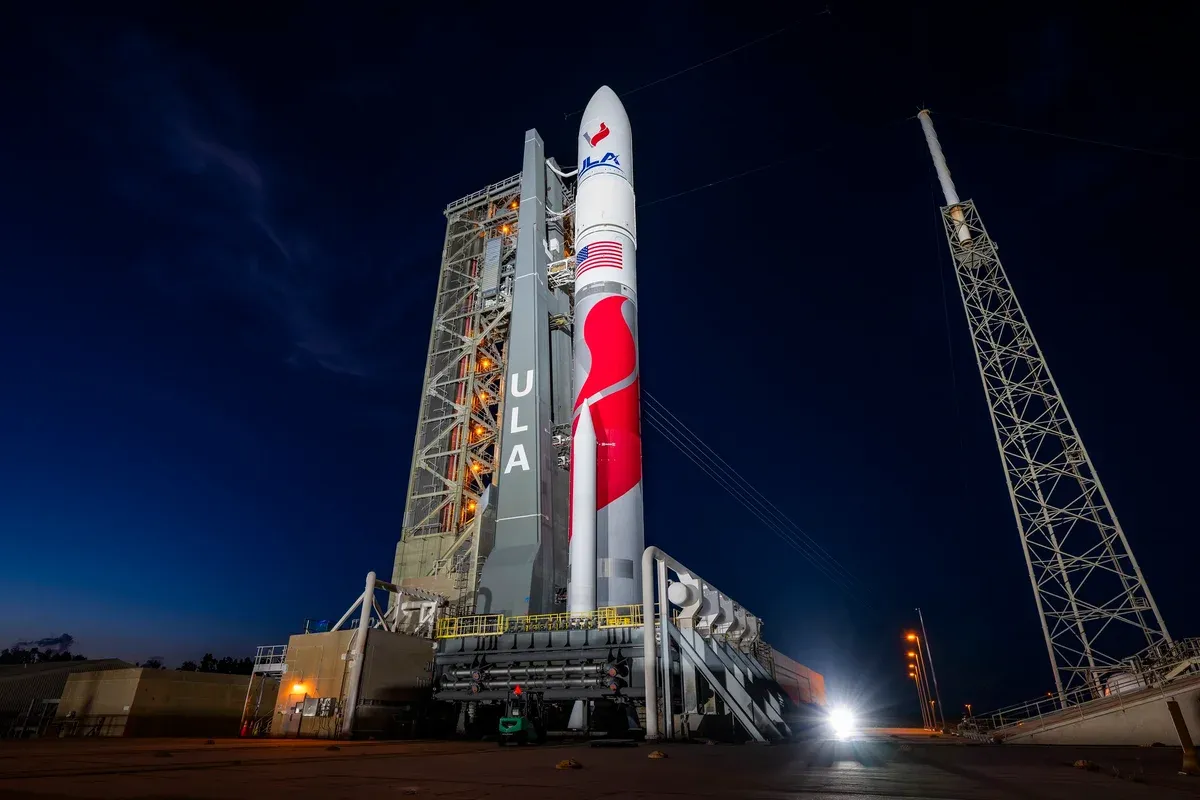
United Launch Alliance's Vulcan rocket has suffered another setback, a heavy blow for the company and for its customers Amazon, NASA and the U.S. Space Force. For decision-makers, the takeaway is concentration risk: three of the most consequential space programs in the country depend on a single vehicle that is not yet fully proven.
The latest setback for Vulcan, the next-generation rocket built by United Launch Alliance, is a heavy blow for the company and for the customers who have built their schedules around it: Amazon, NASA and the U.S. Space Force. That customer list is the story. Vulcan is not a niche vehicle flying experimental hardware for a single agency. It is one of a very small number of American rockets cleared, or in the process of being cleared, to carry the country's most valuable cargo to orbit, and three of the most consequential space programs in the United States have written it into their plans.
United Launch Alliance is the joint venture between Boeing and Lockheed Martin that has spent two decades as the U.S. government's most dependable ride to orbit. Vulcan is its answer to a changed market: a next-generation vehicle meant to replace the Atlas V and Delta IV families and to compete in an era when launch prices, cadence and reusability are set by SpaceX. For ULA, Vulcan is not a side project. It is the future of the franchise. Which is why a setback lands differently here than it would for a company with a deep bench of flight-proven rockets behind it.
For the three customers named, the arithmetic is unforgiving. Amazon is building a satellite broadband constellation that only works at scale, which means it needs hundreds of spacecraft in orbit on a predictable schedule. NASA books launches years ahead for science missions and cargo, and a slipped rocket ripples through budgets that are already tight. The U.S. Space Force depends on Vulcan for national security payloads, the kind of missions where a delay is not an inconvenience but a gap in capability. One rocket, three very different kinds of risk.
The national security piece carries its own rules. The Space Force historically requires a new rocket to fly a set number of successful missions before it is certified to carry the most sensitive payloads. That gate exists for good reason: those satellites can cost more than the rocket and take years to replace. But it also means that a setback does not just delay one flight. It can push back a certification milestone, which pushes back a whole queue of missions, which forces planners to reshuffle payloads across whatever vehicles are available.
Amazon's position may be the most exposed. A broadband constellation is a race against a regulatory clock and a competitor, and the economics only close once enough satellites are in service. Every month of launch delay is a month of capital spent without revenue, and a month of ground infrastructure sitting idle. Amazon has spread its bets across multiple launch providers, which is the right instinct, but diversification only helps if the other rockets are flying on time too. When one vehicle stumbles, the slack has to come from somewhere.
For NASA, the cost is measured in science that does not happen. The agency's launch manifest is a long chain of dependencies: instruments built by universities, spacecraft assembled by contractors, ground stations scheduled years out. A rocket setback typically triggers a cascade of replanning, and the agency rarely gets that time back. For the Space Force, the concern is structural. The United States has deliberately cultivated more than one launch provider so that a single failure cannot ground the entire national security manifest. That strategy only pays off if the second provider is healthy.
That is the uncomfortable context for ULA. The company exists in part because Washington decided it did not want to depend on a single rocket for its most important missions. Vulcan is the vehicle that makes that policy real. A setback therefore lands as more than a corporate problem. It is a stress test of the assumption that the United States has redundant, reliable access to space. Every additional delay narrows the margin for error across the entire manifest, and margin is exactly what a launch program cannot afford to lose.
The strategic lesson for executives outside aerospace is about concentration risk. Launch is a bottleneck with a long lead time, few suppliers and no workaround once a schedule slips. Companies that treat it as a commodity purchase, rather than as a critical dependency to be hedged, insured and stress-tested, tend to discover the difference at the worst possible moment. ULA's customers are about to find out how much slack they actually have. The rest of us get to watch, and to check our own single points of failure before they announce themselves.
This story's Key Insights and Take-aways are locked.
Create a free account to unlock Executive Actions for one credit.
Register to UnlockAlways free for Executives Club members. Join the Club
More in Science

Anthropic's I.P.O. Made Rank-and-File Researchers Worth Tens of Millions
Researchers who joined just a few years ago are now worth tens of millions, and the windfall resets the pay benchmark for every private A.I. lab still paying in paper.

Sea Lion Culling Strategy Fails: New Model Says Killing Them Won't Save Salmon
The latest research from AAAS overturn a long-held conservation assumption, forcing policymakers to rethink critical resource allocation in marine ecosystems.

Microplastics do more than pile up: they react with water to damage cells
Scientists have found that plastic particles can generate highly reactive molecules in water, a mechanism that could explain links to heart attacks, strokes, and neurological disorders.