

Watching your car is legal. Rebuilding months of your movements isn't.
The Hill argues that license plate readers cross a constitutional line the moment they let government reconstruct weeks or months of a driver's life, and that courts, not legislatures, will have to draw it.
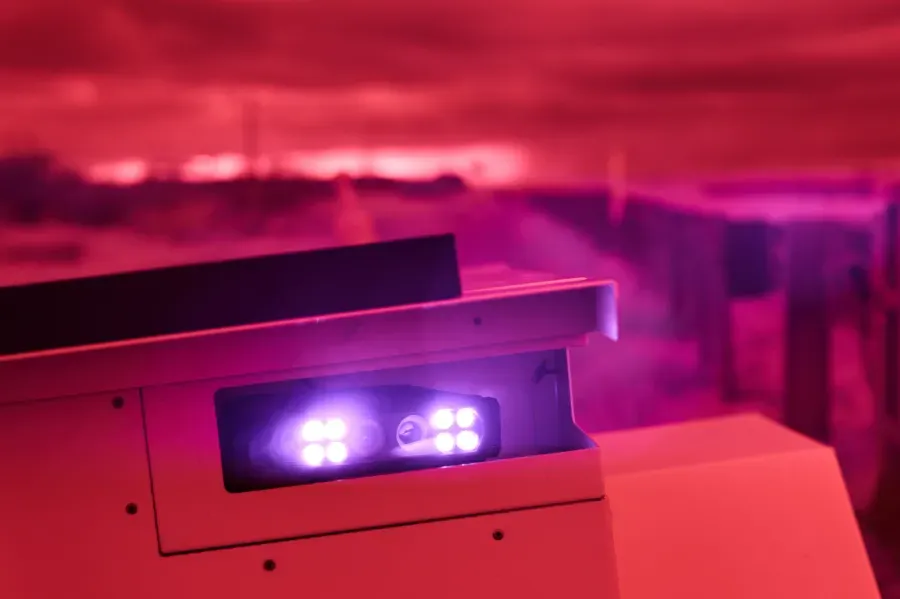
The Hill's opinion section argues that automated license plate readers defy the Constitution when they let the government reconstruct a driver's movements over weeks or months, a step beyond simply observing a car on a public road. For executives running fleets, contracting with cities, or buying surveillance-adjacent data, the consequence is that location data is now a legal and governance exposure, not just an operational one.
Watching a car drive down a public road is not the same thing as giving the government the power to rebuild a person's movements over weeks or months. That is the distinction The Hill puts at the center of its case against automated license plate readers, and it has nothing to do with whether the car was in public view. The piece does not dispute that an officer standing on a corner can read a plate and write it down. It disputes what happens when thousands of cameras, running continuously, feed a database that can answer a question no single officer ever could: where has this person been, and when.
Automated license plate recognition, or ALPR, works by pairing a camera with optical character recognition software. Each pass captures a plate, a timestamp, and typically a location, and the system logs it. One hit is a data point. Millions of hits, retained and searchable, become something closer to a tracking service. That aggregation is the whole product. A single camera on a single corner tells you almost nothing. A network of them, with months of history, can surface a pattern: the same car at a clinic every Tuesday, at a courthouse on a Thursday, at a demonstration on a Saturday. None of that requires the driver to have done anything wrong.
The legal question turns on a doctrine most people have never had to think about: reasonable expectation of privacy. Under Fourth Amendment case law, what a person knowingly exposes to the public is generally not protected, and courts have applied that principle to license plates for decades. The counterargument, and the one The Hill is pressing, is that aggregation changes the character of the observation. In United States v. Jones in 2012, Supreme Court concurrences raised the idea that prolonged government tracking can amount to a search even when each individual data point is public. In Carpenter v. United States in 2018, the Court held that police generally need a warrant to obtain cellphone location records, reasoning that a person does not surrender all Fourth Amendment protection simply by venturing into public space. ALPR sits squarely in that gap, and the gap is where the fight is.
Meanwhile the technology keeps getting cheaper and the networks keep getting denser. In practice, ALPR systems are often operated by private vendors that contract with police departments and municipalities, which means the data can sit in corporate infrastructure as well as government hands. Retention policies vary widely, and sharing arrangements between agencies can extend a single query well beyond the jurisdiction that collected the data. For context, this is a familiar pattern with surveillance technology: the capability arrives first, the rules arrive later, and the rules that do arrive tend to be written by the agencies already using the tools.
That is why this is not an abstract civil liberties story. Fleet operators, delivery companies, insurers, and gig platforms all run vehicles whose movements are now machine-readable by default. A subpoena, a data breach, or a routine records request can turn a company's routing data into a map of its drivers' lives. Cities that buy the cameras inherit the liability. Vendors that store the data inherit the subpoenas. And drivers who have done nothing wrong inherit the exposure.
The Hill's argument is that courts have to draw the line, because legislatures have not. The remedy it points toward is not a ban on cameras. It is a limit on what can be done with what they capture: warrants before a search, retention caps, audit trails, and a clear rule that reconstructing weeks or months of movement is a different act from glancing at a plate in traffic. The distinction matters because the alternative is a system where the government can ask a question about your past and get an answer, without ever having to justify why it asked.
For executives, the practical takeaway is that location data is now a governance issue, not just an IT one. If your company operates vehicles, contracts with a city, or sells anything that touches ALPR, the questions to answer now are where the data lives, how long it is kept, who can query it, and what happens when someone with a badge or a subpoena comes asking. The constitutional fight will be decided in courtrooms. The operational exposure gets decided in contracts, retention schedules, and board conversations that most companies have not had yet.
This story's Key Insights and Take-aways are locked.
Create a free account to unlock Executive Actions for one credit.
Register to UnlockAlways free for Executives Club members. Join the Club
More in Politics

Cybersecurity Was an Afterthought for Decades. AI Is Now Sending the Bill
The internet's vulnerable code was never fixed, and AI is finding it faster than anyone can patch it, turning decades of technical debt into a live balance-sheet risk.

Hannity vows to name GOP lawmakers skipping votes before the majority expires
A prime-time host is turning the House attendance sheet into a public scoreboard, and Speaker Mike Johnson is sitting right next to him while the Republican majority runs out of days.
White House yanks FDA nominee, blindsiding senators and extending a six-month vacuum
Heidi Overton's abrupt withdrawal leaves the FDA without a confirmed commissioner six months after the last one resigned, and the Senate committee that would vet a replacement found out at the last minute.