
We'll probably never sniff another planet. Its chemistry gives away the smell.
No probe carries a nose, but spectroscopy reads the molecules in alien air, and those molecules are the whole recipe for a smell.
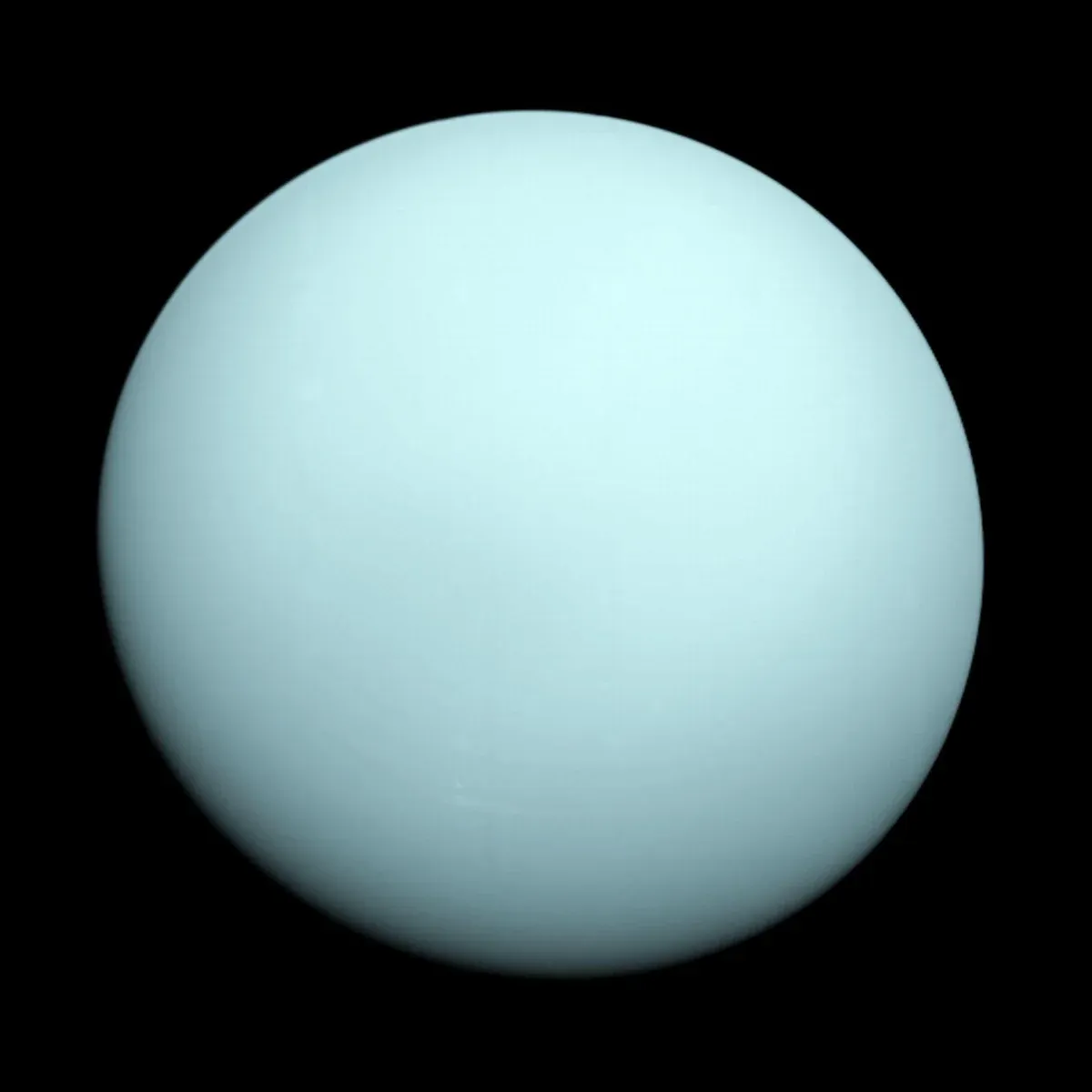
Planetary scientists will probably never send a nose to another world, so the question of what other planets smell like gets answered through chemistry rather than contact. For decision-makers, it is a clean case study in extracting a specific, confident claim from a signal you can never experience firsthand.
Start with the honest answer, because Scientific American does: we will probably never sniff another planet. Nobody is shipping a nose to Mars, and no probe is coming back with a jar of Jupiter. Distance, vacuum, radiation, and the small matter of a months-long commute all rule it out. But the second half of that sentence is where the story gets good. We will probably never sniff another planet, and we can still get a solid idea of what one smells like. The answer is not hiding in air we cannot breathe. It is hiding in the chemistry, and chemistry travels across space far better than noses do.
Here is the unlock that makes the whole question tractable: a smell is not a property of a place. It is a transaction. Molecules drift into a nasal cavity, dock with olfactory receptors, and the brain assembles a label it calls rotten, sweet, sharp, or metallic. No nose, no smell. So 'what does Venus smell like' is really two questions stacked on top of each other. First, which molecules are present, and in what concentrations? Second, what would those molecules do to a human nose if one were somehow there? Chemistry answers the first question directly. The second is inference, and it is the fun part.
The tool that answers question one is spectroscopy, and it is the workhorse of planetary science. Light from a star that grazes or passes through a planet's atmosphere, or light bouncing off a surface, gets absorbed at specific wavelengths. Every molecule has its own absorption fingerprint. Read the gaps in the spectrum and you can name what is in the air from billions of kilometers away. For context, this is the same technique that has been used to identify water vapor, methane, and carbon dioxide in the atmospheres of planets outside our solar system, and telescopes like JWST have pushed that work further. No landing required. No sample return. Just light, split and read.
Once you have the molecule list, the translation begins, and it is where the vivid descriptions come from. Hydrogen sulfide is the one chemists typically reach for when they want rotten eggs. Ammonia reads as sharp and pungent. Sulfur dioxide reads like a struck match. Methane, on its own, is famously odorless, which is why the gas that reaches a kitchen stove carries an added odorant. Concentration changes everything. A trace of a compound and a percent-level blanket of it are different sensory worlds, and temperature and pressure decide whether a molecule is floating in the air at all or locked into ice and rock. The recipe matters as much as the ingredient list.
For context on the worlds we know best, the textbook versions are vivid. Venus is wrapped in clouds of sulfuric acid. Mars is a cold desert whose reddish tint comes from iron oxide dust. Jupiter and Saturn carry ammonia in their upper clouds. Titan, Saturn's largest moon, has lakes and rain made of methane. None of these are places a human nose has visited. All of them are places where the chemistry is well enough understood that a description is possible. That is the quiet achievement here: not a smell, but a translation.
The deeper point is about indirect evidence, and it is why this story is worth more than a fun fact. Almost everything we know about the universe arrives as a signal we did not experience directly. We do not touch a star. We read its spectrum. We do not visit an exoplanet. We read the dip in its star's light. The skill of extracting a confident, specific claim from a proxy is the same skill that shows up everywhere else: a market read from order flow, a product read from retention curves, a culture read from attrition data. The instrument changes. The discipline does not.
There are limits, and they are worth naming. Detecting a molecule is not the same as characterizing an experience. A spectrum tells you what is there; it does not tell you what it is like. The word smell smuggles in a nose, a nervous system, and a brain that no probe carries. That gap is exactly why the question is a good one. It forces a clean separation between the measurement and the interpretation, and it makes the measurement legible to anyone who has ever recoiled from a bad smell.
So the answer to what other planets smell like is not a single scent. It is a method: read the chemistry, translate the molecules, and stay honest about the difference between what you measured and what you imagined. For anyone whose job is to explain something complicated to people who will never see the raw data, that is the whole game. The universe will probably never get sniffed. It can still be described, and the description is where the value lives.
This story's Key Insights and Take-aways are locked.
Create a free account to unlock Executive Actions for one credit.
Register to UnlockAlways free for Executives Club members. Join the Club
More in Science

AI that nails brain-activity tests may be solving them the wrong way
A new discovery suggests strong neural-prediction scores do not prove a model works like the brain, a warning for labs, neurotech investors, and anyone selling brain-like AI.
Scientists Want to Test Whether a Clock Can Run on Two Flows of Time
An atomic-clock experiment has been proposed to catch a never-observed quantum effect, a result that would redraw the boundary between time and gravity.
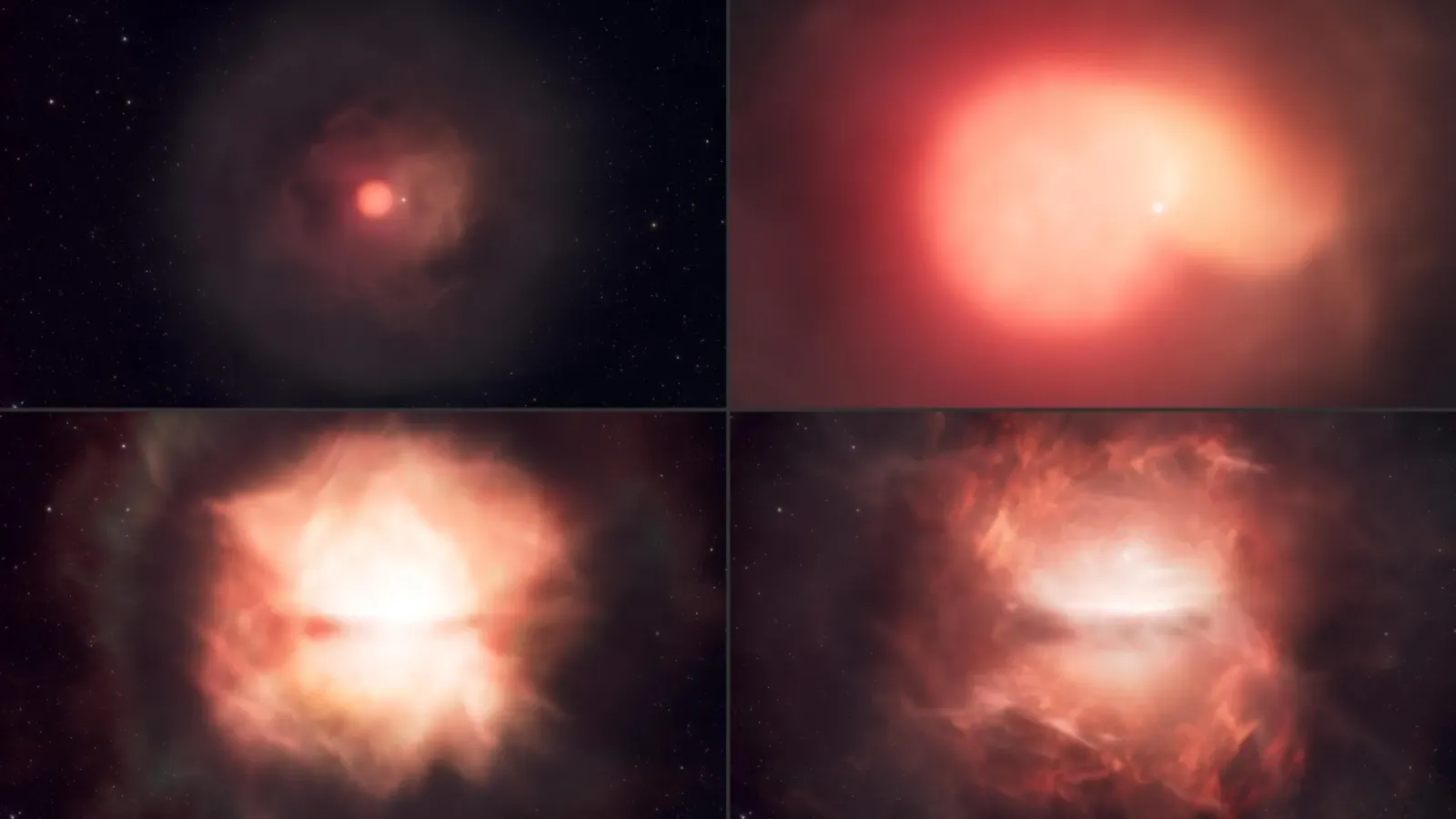
A star swallowed another star. Webb caught the aftermath in 47 days
Astronomers watched a small star spiral into a giant 18,000 times brighter than the Sun in Andromeda, and Webb's 47-day follow-up is rewriting how stellar mergers get studied.