
Weight-loss drug retatrutide halves knee pain for two-thirds of arthritis patients
A 25% drop in body weight at the top dose drove the pain relief, but whether retatrutide protects the joint itself is still unknown, and that answer decides the market.
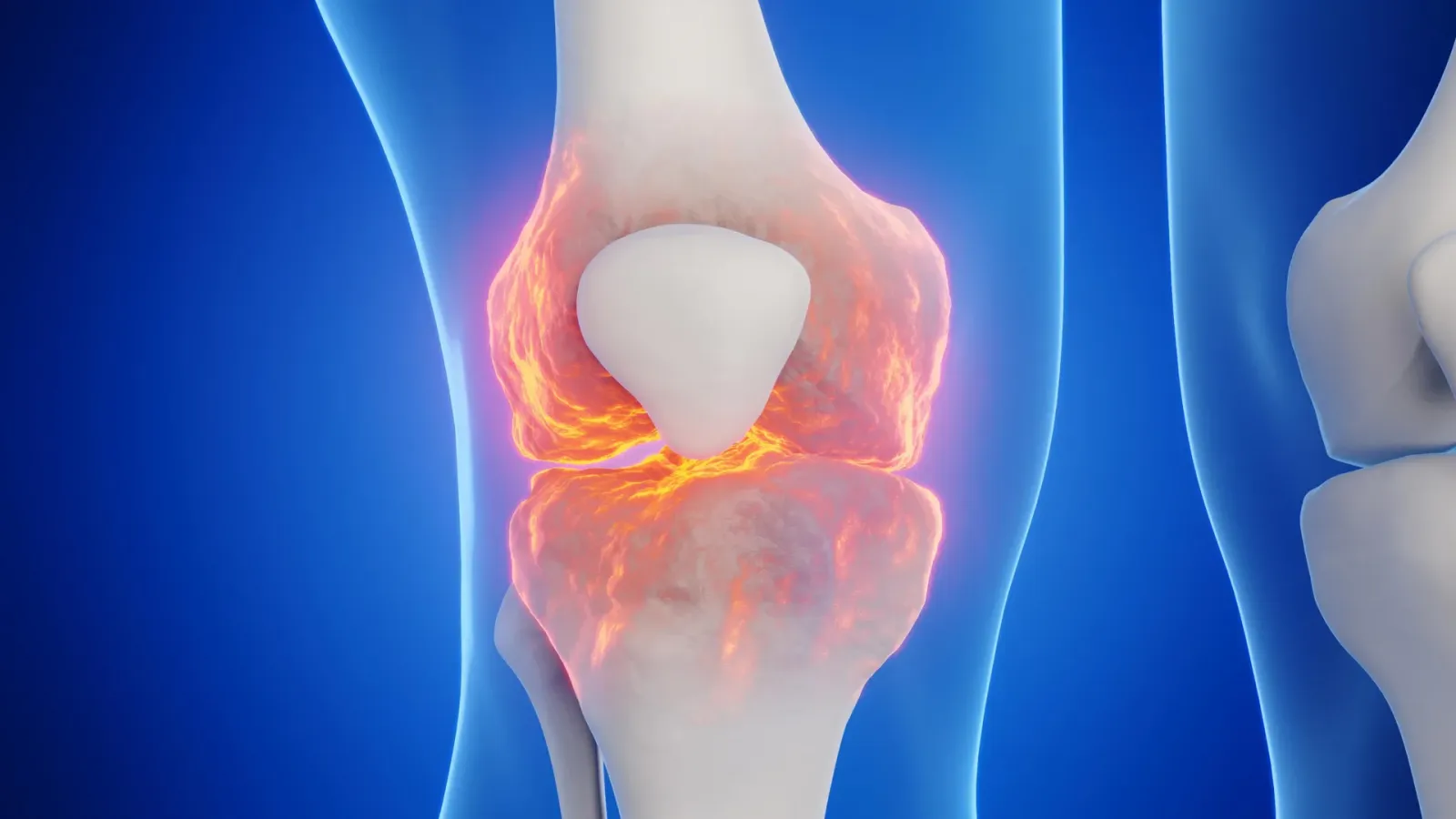
An experimental weight-loss drug called retatrutide helped people with knee osteoarthritis lose about 25% of their body weight at the highest dose, with roughly two-thirds reporting at least a 50% reduction in knee pain. The unresolved question of whether it prevents further joint damage will determine whether it becomes a symptom-management tool or a disease-modifying therapy, with direct consequences for payers, employers and orthopedic procedure volumes.
An experimental weight-loss drug called retatrutide just posted a result that obesity medicine has been chasing for years: at its highest dose, patients with knee osteoarthritis lost about 25% of their body weight, and roughly two-thirds of them reported at least a 50% reduction in knee pain. Read that second number again. Not a modest improvement, not a few points on a survey scale. Half the pain, gone, for most of the people in the trial. For a condition that has historically been managed with painkillers, steroid injections and, eventually, a knee replacement, that is not an incremental step. It is a different conversation.
The caveat arrives immediately, and it matters as much as the headline. The findings do not establish whether retatrutide prevents further joint damage. Pain is what patients feel; cartilage loss is what an X-ray or an MRI shows. Those two things usually move together, but not always, and the difference decides whether this becomes a pain drug or a disease-modifying one. That distinction is worth an enormous amount of money, and it is currently unresolved.
Knee osteoarthritis is one of the most common sources of chronic disability in the world. It is a mechanical and inflammatory problem: cartilage wears down, the joint stiffens, and every extra pound of body weight multiplies the load the knee absorbs with each step. Historically, the treatment ladder has been conservative and unsatisfying. Physical therapy, weight-loss advice, over-the-counter analgesics, then prescription anti-inflammatories, then injections, then surgery. Nothing on that ladder changes the underlying disease. Patients are managed, not treated.
That is why an obesity drug showing up in an arthritis trial is not a random pairing. If body weight is a primary driver of knee load and pain, then a drug that produces 25% weight loss is, in effect, attacking the upstream cause. The source describes retatrutide as a powerful experimental weight-loss drug, and the magnitude here is the point: 25% sits above the range the first generation of obesity medicines typically posted in their pivotal trials. Historically, that kind of gap is what separates a category leader from a fast follower, and it is why the arthritis readout lands as a platform story rather than a single-indication story.
For the company behind it, the path from here runs through regulators. Experimental means exactly that: no approval, no label, no reimbursement. Regulators typically want to see whether a benefit holds up across a defined population, whether it persists over time, and whether the safety profile is tolerable at the dose that produces the effect. A pain endpoint is attractive because patients feel it and payers can measure it. A structural endpoint is more valuable still, because it implies the drug changes the trajectory of the disease rather than masking it. The source is explicit that the joint-damage question remains unknown, which means the next set of data, not this one, will determine how big this opportunity actually is.
Follow the consequences outward. If a drug can cut knee pain in half for two-thirds of patients with osteoarthritis, the first industry to feel it is orthopedics. Knee replacement is one of the highest-volume, highest-cost procedures in developed health systems, and a meaningful share of those surgeries happen in patients whose primary risk factor is excess weight. Employers and insurers, who absorb that cost, have spent years looking for anything that delays or avoids the operating room. A therapy that keeps people off the table is, from their ledger's perspective, a bargain even at a premium price.
For executives, the strategic read is about adjacency. Obesity drugs are no longer a single-market story. They are a platform, and every condition downstream of body weight, from sleep apnea to liver disease to joint degeneration, becomes a candidate indication. Companies with exposure to those adjacencies should be modeling what happens if the platform keeps expanding. So should anyone whose business assumes a steady flow of joint replacement procedures.
Three things to watch. First, whether the joint-damage data arrives and what it shows. Second, the dose at which the benefit holds, since the 25% figure came at the highest dose and tolerability at high doses is the perennial constraint in this class. Third, whether payers treat pain relief alone as sufficient justification for coverage. The source frames retatrutide as a potential transformation for millions of people suffering from painful arthritis. The transformation is real. The size of it is still being written.
This story's Key Insights and Take-aways are locked.
Create a free account to unlock Executive Actions for one credit.
Register to UnlockAlways free for Executives Club members. Join the Club
More in Science

Anthropic's I.P.O. Made Rank-and-File Researchers Worth Tens of Millions
Researchers who joined just a few years ago are now worth tens of millions, and the windfall resets the pay benchmark for every private A.I. lab still paying in paper.

Sea Lion Culling Strategy Fails: New Model Says Killing Them Won't Save Salmon
The latest research from AAAS overturn a long-held conservation assumption, forcing policymakers to rethink critical resource allocation in marine ecosystems.

Microplastics do more than pile up: they react with water to damage cells
Scientists have found that plastic particles can generate highly reactive molecules in water, a mechanism that could explain links to heart attacks, strokes, and neurological disorders.