
Weird Al Confirms Major GTA 6 Role in a Launch That Beat Expectations
The parody icon's confirmed role lands inside a GTA 6 launch that has already blown past player expectations, a reminder that casting is now a growth lever, not a garnish.
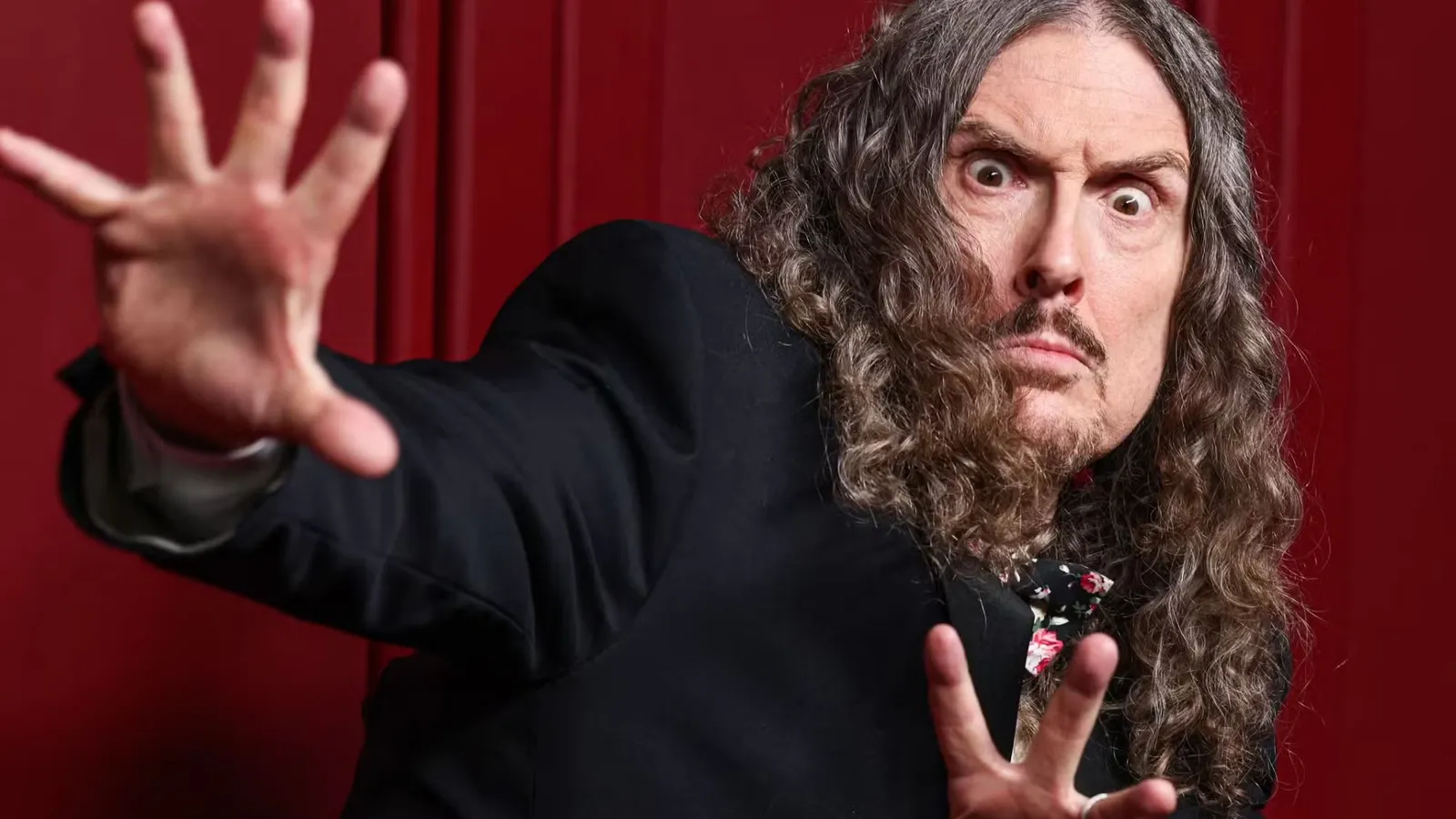
Weird Al Yankovic, the parody musician, has confirmed he holds a major role in Grand Theft Auto 6, the Rockstar Games title that is now out and, per ScreenRant, has blown players' expectations out of the water. For executives in media, gaming, and brand marketing, the reveal shows how one casting decision can extend a launch's cultural tail and pull non-gamer audiences into a franchise's orbit.
Weird Al Yankovic has confirmed he has a major role in Grand Theft Auto 6, and the fact that he confirmed it himself is the detail worth noticing. The parody musician, whose career is built on stepping into other people's biggest moments and rewriting them, is now officially inside the biggest entertainment launch of the moment. Per ScreenRant, the reveal is just "another of the game's countless surprises," which says a lot about how Rockstar Games has structured this release: not as a single product drop, but as a rolling sequence of reveals that keeps the conversation alive long after players have downloaded the game.
The second half of that headline is the part executives should underline. GTA 6 is finally out, and by ScreenRant's account it has "absolutely blown players' expectations out of the water." Knowing a game will be good and actually playing it are, in the outlet's framing, "a completely different story." The world of Leonida, the game's fictional setting, "feels truly alive," immersing players in ways they were not anticipating. That is the environment Weird Al's role now sits inside: a launch that has already cleared the industry's highest bar and is still finding ways to surprise the people who paid for it.
Casting has always been part of the Grand Theft Auto formula, though historically it has skewed toward actors and musicians who lend a specific texture to a fictional city. Vice City leaned on Ray Liotta. San Andreas leaned on Samuel L. Jackson. The pattern is not celebrity for celebrity's sake; it is celebrity as world-building, a shortcut that tells players what kind of place they are standing in before a single line of dialogue lands. Weird Al is a different flavor of that instinct. He is not a dramatic heavyweight. He is a cultural signal, and the signal he sends is satire.
That reads as a deliberate choice, and it fits. Weird Al's catalog is a long negotiation with fame: he takes the biggest song in the room and rewrites it until it belongs to everyone. A franchise that has spent decades parodying American excess, consumerism, and Florida-adjacent chaos is, on paper, the most natural home he could ask for. Leonida is a fictional stand-in for the Sunshine State, and Weird Al is, functionally, a Florida man of the American pop canon. The pairing looks less like a stunt and more like a casting director finally connecting two dots that were always sitting next to each other.
The business logic underneath is straightforward. Grand Theft Auto is one of the most valuable franchises in entertainment, owned by Take-Two Interactive and developed by Rockstar Games, and its releases historically rank among the best-selling entertainment products ever shipped. A launch at that scale is not just a game release; it is a media event with a marketing budget that behaves like a film studio's. In that context, casting is not garnish. It is distribution. Every confirmed name gives a different audience a reason to pay attention: the music press, the comedy press, the nostalgia economy, and the people who have not bought a console since the last one.
The second-order effects are where this gets interesting for anyone outside gaming. A confirmed role for a musician of Weird Al's profile raises the value of the surrounding IP: in-game radio, licensed tracks, in-world branding, and the merchandise and live-event tie-ins that typically follow a launch of this size. It also resets expectations for talent deals across the sector. If a parody artist can land a major role in the year's biggest release, the ceiling for creators, podcasters, and internet-native personalities in AAA productions moves up. Publishers that have historically treated casting as a cost line will increasingly treat it as a growth line, and agents will price accordingly.
There is a structural lesson in how the news arrived, too. The role was not announced in a trailer or a press release; it was confirmed by the artist himself, which is the cheapest and most effective distribution channel available. Rockstar has built this launch around a steady drip of surprises, and each one buys another news cycle. For marketing leaders, that is the playbook worth borrowing: let the talent be the megaphone, stagger the reveals, and let the audience do the amplification for free.
For executives, the takeaway is not that a beloved musician is in a video game. It is that the boundary between gaming, music, comedy, and brand marketing has effectively dissolved at the top of the market. The companies that win the next cycle will treat casting, licensing, and surprise reveals as one integrated go-to-market motion rather than three separate departments. Weird Al's role is a small detail inside a very large launch. It is also a clean signal about where cultural attention is being assembled, and who is getting paid to assemble it.
This story's Key Insights and Take-aways are locked.
Create a free account to unlock Executive Actions for one credit.
Register to UnlockAlways free for Executives Club members. Join the Club
More in Entertainment

GTA 6 banks $3.8bn in one day, torching every launch record
One game just out-earned every video game launch and every single-day film box office haul in history, and the fallout lands on every media CEO's forecast.

GTA VI Racked Up $3.79 Billion in a Single Day, Topping Every Film Ever
A 13-year wait produced a $3.79 billion day, more than any movie has made in its entire run, and it resets the launch math for every studio, streamer, and brand chasing the same attention.

GTA 6 sells 32.5M pre-sales and $3.79B day one, torches 13-year record
Rockstar's sequel didn't just beat Grand Theft Auto V's 13-year-old benchmark; it reset what a launch can be, with 32.5 million pre-sale copies and $3.79 billion in a single day.