
50-year-old theory that evolution shields essential genes fails big test
A sweeping analysis of mutations in bacteria and yeast found no evidence that essential genes mutate less often, forcing biologists to rethink what their data actually measures.
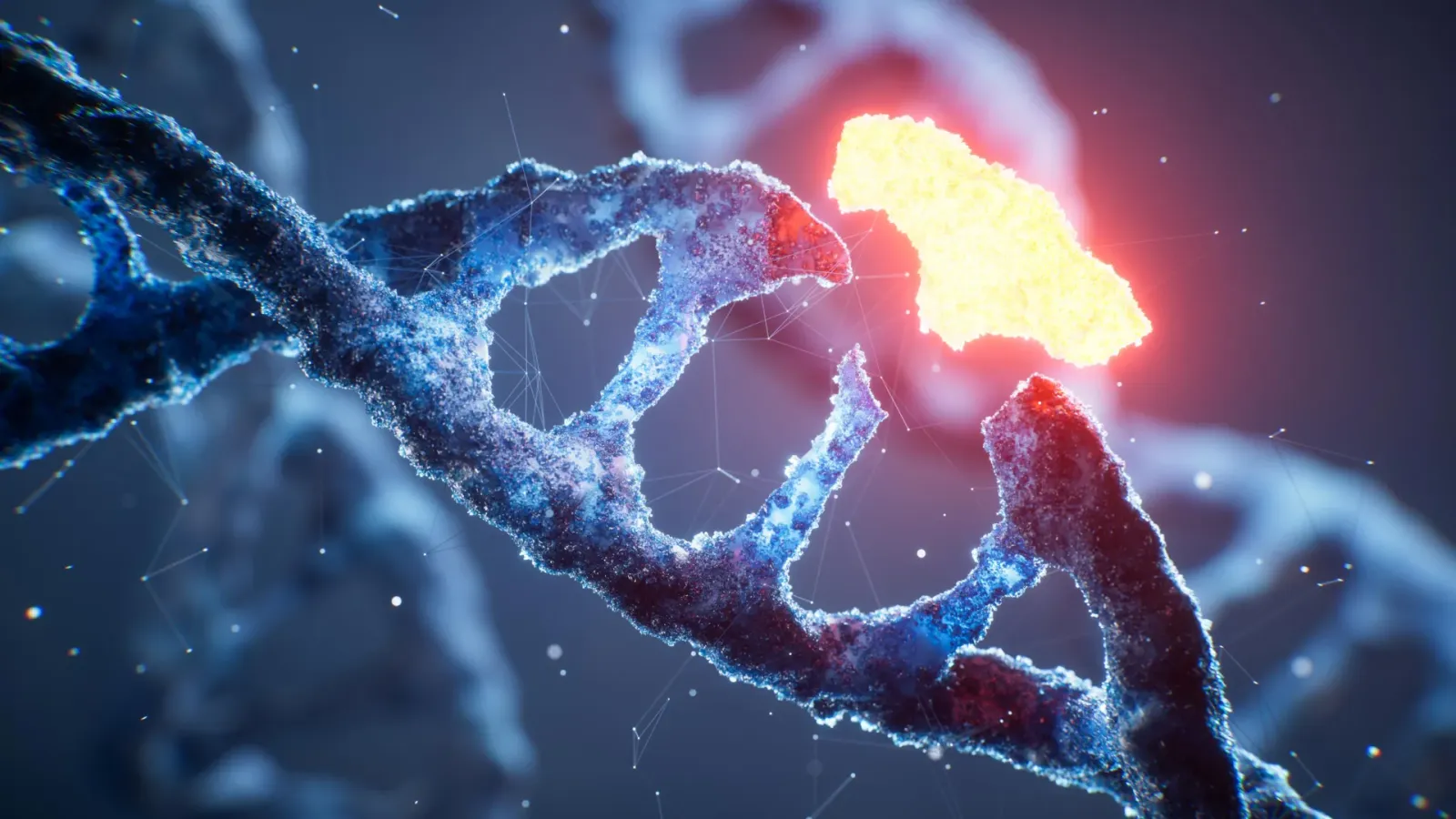
Researchers analyzing mutations across bacteria and yeast found no evidence that essential genes, the ones an organism cannot survive without, mutate less frequently than any other genes, undercutting a theory that has stood for roughly 50 years. For leaders in biotech, pharma, and computational biology, the result is a warning that observed mutation data can be shaped by what natural selection already deleted rather than by what actually happened.
The idea has been a comfortable one for half a century: evolution, the story went, quietly protects the genes that matter most. An organism cannot live without its essential genes, so mutations there should be ruthlessly weeded out, leaving those genes measurably less mutated than the rest of the genome. A new, extensive analysis of mutations in bacteria and yeast found no evidence for it. Essential genes, the researchers report, do not mutate less frequently than other genes. The protection was never there.
The explanation for why so many earlier studies saw the opposite is the part that should make scientists sit up. Researchers say prior work may have been misled by harmful mutations that disappeared through natural selection before anyone could detect them. In other words, the older studies were not measuring how often mutations arise. They were measuring which mutations survived long enough to be counted. That is a subtle but enormous difference, and it is the kind of error that can survive decades because the data looks clean.
That distinction, mutation versus survival, is the whole ballgame. A mutation is a raw event, a copying error written into DNA. Whether it is still there when you sequence the organism is a separate question, answered by selection. If a mutation lands in a gene the cell cannot function without, the cell often dies, and the mutation dies with it. Sequence enough living cells and you will find fewer of those mutations, not because they were never made, but because they were never kept. It is like estimating how often cars crash by counting only the cars still driving.
For context, essential genes have long been treated as the genome's load-bearing walls. Antibiotic discovery has historically leaned on them, on the logic that a bacterium cannot easily mutate its way around a drug that hits a gene it needs to survive. Crop and industrial microbiology programs engineer around them. If essential genes are not actually shielded from mutation, that assumption deserves a fresh look, because the raw rate at which they change may be higher than the surviving data suggests.
The finding also lands on a long-running argument in evolutionary biology about how much of a genome is shaped by selection versus chance. Historically, researchers have used patterns of mutation across genes to infer where selection is strongest. If that pattern is partly an artifact of mutations vanishing before detection, then some of those inferences rest on a filtered view. The new analysis covered bacteria and yeast, and whether the same holds in plants, animals, or humans is an open question, but the methodological warning travels.
There is a practical lesson here that goes beyond the lab. Survivorship bias is the quiet error that makes smart people confident about the wrong thing. It shows up in venture portfolios that count only the companies still alive, in hiring data that measures only the people who stayed, in customer research that surveys only the customers who did not churn. The old mutation studies are a textbook case: the missing data was not random, it was systematically removed by the very process being studied. The lesson is not that the earlier researchers were careless. It is that the bias was baked into the method, invisible from the inside.
For decision-makers in the life sciences, the near-term move is not to throw out existing target lists but to ask harder questions about how they were built. Which conclusions rest on observed variation in living organisms, and which rest on direct measurement of mutation events? Where a drug target was prioritized because it looked unusually stable, is that stability real, or is it the shadow of selection? Those are cheap questions to ask and expensive ones to skip.
The bigger point is about how science corrects itself. A theory that survived 50 years did not survive because it was right. It survived because the tools available kept confirming it. Better measurement, applied at scale across two very different organisms, took the theory apart. That is the system working, and it is a reminder that the most durable assumptions are often the ones nobody has bothered to re-test. For anyone whose work depends on genomic data, the practical question is simple: what did your dataset delete before you got it?
This story's Key Insights and Take-aways are locked.
Create a free account to unlock Executive Actions for one credit.
Register to UnlockAlways free for Executives Club members. Join the Club
More in Science

AI that nails brain-activity tests may be solving them the wrong way
A new discovery suggests strong neural-prediction scores do not prove a model works like the brain, a warning for labs, neurotech investors, and anyone selling brain-like AI.

Scientists Want to Test Whether a Clock Can Run on Two Flows of Time
An atomic-clock experiment has been proposed to catch a never-observed quantum effect, a result that would redraw the boundary between time and gravity.

A star swallowed another star. Webb caught the aftermath in 47 days
Astronomers watched a small star spiral into a giant 18,000 times brighter than the Sun in Andromeda, and Webb's 47-day follow-up is rewriting how stellar mergers get studied.