
80 Texas residents sue SpaceX over rocket launches allegedly destroying their homes
A class action filed near Starbase claims negligence, gross negligence, and trespass under the Commercial Space Launch Act of 1984.

Eighty residents of towns near SpaceX's Starbase facility in South Texas filed a class-action lawsuit alleging the company's rocket launches physically destroy their homes. For decision-makers, it signals mounting legal and operational risk where spaceflight infrastructure meets densely lived property.
Eighty residents of towns near SpaceX's Starbase facility in South Texas have filed a class-action lawsuit alleging that SpaceX's constant rocket launches are physically destroying their homes. The lawsuit targets the company not with a vague complaint, but with specific legal theories: negligence, gross negligence, and trespass, and it does so based on the Commercial Space Launch Act of 1984.
The core accusation is simple and explosive for anyone watching the space economy go from experimental to industrial. Plaintiffs claim the launch activity is having direct physical impacts on their properties. One plaintiff, according to Reuters, showed a reporter her home in Port [the source text cuts off there], underscoring that this is being presented as real-world damage, not just noise or inconvenience.
This is also a timing story. SpaceX is pushing hard on cadence and throughput at Starbase, because launch frequency and reliability are how you convert rocket engineering into business momentum. But increased launch activity tends to concentrate risk in the one place operations cannot hide: the surrounding communities that live under flight paths, near staging areas, and within reach of vibration, debris, or other launch-adjacent effects. The plaintiffs are effectively arguing that those externalities are not acceptable costs of doing business.
From a legal standpoint, the case is framed around the Commercial Space Launch Act of 1984. That matters because plaintiffs are anchoring their claims to the regulatory and statutory environment that governs commercial launches. In plain English, they are trying to connect the act of launching to duties and boundaries that, in their view, SpaceX violated. When lawsuits reference a specific statute like this, it is often a sign that the plaintiffs want the court to treat the dispute as more than a local tort complaint.
There are also second-order implications for executives beyond SpaceX itself. As more companies build launch sites and expand operations, the number of “neighbors” who can plausibly file claims increases. Boards and senior leaders at space-adjacent companies will have to ask a different kind of question than “will it launch?” They will need to be able to answer “how will we prove we are not harming people, even when operations are at scale?” That means tightening documentation around launch effects, improving monitoring, and building response mechanisms that show up in discovery.
It is tempting to look at this as a community dispute, but class actions are designed to amplify uncertainty and cost. Even if SpaceX ultimately prevails, the existence of a class-action filing can force management to spend time on litigation posture, legal strategy, and potential settlement discussions. That is time and attention that would otherwise go to engineering, manufacturing, and reliability. The lawsuit is also public, which can matter for regulators, investors, and potential future employees who want to understand how external risk is being handled.
There is another practical layer here: trespass claims raise the stakes by implying an unauthorized physical intrusion. Negligence and gross negligence claims imply that plaintiffs believe SpaceX either failed to exercise reasonable care or that the alleged failures rise to a higher level. Whether courts accept those characterizations is a separate question, but the fact that plaintiffs chose these labels indicates they want the lawsuit to sound in something more serious than accidents.
For decision-makers watching this space, the strategic takeaway is not “lawsuits are inevitable.” It is that the space industry is crossing a threshold where operational expansion triggers neighborhood-level legal risk at scale. If you are on a board, in legal, or running operations for a company with high-frequency launches, this is a reminder that regulatory frameworks, community relations, and measurable operational safeguards are not side projects. They can become material risk factors the moment a class action starts circulating and the first plaintiff puts their home on the record.
This story's Key Insights and Take-aways are locked.
Create a free account to unlock Executive Actions for one credit.
Register to UnlockAlways free for Executives Club members. Join the Club
More in Business

SpaceX debuts Friday on Nasdaq at $135, surges to $160.95, valued near $1.8T
A Nasdaq opening pop turns SpaceX into a public company overnight, forcing new money questions fast.

Elon Musk became the world’s first trillionaire after SpaceX IPO lifted him past $1T
SpaceX shares jumped, and Musk’s $800B pre-IPO value crossed a trillion, reshaping how investors price “moonshots.”
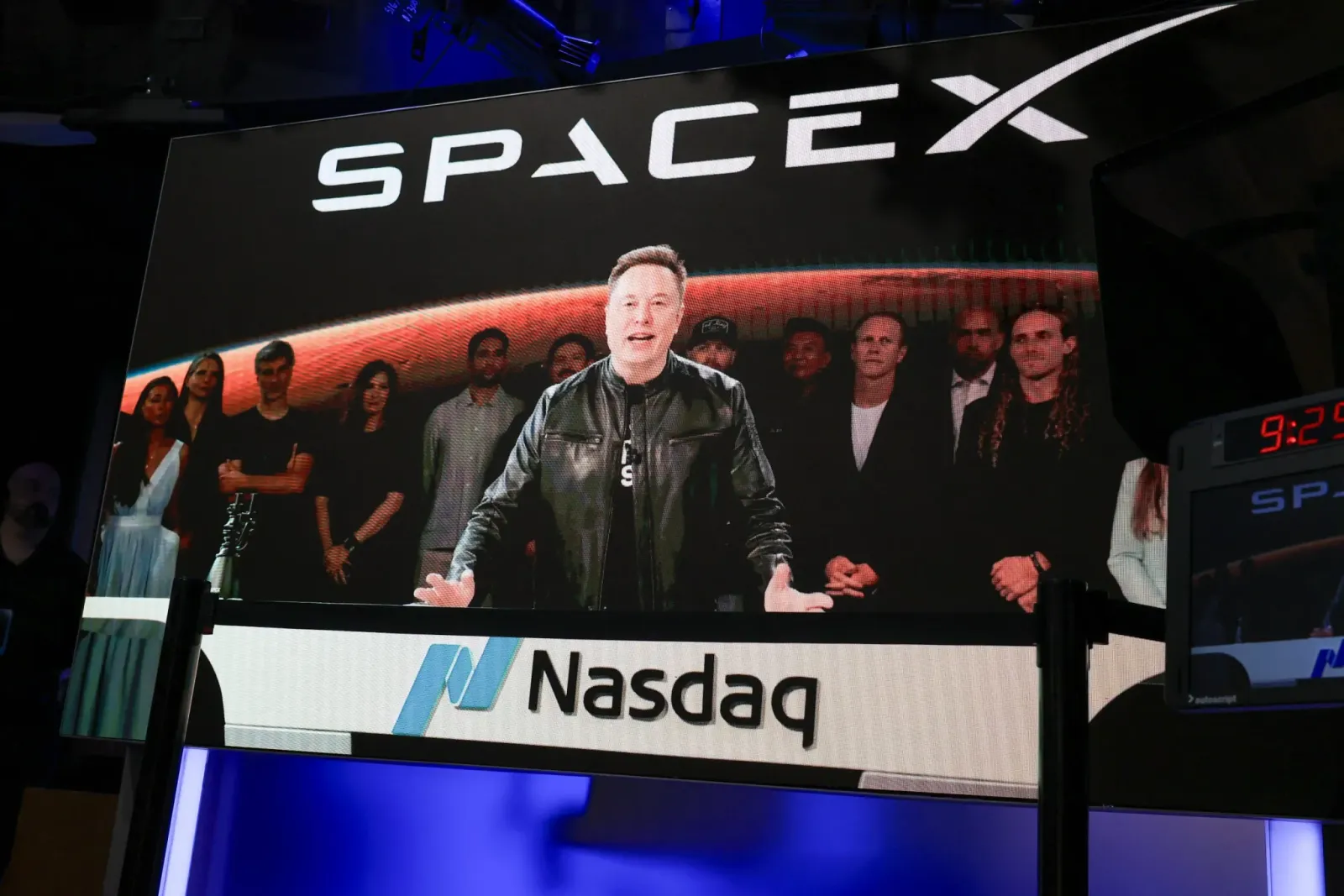
SpaceX stock closes at $161.11 after $2.1T debut valuation shatters expectations
The IPO priced at $135, surged on Nasdaq and Texas, and immediately rewired how executives think about mega-debuts.