
Bassam Tariq Walked Away From Marvel's Blade: 'Life's Too Short To Make Sh** Films'
The director's exit from Mahershala Ali's long-gestating Marvel reboot finally has an on-the-record explanation, and it is a warning about who actually controls a tentpole.
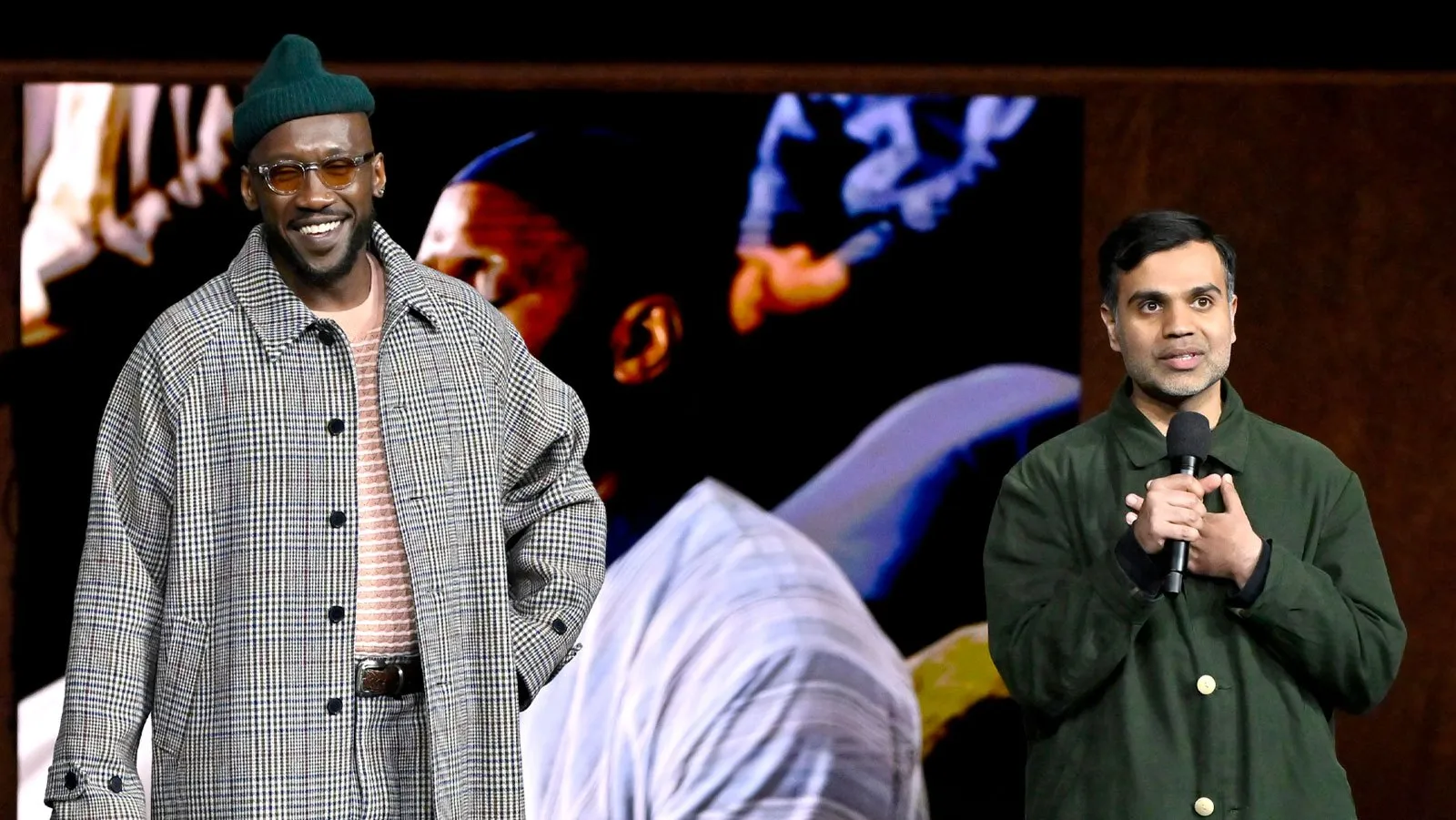
Bassam Tariq, the director once attached to Marvel's Blade starring Mahershala Ali, has publicly explained his exit from the project, saying "Life's too short to make shit films, so that was my big lesson: I have to have full" creative control. For studio executives, the admission reframes a director walkout from a scheduling nuisance into a measurable risk: creative misalignment surfaces at the most expensive possible moment, after money is committed and before footage exists.
Bassam Tariq, the filmmaker Marvel once tapped to direct Blade with Mahershala Ali, has finally said the quiet part out loud. In a new interview, the director of Your Mother Your Mother Your Mother explained why he walked away from one of the most-watched superhero projects in Hollywood: "Life's too short to make shit films, so that was my big lesson: I have to have full..." The published excerpt cuts off there, but the sentence does not need finishing. The lesson is the sentence.
For anyone who has watched a director join a franchise and then quietly vanish from the credits, this is the rare on-the-record version of that story. Tariq was attached to Blade. He exited. And now he has framed the decision not as a scheduling casualty or a polite "creative differences" statement, but as a standard he was unwilling to lower. That is a far more interesting thing for the industry to chew on, because it reframes a director's exit from a cost to be managed into a signal about how the job is actually structured.
Blade is not a small assignment. It is a Marvel Studios property built around Oscar winner Mahershala Ali, who was announced as its star in 2019 to a Comic-Con Hall H crowd. For Ali, it has long read as a passion project rather than a paycheck. For Marvel, it sits inside a slate where a single title can carry nine figures of production spend before marketing, and where the release calendar is a machine that other films, other teams, and other revenue lines are bolted onto. When a director leaves a film like that, the cost is not only the fee. It is the pre-production already spent, the calendar reshuffled, the cast and crew held in limbo, and the months of momentum that have to be rebuilt from zero.
The parting, when it came, was reported at the time as a scheduling matter. Tariq's version, delivered years later, is about something harder to schedule around: whether he would have the authority to make the film he signed up to make. That gap between the official explanation and the personal one is where the real story lives. Studios typically control the levers that matter most on a tentpole: the script, the final cut, the reshoots, the release date. Directors on franchise films often describe the job as steering a ship that is already bolted to a track. Some thrive in that. Some discover, mid-voyage, that it is not the job they wanted.
For context, this is not a new tension. The last decade of franchise filmmaking has been defined by the industrialization of the director's role: a pipeline of writers' rooms, visual effects vendors, and second-unit teams that can keep a movie moving even when the person in the chair changes. That model is efficient. It is also, historically, a poor fit for filmmakers who built their reputations on authorship. Tariq came up through independent film, where the director is usually the last word. Moving from that to a studio tentpole is not a promotion or a demotion; it is a different profession wearing the same title.
What makes his comment land now is timing. The economics of streaming and theatrical have tightened. Studios are under pressure to make fewer, bigger bets, which means more oversight per film, not less. At the same time, the pool of directors with genuine indie credibility has become a recruiting ground for exactly those bets, because that is where the distinctive voices are. The result is a structural mismatch: the studios want the voice, and the voice wants the control. Tariq's exit is one data point in that mismatch, but it is a loud one, because he said it plainly instead of letting a publicist smooth it into "scheduling."
The second-order effects are worth naming. First, for Marvel and its peers, every high-profile director exit raises the cost of the next hire. Agents and managers remember. When a filmmaker with options watches a peer walk away from a franchise and then describe the experience as a lesson in self-respect, the pitch gets harder. Second, for emerging directors, it is a reminder that leverage is asymmetric and time-limited: you have the most power before you sign, and almost none after. Third, for audiences, it is a small but real signal about why certain films feel assembled rather than directed.
None of this means Blade is doomed, or that Tariq is right about how it will turn out. It means the trade he declined is now visible to everyone who gets offered the same one. The project has continued to move through the studio system, with the usual churn of creative changes and calendar adjustments that follow any long-gestating tentpole. What Tariq has done is put a price tag on the thing that never shows up in a budget line: a director's willingness to be a hired hand.
For executives, the takeaway is not sentimental. Creative alignment is a risk-management function. A director who is philosophically misaligned with the machine does not just underperform; they leave, and they leave at the most expensive possible moment, after the money is committed and before the footage exists. The cheapest time to find out whether a filmmaker will accept the constraints is before the deal closes, in a conversation most studios are not structured to have. Tariq's answer, delivered years later and in a single sentence, is the question every franchise should be asking earlier.
This story's Key Insights and Take-aways are locked.
Create a free account to unlock Executive Actions for one credit.
Register to UnlockAlways free for Executives Club members. Join the Club
More in Entertainment

GTA 6 banks $3.8bn in one day, torching every launch record
One game just out-earned every video game launch and every single-day film box office haul in history, and the fallout lands on every media CEO's forecast.

GTA VI Racked Up $3.79 Billion in a Single Day, Topping Every Film Ever
A 13-year wait produced a $3.79 billion day, more than any movie has made in its entire run, and it resets the launch math for every studio, streamer, and brand chasing the same attention.

GTA 6 sells 32.5M pre-sales and $3.79B day one, torches 13-year record
Rockstar's sequel didn't just beat Grand Theft Auto V's 13-year-old benchmark; it reset what a launch can be, with 32.5 million pre-sale copies and $3.79 billion in a single day.