

Bill Ritter steps down from ABC7 after Alzheimer’s diagnosis, revealed on air Friday
A New York TV anchor with decades of trust tells viewers he has Alzheimer’s and exits his 6 p.m. role.
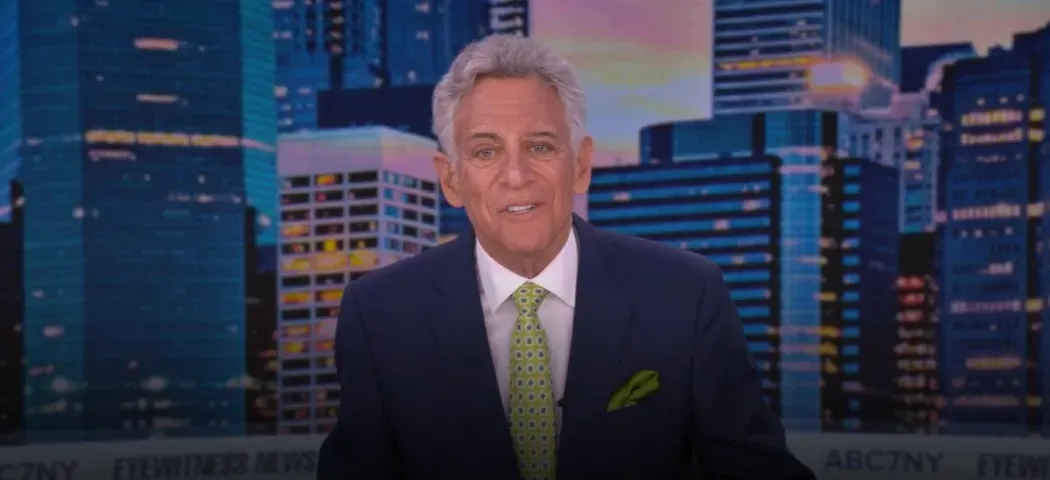
Bill Ritter, the longtime ABC7 New York anchor for ABC7 Eyewitness News since 1999, announced Friday during his staple 6 p.m. newscast that he has been diagnosed with Alzheimer’s and is stepping down. For decision-makers across broadcast, it spotlights how legacy on-air relationships create operational and leadership ripples fast.
Bill Ritter, the longtime ABC7 New York anchor for ABC7 Eyewitness News since 1999, used his staple 6 p.m. newscast Friday to disclose a diagnosis that changes everything: he has been diagnosed with Alzheimer’s and will step down from the role. Ritter is a San Diego native whose journalism career started in Los Angeles, first with the Los Angeles Times.
That sequence matters because it is not a behind-the-scenes memo or a vague “health update.” It is an on-air announcement in the time slot audiences already rely on. For viewers, the message is personal and urgent. For the business side of broadcast, it is operationally immediate, because anchors are not just employees. They are the familiar face that anchors viewer habits, advertiser relationships, and day-to-day newsroom execution.
Alzheimer’s is progressive, but the source does not lay out a timeline for how quickly or how far the condition will affect Ritter’s day-to-day duties. What is clear is the action: he is stepping down. That distinction is important for anyone managing broadcast continuity, because it shifts the problem from “how do we adjust around an unknown” to “how do we transition a defined role while protecting trust.” In local TV, where credibility is the currency and routines drive loyalty, a transition has to be handled quickly and carefully.
To understand why this hits harder than most staffing announcements, it helps to zoom out on how anchors function. The anchor is the connective tissue between segments, producers, reporters, field crews, and the audience at home. They set the tempo of the newscast, help frame major stories, and often become part of the brand identity in ways that are hard to replicate on a calendar. When a figure like Ritter has been in place since 1999, his face is essentially a long-running contract with the viewer. Breaking that contract, even for a necessary reason, creates a communications and continuity challenge.
There is also an “information discipline” component. Ritter revealed the diagnosis publicly on his own newscast. That means the station and its leadership no longer control the narrative through internal channels alone. They need to respond in a way that respects the personal nature of the announcement while still stabilizing the product that airs every evening. In practice, that often means accelerating internal planning: who will cover, how the shows will be structured, how other talent is positioned, and how to avoid confusing audiences during a period when viewers are already processing difficult news.
From a governance and board dynamics perspective, this is the kind of personnel event that exposes how much contingency planning matters when the organization depends on a single, high-profile role. Many companies can spread responsibilities across a team. In broadcast, the anchor is often an identifiable centerpiece. Even when there are other capable reporters and presenters, the audience expectation is tuned to one voice and one cadence. A transition therefore tests the organization’s ability to convert institutional talent into a stable on-air experience without losing momentum.
It is also a reminder of how health-related announcements can intersect with brand strategy. Ritter has built trust over years, and stepping down after an Alzheimer’s diagnosis is not a marketing angle. But it becomes part of the station’s public story anyway, shaping how viewers interpret forthcoming changes. The station will have to balance transparency with privacy, and it will have to do so while protecting the integrity of its evening news. That is not just a human concern. It is a business imperative because evening news performance is tied to habits that advertisers value and that audiences do not like to lose.
Second-order implications show up in scheduling and talent pipelines. A major anchor’s departure can change the internal career map. People who were backup options suddenly need to become front-line. Producers might shift who gets prominence. Management may also have to consider whether the station should revisit how it develops and auditions future on-air talent, because the “next anchor” cannot be only a theoretical idea. It has to be a person ready to carry the show, ideally with the audience trust necessary to keep the brand steady.
For peers across local broadcast, this is a stark case study in the reality that continuity planning is not optional. Ritter has been an anchor for ABC7 Eyewitness News since 1999, and the station is now facing a transition initiated directly by him after he revealed his Alzheimer’s diagnosis on the Friday 6 p.m. newscast. The strategic stakes are straightforward: protect viewer trust, stabilize the product, and ensure leadership and talent planning can handle sudden, personal, high-impact developments without turning them into chaos.
This story's Key Insights and Take-aways are locked.
Create a free account to unlock Executive Actions for one credit.
Register to UnlockAlways free for Executives Club members. Join the Club
More in Entertainment

Russell Brand's accuser 'bewildered and confused' as he denies 7 sex charges
The criminal case against the comedian is a live test of how media companies manage talent risk when serious allegations go public.

'It's a Magic Trick': Ballet Experts Say Rosalía's SNL Pose Is Impossible
Three ballet experts tell Rolling Stone Rosalía's gravity-defying SNL stillness shouldn't be possible - and why the debate is now part of the show.

Activision CMO: GTA 6 Will Boost Call of Duty, Not Bury It
Activision's top marketer says Rockstar's blockbuster will drive players back to consoles and into Modern Warfare 4, even as the company admits its recent strategy failed.