

Blade director exited Marvel's 'dangerous' scriptless shoot: 'Life's too short to make shit films'
Bassam Tariq tells The New Arab that casting and building a Marvel tentpole without a finished screenplay was 'funny and strange' - and his exit is a warning for every studio that greenlights a calendar before it greenlights a script.
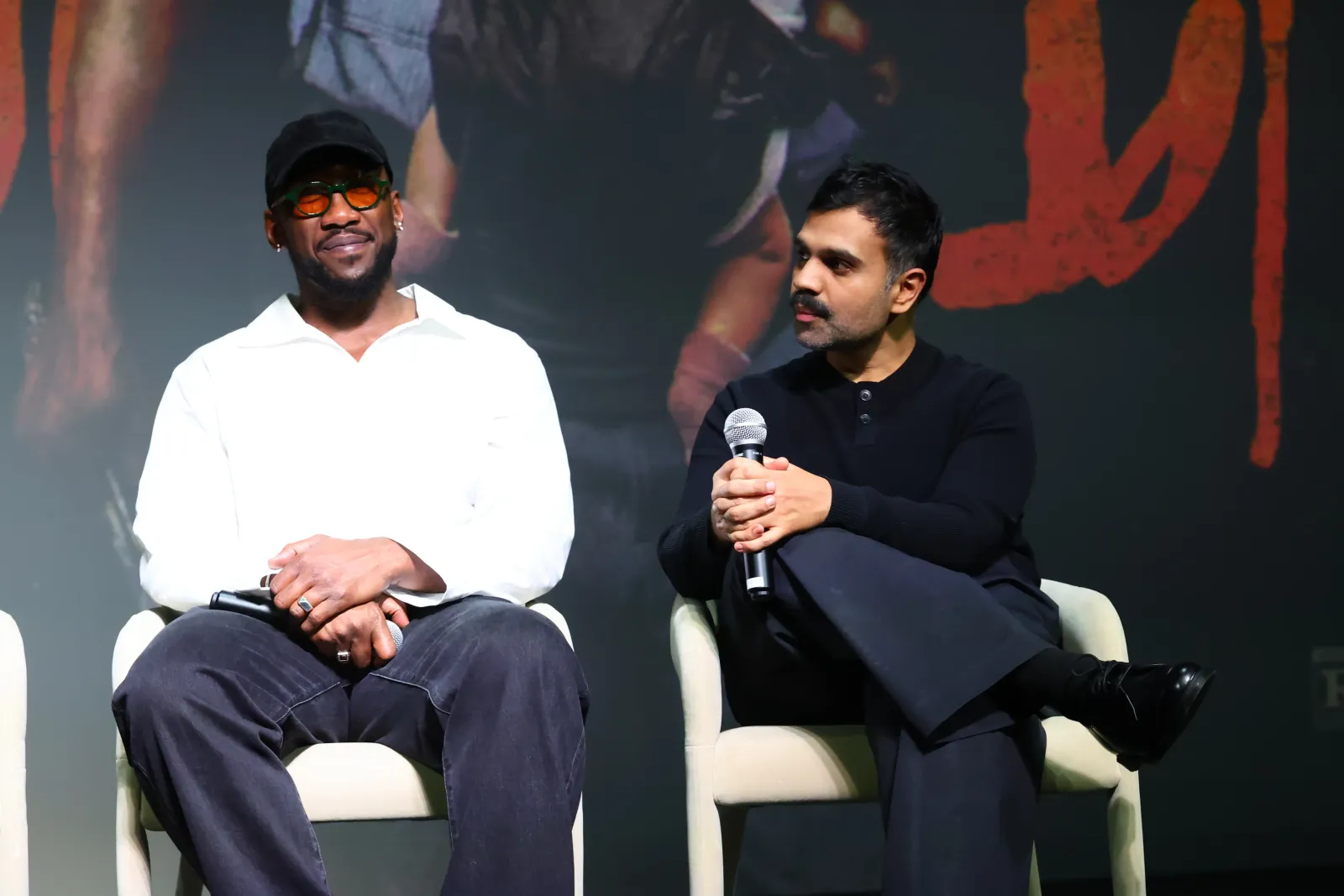
Bassam Tariq, the original director of Marvel's failed Blade movie, told The New Arab that the biggest lesson from his short-lived Marvel career is that 'life's too short to make shit films,' calling it 'funny and strange' to start casting and building without a proper script. His account puts a price tag on a development model that commits capital, crew and release dates before the screenplay exists, and it gives talent, financiers and boards a concrete test for when to walk.
Bassam Tariq, the director originally attached to Marvel's Blade, has said out loud what most people in Hollywood only say once the paperwork is signed and the project is dead. In a new interview with The New Arab, Tariq said the biggest lesson he took from his short-lived Marvel career is blunt: "life's too short to make shit films." He described the experience of starting to cast and build the movie without a finished screenplay as "funny and strange," and framed working without a proper script as "dangerous." Three quotes, one story: a director walked away from one of the most valuable franchises in entertainment because the pages were not there. The source material describes the resulting film as failed.
To understand why that matters, you have to know what "casting and building without a proper script" actually costs. Casting is not a round of auditions. It is offers, options, pay-or-play commitments and scheduling windows carved out of actors' calendars. Building is production design, costume, pre-visualization, visual effects vendors, soundstages and crews, all booked months or years ahead. Every one of those commitments is expensive to unwind and nearly impossible to unwind quietly. Doing it before the screenplay locks means a studio is effectively buying a movie it cannot yet describe to the people making it. Tariq's word for the experience was "funny and strange." The framing around his exit uses a sharper one: dangerous.
This is not a quirk of one director's temperament. Studios at this scale typically lock release dates before a screenplay is finished, because marketing, merchandising, licensing and international distribution all run on calendars that do not wait for a third-act rewrite. A date on the schedule becomes the organizing principle, and the script becomes the thing that has to catch up to it. For context, that inversion is a relatively modern habit, and it hardened during the streaming land grab, when the premium was on volume and speed rather than on finished drafts. The logic was defensible when subscribers were the metric. It gets harder to defend when the metric is a theatrical box office and a franchise's long-term value.
The economics explain why nobody stops. Historically, the further a project moves into pre-production, the harder it becomes to halt, because the spend is already committed and the people are already hired. Sunk cost is not a finance concept in a studio hallway; it is a social one. Cancelling means writing off development, disappointing a star, releasing crew, and explaining a hole in a release slate to investors who were promised a pipeline. So the rational individual decision at every step is to keep going, even when the aggregate decision is to make something nobody can defend. That is how a project reaches the point where a director is casting and building around a script that does not exist.
The talent side is where the calculus has shifted. Directors, above-the-line actors and their representatives now price reputational risk into the deals they sign, because a collapsed tentpole follows them for years in a way a small misfire does not. Tariq's account is a data point in that repricing: the cost of staying became higher than the cost of leaving. For a studio, that is a slow-moving problem. You can replace a director. You cannot easily replace the pool of directors willing to take the job under those conditions, and you cannot replace the years lost when a project resets.
There is a broader lesson buried in the quote, and it is about intellectual property. Franchise value lives in the name, and the name is genuinely valuable. But a name does not write a screenplay, block a scene, or solve a third act. When a company's strategy leans on recognizable titles, the temptation is to treat the title as the product and the script as a detail. Tariq's experience is what that looks like from the inside: casting and building as acts of faith. The source material's own description of the outcome, a failed movie, is the receipt.
For anyone allocating capital to content, running a studio, or building a creative business, the practical question is not whether Marvel made a mistake. It is what discipline looks like before the money is spent. Script lock before greenlight is the obvious answer, but the harder version is governance: who has the authority to stop a project that has a date, a star and a logo but no finished pages, and what evidence do they need to exercise it? Boards that ask only about slate size and release cadence are asking the easy questions. The expensive ones are about readiness.
Tariq's line will get quoted because it is funny and because it is profane. The reason it lands is that it is also a decision rule. Life is short, capital is finite, and calendars are not scripts. The studios that internalize that before their next tentpole goes into pre-production will save more than money. They will keep the directors.
This story's Key Insights and Take-aways are locked.
Create a free account to unlock Executive Actions for one credit.
Register to UnlockAlways free for Executives Club members. Join the Club
More in Entertainment

GTA 6 banks $3.8bn in one day, torching every launch record
One game just out-earned every video game launch and every single-day film box office haul in history, and the fallout lands on every media CEO's forecast.

GTA VI Racked Up $3.79 Billion in a Single Day, Topping Every Film Ever
A 13-year wait produced a $3.79 billion day, more than any movie has made in its entire run, and it resets the launch math for every studio, streamer, and brand chasing the same attention.

GTA 6 sells 32.5M pre-sales and $3.79B day one, torches 13-year record
Rockstar's sequel didn't just beat Grand Theft Auto V's 13-year-old benchmark; it reset what a launch can be, with 32.5 million pre-sale copies and $3.79 billion in a single day.