
“Computah” uses Meta Ray-Bans to “program” strangers, and the clips are going mainstream
A Chicago viral persona turns smart glasses into a comedy format, while Meta wrestles with creep-glasses optics.

Julius Mondragon, aka “Computah” on TikTok, uses Meta Ray-Ban smart glasses to issue bot-like commands to strangers, filming reactions across Chicago and beyond. For executives, it shows how consumer hardware adoption, regulation, and brand perception can pivot on the content people choose to make with it.
Julius Mondragon, aka “Computah” on TikTok, is using Meta Ray-Ban glasses for the one thing smart glasses rarely get credit for: turning the tech into a clear, shareable bit. On a chilly winter day, he boards a half-empty Metra train car in Chicago and commands a random woman typing on her laptop to “activate hyperspeed typing.” He tells two men sitting together to “make these two guys friends forever,” and instructs a passerby to “make sure this man feels confident and sexy at all times of the day.” Before he exits, he announces: “You’ve been programmed!” Then he does it again, and again, and again, filming the reactions.
That street-level stunt is why the “Computah” videos have gone viral, making him a local hero. Mondragon, 26, has built a whole character around wearing the Meta Ray-Ban glasses and recording people’s reactions to his weirdly accented “Computah” voice. It’s the kind of usage that is almost comically different from the default fears around wearable cameras. And unlike many viral tech experiments, he has a stated goal: he does not want to “mess up this person’s day,” and he’s trying to avoid interactions that leave someone feeling shitty. For anyone in product, strategy, or governance, this matters because the adoption path for camera wearables is not just about hardware quality. It is about what users do with them when they think no one is watching.
Meta Ray-Bans have been controversial since their launch in 2021, with recurring concern that people could use them as “creep glasses” to record others surreptitiously. The market signal, though, has been stronger than the backlash: the article notes that Meta said it sold more than 7 million pairs in 2025, triple the amount it sold in 2024. That means the product is finding buyers, even as optics remain fragile. The “Computah” approach is a direct counter-example to the worst-case narrative, because his videos are framed as consensual-feeling comedy theatre. Whether every reaction is fully consented to is complicated, but the footage is not presented as secret surveillance or harassment.
Still, the article is honest about the two buckets of content that show up online. It says social media footage tends to fall into trolls harassing service workers and men posting pickup-style attempts. Mondragon’s feed, he says, is mostly Meta videos, and he describes it as “mainly pickup artists and people trying to ragebait people.” When asked about “Computah’s” popularity, Meta spokesperson Andy Stone told Business Insider: “Local hero wears Ray-Ban Metas is a great story!” That quote is doing a lot of work here. It signals that Meta is comfortable leaning into mainstream, positive storylines, even while the underlying policy and social trust questions around camera wearables are still unresolved.
So how does Mondragon end up in this position, and why should executives care? The article lays out the incentive flywheel. Mondragon got a pair of the Meta Ray-Bans this past Christmas and started posting TikTok videos recorded by the glasses to TikTok in January. The “Computah” idea, he says, came from an Eric André sketch where André, in a black leotard with electronic parts glued on, pretends to be Google and approaches strangers on the street. Mondragon says that when he got the Metas, he thought: “What if I’m Meta and I’m pretending I’m just an AI and I can transform anything in my surroundings?” In other words, he turned the capability into a roleplay mechanic.
He also had a path to money that lets the content keep going. He grew up in the Chicago suburbs and lives on the South Side of Chicago. For the last few years he has been a music producer, while working a day job in retail. He recently quit his day job at Foot Locker thanks to money earned through social media. The article also says Cameo helped him financially: he charges $40 to send personalized messages to fans. That detail matters because it shows a hybrid model where consumer hardware becomes not just a novelty, but a distribution platform for income, recognition, and possibly a full-time career.
What it looks like in real life is where the “pattern interruption” idea lands. The article suggests there is something about the experience of being “programmed” that feels like a universal anxiety: that our worldview and the trajectory of our days, and even our bodies, are shaped by some unfeeling algorithm. Mondragon calls it a “pattern interruption,” saying that is “really what I’m trying to go for.” The piece also highlights a catch phrase that became a meme: “Computah, make these guys super gay and horny!” He says he means it in the spirit of fun, not as something antigay, and he is not sure why girls latched onto it.
On the day the article was written, Mondragon met up with the writer in a Harlem café near his hotel in New York. Later, on a subway ride downtown, he donned the glasses and began programming people in the car. New Yorkers, unsurprisingly, did not react much. But at a Washington Square Park rally for the New York Knicks, where a few hundred young men gathered to chant “Knicks in four,” the social dynamic flipped fast. Someone recognized him: “Hey, it’s Computah!” A young couple visiting from Florida, Amanda Rivera and her boyfriend Diego Casanova, asked him to program them. Casanova told the writer he was inspired by Mondragon to buy his own pair of Meta glasses, and he was wearing clear-lens frames while they spoke. When Mondragon started programming the Florida visitors, heads turned, cheers erupted, and a crowd formed. The article describes it as the “perfect chronically online cohort,” people who had seen his antics on TikTok and Reels.
For executives, boards, and anyone making decisions about consumer tech with cameras, this is the second-order lesson: the product narrative will be rewritten by the most persistent creators. If the dominant use cases online are harassment, the brand becomes a risk. If creators can turn the device into a recognizable format with clear boundaries, the device becomes culture instead of controversy. Mondragon is, effectively, proving that smart glasses can be both viral and funny, not just watchful. The question for peers is whether they build policies, partnerships, and user guidance that make that outcome easier to scale than the creepy one.
This story's Key Insights and Take-aways are locked.
Create a free account to unlock Executive Actions for one credit.
Register to UnlockAlways free for Executives Club members. Join the Club
More in Business

SpaceX debuts Friday on Nasdaq at $135, surges to $160.95, valued near $1.8T
A Nasdaq opening pop turns SpaceX into a public company overnight, forcing new money questions fast.

SpaceX shares jump 11% after its IPO, signaling a rush of AI mega-offerings
The biggest IPO ever in a crowded market just re-priced risk for the next wave: OpenAI and Anthropic.
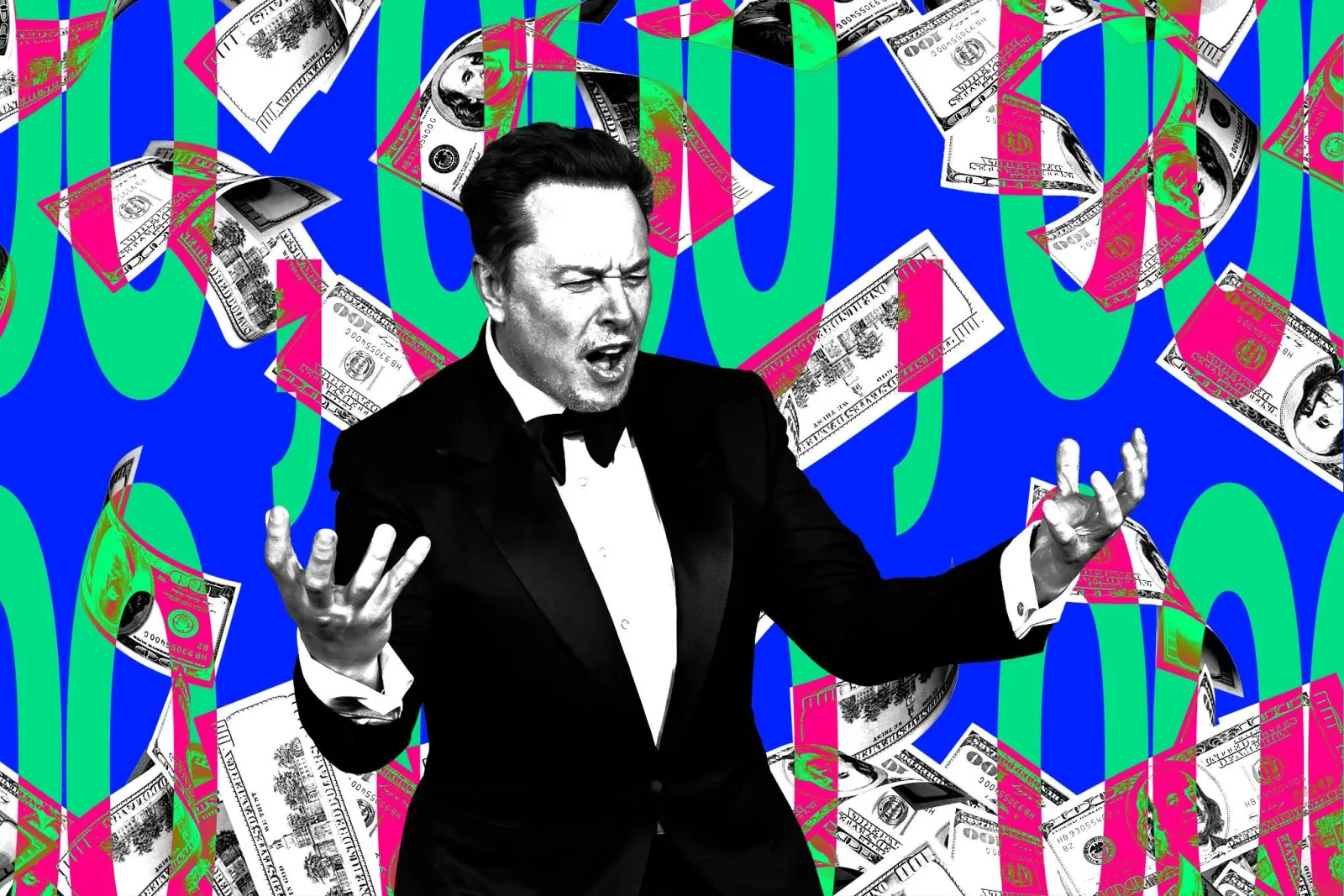
Elon Musk became the world’s first trillionaire after SpaceX IPO lifted him past $1T
SpaceX shares jumped, and Musk’s $800B pre-IPO value crossed a trillion, reshaping how investors price “moonshots.”