
Del Toro Denies Star Wars Talks, Then Confirms His Jabba the Hutt Script
The Oscar-winning director shut down Marvel and Star Wars rumors in one post, then spent the next day explaining the Lucasfilm movie he and David S. Goyer wrote that nobody ever greenlit.
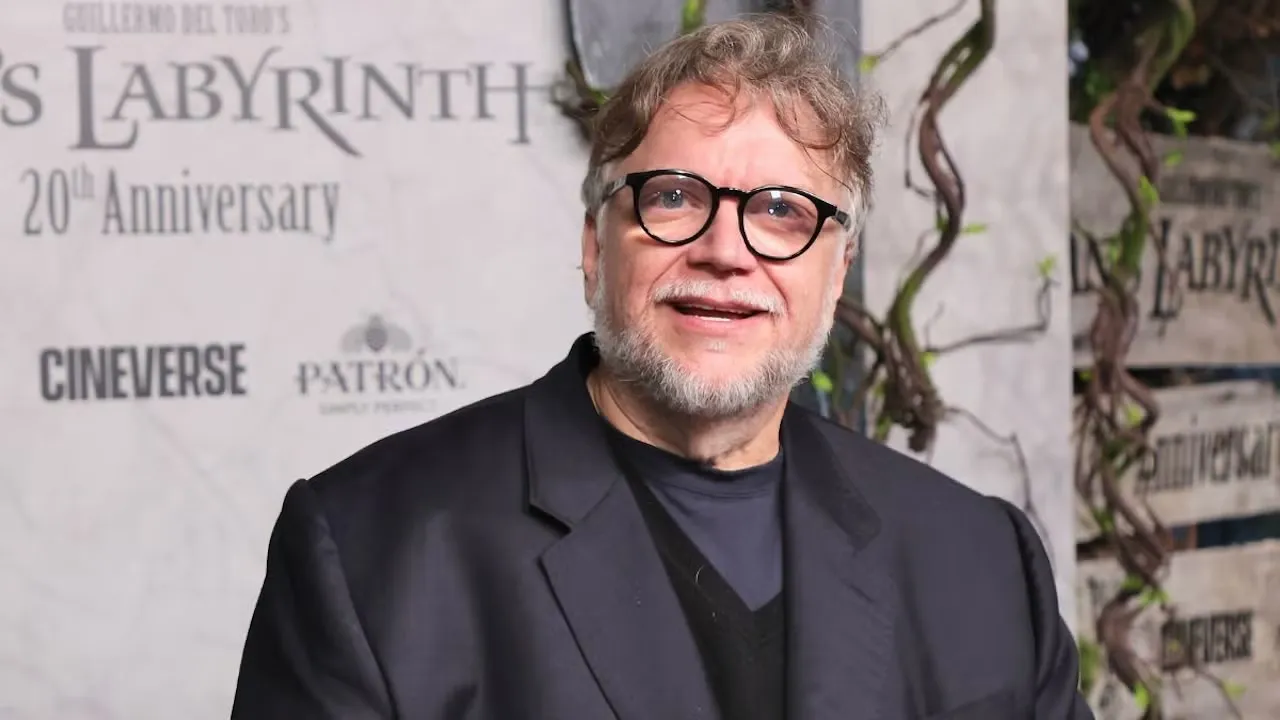
Guillermo del Toro publicly denied being in talks with any Star Wars or Marvel property, then confirmed he and David S. Goyer wrote a script and developed art for an unproduced film called 'The Rise and Fall of Jabba the Hutt.' For executives, the episode is a live case study in how a clean public denial can double as slate positioning, and how shelved IP drafts sit as free optionality on a franchise's balance sheet.
Guillermo del Toro would like everyone to calm down. On Thursday, the Oscar-winning director went on X to kill a rumor cycle that had attached him to the two biggest franchises in Hollywood, and he did it in the flattest terms available: "I am not in talks with any Star Wars, Marvel properties in any capacity. At all." Then he listed what he is actually doing. "I am involved in writing a screenplay, prepping my stop motion movie at Shadwomachine [sic], producing a few things for others and that's it." And he pre-empted the reaction before anyone could type it: "Just some facts (some will take this denial as confirmation, I know)."
He was right, and it took less than a day. On Friday, del Toro clarified that he and David S. Goyer had written a script and developed art for a Star Wars film called "The Rise and Fall of Jabba the Hutt," built around the slug-like crime lord first introduced in 1983's "Return of the Jedi." His words: "Goyer and I did write the script and I even developed some art and sculptures." The movie was never greenlit by Lucasfilm. So the denial was accurate and the rumor was directionally accurate at the same time, which is the most del Toro outcome available: a "no" that somehow arrives with concept sculptures attached.
That is the genuinely interesting part for anyone who runs a slate. In an IP-driven market, a director's public denial does two jobs at once. It clears the calendar, which matters when talent is juggling a dozen speculative attachments, and it advertises the calendar it cleared. Del Toro did not just say no. He named the screenplay he is writing, the stop-motion feature he is prepping and the producing work he has taken on. That is a portfolio statement dressed as a correction. The line about denial-as-confirmation is the tell: he knows that in franchise media, an unambiguous "no" is read by fans as a "not yet," and he said it anyway, because the alternative, silence, generates worse rumors than the truth.
The Star Wars side of the ledger explains why the rumor existed at all. The Hutt corner of the galaxy is warm again: Rotta the Hutt, Jabba's son, appeared in the recent "The Mandalorian and Grogu" feature film starring Pedro Pascal. The next Star Wars movie in the pipeline is Shawn Levy's "Star Wars: Starfighter," starring Ryan Gosling, slated for release in May 2027. A crime-lord origin story from a two-time Oscar winner is exactly the kind of pitch that generates a decade of internet gravity whether or not a studio ever says yes, and Lucasfilm never did.
Del Toro's franchise credentials are not speculative either. He directed "Blade II" in 2002, starring Wesley Snipes as the vampire hunter. The film was based on a Marvel Comics character but distributed by New Line Cinema, and Goyer, his Jabba co-writer, wrote it. He directed "Hellboy" and "Hellboy II: The Golden Army," both based on the Dark Horse comic character, plus the original mecha film "Pacific Rim" in 2013. On the Marvel side, the next MCU release is December's "Avengers: Doomsday," which is precisely why the rumor mill wanted a del Toro name in the mix. He has already worked inside that machinery once, and the industry remembers.
What he is actually building is smaller, stranger and arguably more defensible. ShadowMachine is the American animation studio behind his award-winning "Pinocchio" and the upcoming "The Buried Giant" adaptation for Netflix, which is presumably the stop-motion movie he referenced. Del Toro won the Academy Award for Best Picture and Best Director for 2017's "The Shape of Water" and Best Animated Feature in 2022 for "Pinocchio." That is a director who has already proven he can win the biggest prizes in the business without inheriting a franchise, and who is now choosing a capital-light, craft-heavy lane over a tentpole one.
The strategic read for anyone allocating capital to content: unproduced scripts are options, not failures. A shelved Jabba draft costs Lucasfilm nothing to keep in a drawer and can be revived the moment Hutt demand spikes, which is exactly what a Mandalorian-adjacent release does. Talent denials are also a form of disclosure. When a filmmaker of del Toro's stature says "at all," the market should believe him, and when he follows up with a specific, detailed account of what he did write, that is a signal about where his attention is going, not where it went. And the stop-motion lane deserves a second look. ShadowMachine gives a director franchise-scale IP without franchise-scale budgets, release-date pressure or a studio committee in the room. For peers weighing a nine-figure tentpole against a craft-driven slate, del Toro just showed his hand in public, twice, in 48 hours.
This story's Key Insights and Take-aways are locked.
Create a free account to unlock Executive Actions for one credit.
Register to UnlockAlways free for Executives Club members. Join the Club
More in Entertainment

GTA 6 banks $3.8bn in one day, torching every launch record
One game just out-earned every video game launch and every single-day film box office haul in history, and the fallout lands on every media CEO's forecast.

GTA VI Racked Up $3.79 Billion in a Single Day, Topping Every Film Ever
A 13-year wait produced a $3.79 billion day, more than any movie has made in its entire run, and it resets the launch math for every studio, streamer, and brand chasing the same attention.

GTA 6 sells 32.5M pre-sales and $3.79B day one, torches 13-year record
Rockstar's sequel didn't just beat Grand Theft Auto V's 13-year-old benchmark; it reset what a launch can be, with 32.5 million pre-sale copies and $3.79 billion in a single day.