
Elizabeth Holmes Doc Hits $100M Tonight. Documentaries Almost Never Get Here
A24's You Can See Everything, co-directed by Lance Oppenheim and Nathan Fielder, becomes one of the rare nonfiction films to crack nine figures, with $90.9M domestic and foreign still climbing.
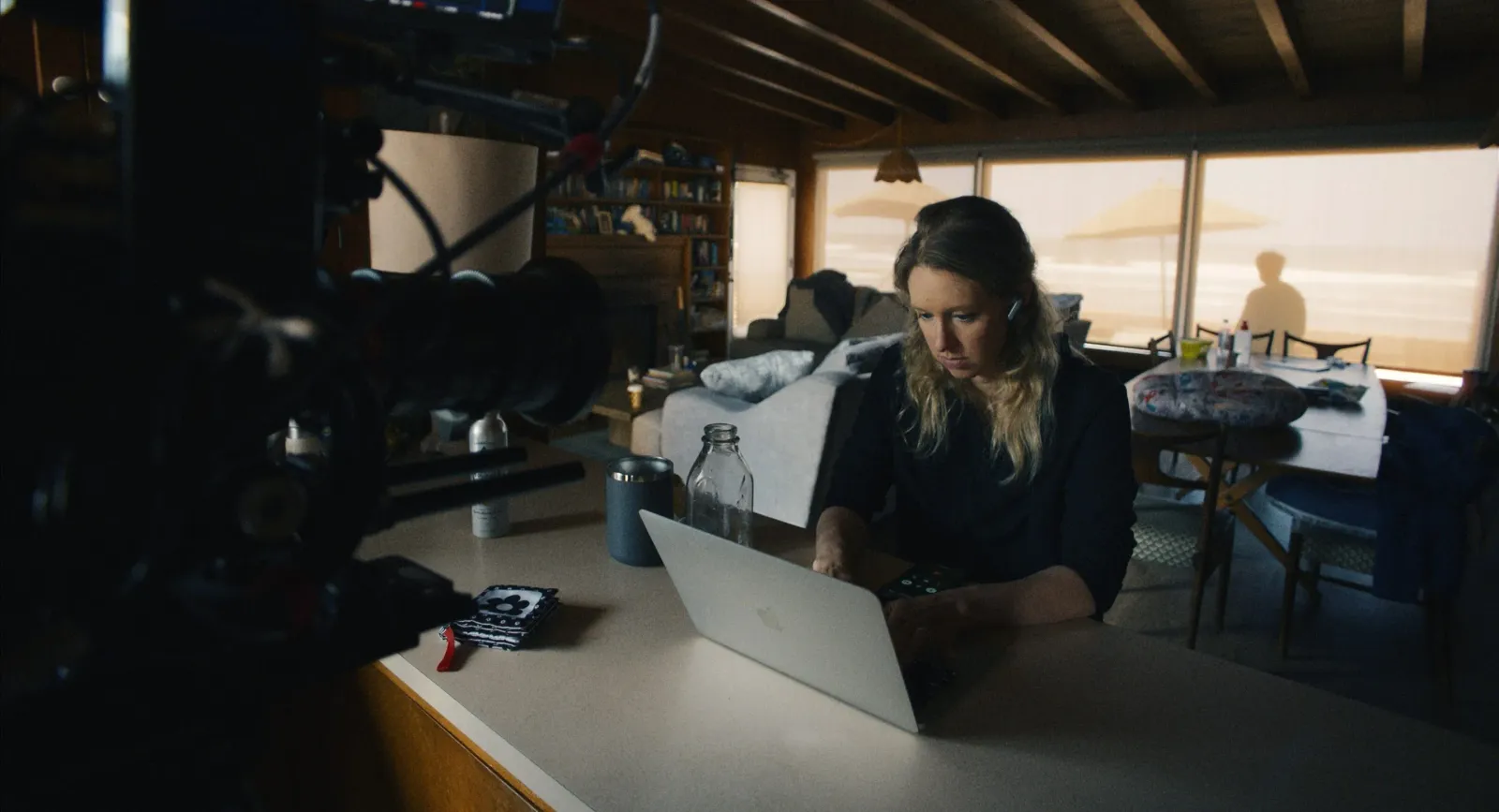
A24's documentary You Can See Everything, co-directed by Lance Oppenheim and Nathan Fielder and centered on Elizabeth Holmes, will pass $100 million worldwide tonight on $90.9 million domestic and a foreign cume coursing to $8 million. The result resets what nonfiction can earn, giving studios a new greenlight math and handing boards a fresh case study in founder-claim governance.
A24's You Can See Everything will cross $100 million at the global box office tonight, Deadline reports exclusively, and the split behind that number is the part that should make the industry sit up. Domestic stands at $90.9 million. The foreign cume is coursing toward $8 million today. That is a nearly all-domestic run for a documentary co-directed by Lance Oppenheim and Nathan Fielder, and it is about Elizabeth Holmes.
Now hold that against the genre. Nonfiction films, even the acclaimed ones, typically live in the single-digit millions domestically. A $100 million global gross is a club with only a handful of members, historically populated by political lightning rods and concert films. Oppenheim and Fielder just walked a movie about a disgraced blood-testing founder into it. Deadline calls the film groundbreaking, and the box office is doing the arguing.
For anyone who needs the backstory: Holmes founded Theranos on a promise that a single finger prick could run hundreds of diagnostic tests without a vial of blood or a lab. She raised hundreds of millions from investors, signed retail partners, and was once billed as the youngest self-made female billionaire. Then reporting unraveled the technology, the company collapsed, and Holmes was convicted on fraud charges in 2022. She was sentenced to more than 11 years in prison and reported to custody in 2023. The saga has already produced a bestselling book, a podcast, and a scripted series. What it had not produced, until now, is a theatrical hit of this size.
The domestic-foreign imbalance is its own signal. A $90.9 million domestic haul against a foreign cume heading to roughly $8 million means the film is selling almost entirely to an American audience, the market that watched the Theranos story unfold in real time and still wants the director's cut. For distributors, that is a useful data point: founder-fraud narratives travel as domestic product first, and international upside is a bonus, not the business case. Budget accordingly.
Why are people paying theater prices for a story they already know the ending to? Because the appetite for founder-fraud narratives has been building for years, and this result suggests the ceiling is far higher than anyone assumed. The film's title, You Can See Everything, reads like a dare in that context. The promise of total visibility into how a celebrated founder actually operated is exactly what a post-Theranos audience wants to buy, and the box office says they will buy it in numbers normally reserved for scripted tentpoles.
For A24, the math is even better than the headline. Documentaries are cheap relative to narrative features: no star salaries at the top of the call sheet, shorter shoots, leaner crews, no visual effects arms race. A $100 million gross on that cost base is a margin profile most studios cannot touch with a franchise sequel. It also gives A24 a nonfiction capability it did not obviously have, plus a title that historically becomes an awards-season fixture at this scale. The studio built its brand on taste and risk. This is the payoff version of that strategy.
The second-order effects land on founders, boards, and the investors who back them. Every founder who has ever stretched a metric now has a fresh reminder that the stretch can become a permanent public record, retold for a mass audience a decade later. Every board that waved through a charismatic chief executive's unverifiable claims has a case study in what governance failure looks like when it is edited for the screen. And every venture investor has a sharper answer to the question limited partners ask after a blowup: what did diligence actually check, and who signed off on it?
There is a harder lesson buried in the numbers. Holmes was convicted, imprisoned, and stripped of the story she told. The story itself, though, turned out to be one of the most valuable intellectual properties of the decade, and the people who built the cautionary tale are the ones collecting $100 million. That is a strange and instructive outcome for anyone who assumes reputational collapse is the end of the value chain. Watch what happens next. A documentary crossing nine figures changes what streamers and studios greenlight, what subjects get funded, and how fast the next founder scandal gets optioned. The Holmes chapter is closed in court. In the market, it just posted its best quarter yet.
This story's Key Insights and Take-aways are locked.
Create a free account to unlock Executive Actions for one credit.
Register to UnlockAlways free for Executives Club members. Join the Club
More in Entertainment

GTA 6 banks $3.8bn in one day, torching every launch record
One game just out-earned every video game launch and every single-day film box office haul in history, and the fallout lands on every media CEO's forecast.

GTA VI Racked Up $3.79 Billion in a Single Day, Topping Every Film Ever
A 13-year wait produced a $3.79 billion day, more than any movie has made in its entire run, and it resets the launch math for every studio, streamer, and brand chasing the same attention.

GTA 6 sells 32.5M pre-sales and $3.79B day one, torches 13-year record
Rockstar's sequel didn't just beat Grand Theft Auto V's 13-year-old benchmark; it reset what a launch can be, with 32.5 million pre-sale copies and $3.79 billion in a single day.