
Evolution turned this lemur into an opera star. Scientists are now listening.
After millions of years produced a lemur that sings like a trained soprano, researchers are turning its voice into a conservation instrument, and the reason is more urgent than the sound.
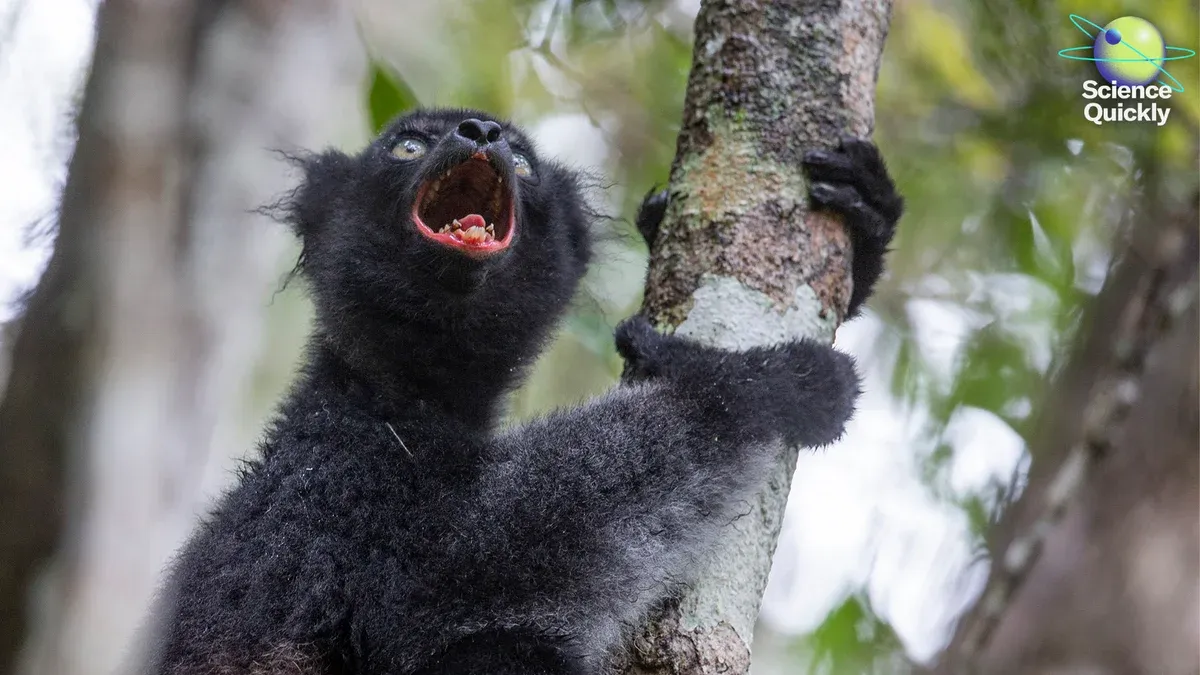
Scientific American reports that after millions of years of evolution, one lemur species sings like an opera star, and scientists are now tuning in with conservation in mind. For decision-makers, the story is an early look at how biodiversity is being instrumented: sound treated as data, and nature treated as a measurable reporting line.
Scientific American's headline says it plainly: after millions of years of evolution, one lemur species sings like an opera star. The follow-through is the part worth your attention. Scientists are not simply admiring the performance, they are tuning in with conservation in mind, which means the song is being treated as evidence rather than entertainment. That reframes a story that sounds like a nature documentary into something closer to a measurement problem: how do you protect an animal whose most distinctive feature is a sound?
The answer, in conservation biology generally, is that sound travels further and cheaper than a field team does. Acoustic monitoring has become a standard tool for estimating where animals are, how many remain, and whether a population is holding steady or slipping. When a species has a vocal repertoire as elaborate as this one, the signal is richer. Variation in pitch, rhythm, and phrasing can carry information about individuals, groups, and behavior, which is precisely the kind of detail that turns a recording into a dataset. The Scientific American framing puts the emphasis where it belongs. Millions of years of evolution built the instrument. The research now is about what the instrument can tell us before the species disappears.
Context matters here. Lemurs exist in the wild in one place on Earth: Madagascar, the island off southeast Africa that has been isolated for tens of millions of years. That isolation is exactly why the lineage is so strange and so varied, and it is also why the animals have nowhere else to go. Conservation assessments have repeatedly placed lemurs among the most threatened groups of mammals, with habitat loss from deforestation and agricultural clearing as the primary pressure. A species that evolved a showstopping voice over millions of years can lose the forest that carries it in a single human generation. That asymmetry, deep time on one side and a few decades on the other, is the whole reason the listening matters.
There is a second reason scientists lean in. Complex vocal behavior is rare. Songbirds do it. Whales and dolphins do it. Humans do it. Among primates, the trait is far less common, which makes a lemur with operatic range a genuinely useful case study for anyone asking how elaborate communication evolves in the first place. The comparison is not decorative. If you want to understand the biological ingredients that make sophisticated vocal learning possible, you need more than one example, and a primate lineage that split off early gives you a different data point than a songbird does. The lemur is not a novelty act. It is a control group with a very good voice.
Which brings the story back to funding. Conservation is a resource-allocation problem dressed up as a moral one. Field surveys are expensive, slow, and often difficult to run at scale; acoustic sensors are cheap, patient, and can operate continuously in places people cannot easily reach. For a species whose identity is bound up in sound, that is a rare alignment of biology and budget. The Scientific American piece is explicit that the motivation is conservation, not curiosity for its own sake, and that distinction matters when the money is being argued over. A recording that identifies a species, a group, or a trend is worth more to a funder than a recording that is merely beautiful.
Step back and the pattern is bigger than lemurs. Biodiversity is becoming a reporting line. Corporate nature disclosures are moving from voluntary to increasingly expected, and the frameworks that govern them need measurable inputs, not anecdotes. Acoustic monitoring, camera traps, and environmental DNA are the instruments that turn a stated commitment into a number an auditor can check. Any operator with land, long supply chains, or a public sustainability pledge should expect to be asked for that number within the next few years. The lemur is an early, charismatic example of a much broader shift: nature is being instrumented, and the instrumentation is getting cheap.
What to watch is whether the acoustic work produces something actionable. A baseline population estimate. A way to detect decline earlier than a visual survey would. A monitoring method that local researchers and communities can run themselves. That last one is the most important, and it is the one most often skipped. Conservation projects that depend entirely on outside expertise tend to end when the grant does. Projects that transfer the microphone to the people who live near the forest tend to last. If the lemur's song becomes a routine data stream rather than a novelty recording, that is the version of this story that actually protects the animal.
The strategic read for anyone building or backing a company is straightforward. The tools that make a lemur's song legible are the same tools that will make a supply chain's impact legible. Bioacoustics, remote sensing, and species-level data are quietly becoming infrastructure, and the species that benefits first is the one with the loudest, most distinctive signal, which is a strange and slightly wonderful accident of evolution. The species that benefits next may be the one whose defenders can afford the sensors. That is the uncomfortable part of the story, and it is worth sitting with.
This story's Key Insights and Take-aways are locked.
Create a free account to unlock Executive Actions for one credit.
Register to UnlockAlways free for Executives Club members. Join the Club
More in Science

AI that nails brain-activity tests may be solving them the wrong way
A new discovery suggests strong neural-prediction scores do not prove a model works like the brain, a warning for labs, neurotech investors, and anyone selling brain-like AI.

Scientists Want to Test Whether a Clock Can Run on Two Flows of Time
An atomic-clock experiment has been proposed to catch a never-observed quantum effect, a result that would redraw the boundary between time and gravity.

A star swallowed another star. Webb caught the aftermath in 47 days
Astronomers watched a small star spiral into a giant 18,000 times brighter than the Sun in Andromeda, and Webb's 47-day follow-up is rewriting how stellar mergers get studied.