
Field Museum names a new species from 309 million years ago, before the dinosaurs
The Chicago-area find predates the dinosaurs and adds a branch to the family tree of frogs and salamanders, a reminder that the fossil record is still an unfinished inventory.
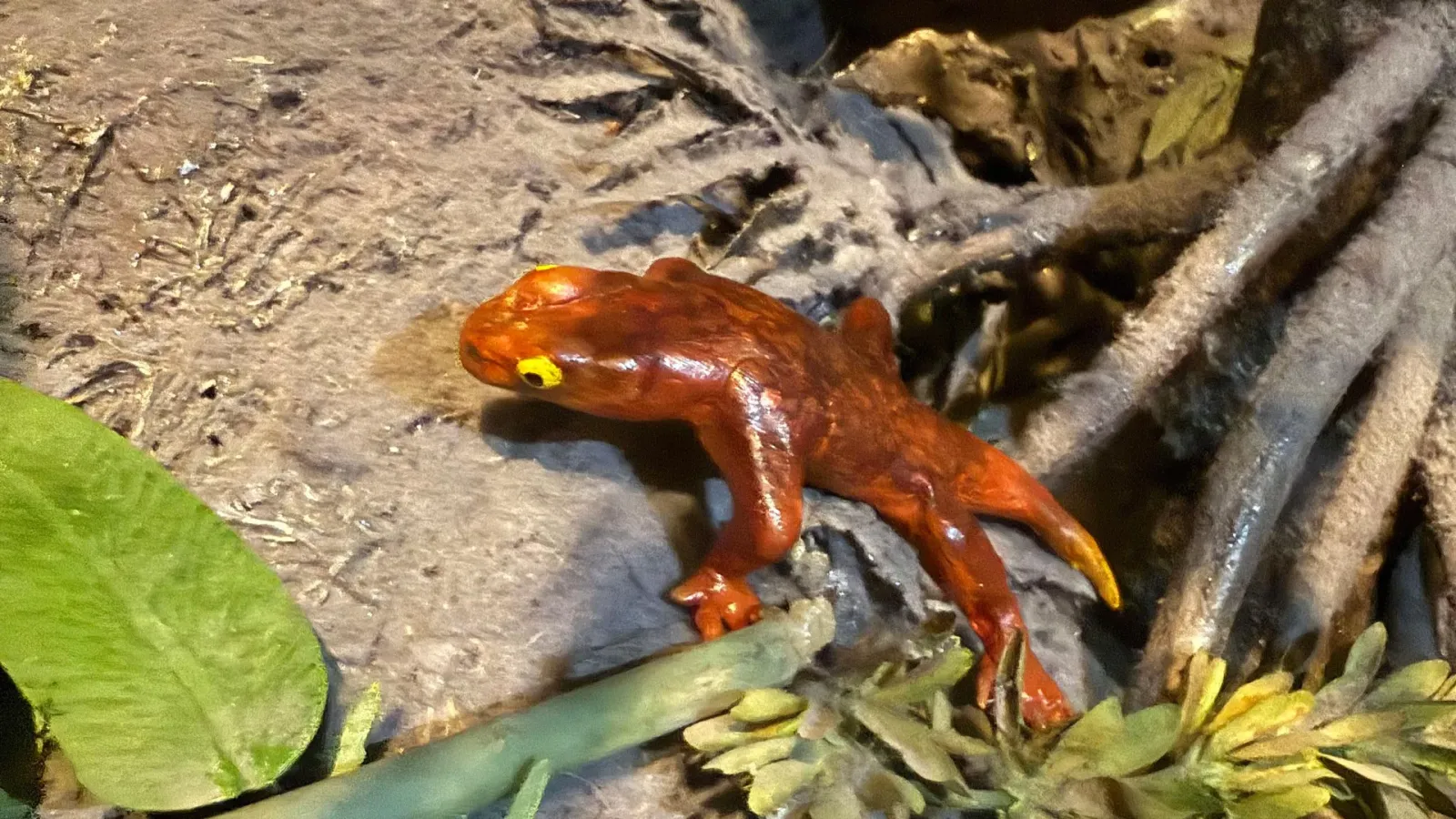
Scientists at the Field Museum have identified a previously unrecognized species of ancient amphibian ancestor that lived about 309 million years ago in what is now the Chicago area, long before the dinosaurs. For decision-makers, the find is a case study in long-horizon institutional research: the payoff from collections and patient funding arrives as a single named species, and it resets the baseline for how the frog and salamander lineage is dated.
Scientists at the Field Museum in Chicago have identified a previously unrecognized species of ancient amphibian ancestor, an animal that lived about 309 million years ago, long before dinosaurs roamed the Earth. The Chicago area at that time was not the grid of steel and lakefront traffic we know. It was a steamy, swampy landscape teeming with bizarre creatures, and the newly recognized species sits on the deep lineage that eventually produced every frog and salamander alive today. The museum's identification adds a branch to the earliest chapters of four-limbed life and, per the Field Museum, reveals new clues about how the amphibian line took shape.
Hold onto the number: 309 million years. Dinosaurs did not appear until roughly 230 million years ago, so this creature was already ancient, by something like 75 million years, when the first dinosaurs were getting started. It belongs to the Carboniferous period, an era when swamp forests covered huge stretches of what is now North America and Europe, when the climate and atmosphere looked nothing like today's, and when amphibians were a dominant form of vertebrate life rather than the pond-dwelling curiosities many people picture. The Chicago region, in that telling, was humid, low-lying, and biologically crowded.
The phrase "previously unrecognized species" is doing real work here. It does not mean a monster was pulled out of a parking lot last week. It means scientists examined ancient material and concluded it represents a distinct species that had never been formally described, a separate branch rather than a known one. That distinction matters because the fossil record is not a finished inventory. It is a partial ledger, and every new entry changes the shape of the tree around it. When the entry sits near the base of a major living group, as this one does for frogs and salamanders, the change ripples through how biologists date evolutionary splits, reconstruct anatomy, and argue about which traits came first.
For context on why a museum is the entity making this call: natural history museums are not just exhibit halls. They are research institutions with collections, labs, and staff scientists, and their core product is exactly this, the slow, unglamorous work of comparing specimens and naming what has not yet been named. That work is typically funded through a mix of philanthropy, grants, and endowment, which means discoveries like this one are effectively the return on decades of institutional patience. The Field Museum's announcement is a reminder that the pipeline from field to collection to published species description can run for a very long time, and that the payoff often arrives as a line in a scientific paper rather than a headline.
Why frogs and salamanders? Because they are the survivors. The lineage this animal belongs to did not vanish with the swamps. It narrowed, adapted, and persisted through mass extinctions that erased far more famous creatures, and it is still with us in backyards, wetlands, and pet stores. Amphibians today are also among the most closely watched vertebrate groups in conservation, sensitive to changes in water, temperature, and habitat in ways that make them useful early indicators of ecosystem stress. Understanding where they came from, and what the world they evolved in actually looked like, is the baseline against which their present is measured.
There is a broader lesson in the geography. The same patch of planet that now hosts one of the world's largest economies and a global commodities complex was, 309 million years ago, a swamp full of animals with no names until a scientist gave them one. Deep time compresses the things we treat as permanent. Coastlines, climates, and dominant species all rotate. For anyone building something meant to last, that is either a comfort or a warning, depending on how much of the thesis rests on conditions staying exactly as they are.
The immediate stakes are narrower and more concrete. A new species means new comparative data, new questions about when the amphibian lineage split from its relatives, and new reasons for the institutions that hold these collections to keep holding them. Historically, that is how paleontology tends to work: material sits in collections for years before someone recognizes what it actually is, which is why funding the storage and the staffing matters as much as funding the digging. The Field Museum just proved that the 309-million-year-old version of Chicago still had unnamed residents. The odds are good that the present one does too.
This story's Key Insights and Take-aways are locked.
Create a free account to unlock Executive Actions for one credit.
Register to UnlockAlways free for Executives Club members. Join the Club
More in Science

Anthropic's I.P.O. Made Rank-and-File Researchers Worth Tens of Millions
Researchers who joined just a few years ago are now worth tens of millions, and the windfall resets the pay benchmark for every private A.I. lab still paying in paper.

Sea Lion Culling Strategy Fails: New Model Says Killing Them Won't Save Salmon
The latest research from AAAS overturn a long-held conservation assumption, forcing policymakers to rethink critical resource allocation in marine ecosystems.

Microplastics do more than pile up: they react with water to damage cells
Scientists have found that plastic particles can generate highly reactive molecules in water, a mechanism that could explain links to heart attacks, strokes, and neurological disorders.