
Halo is the summer’s only true “forever game” while live-service keeps shrinking
A still-popular franchise goes single-player-first as Fortnite, Destiny 2, and others struggle to end big stories cleanly.
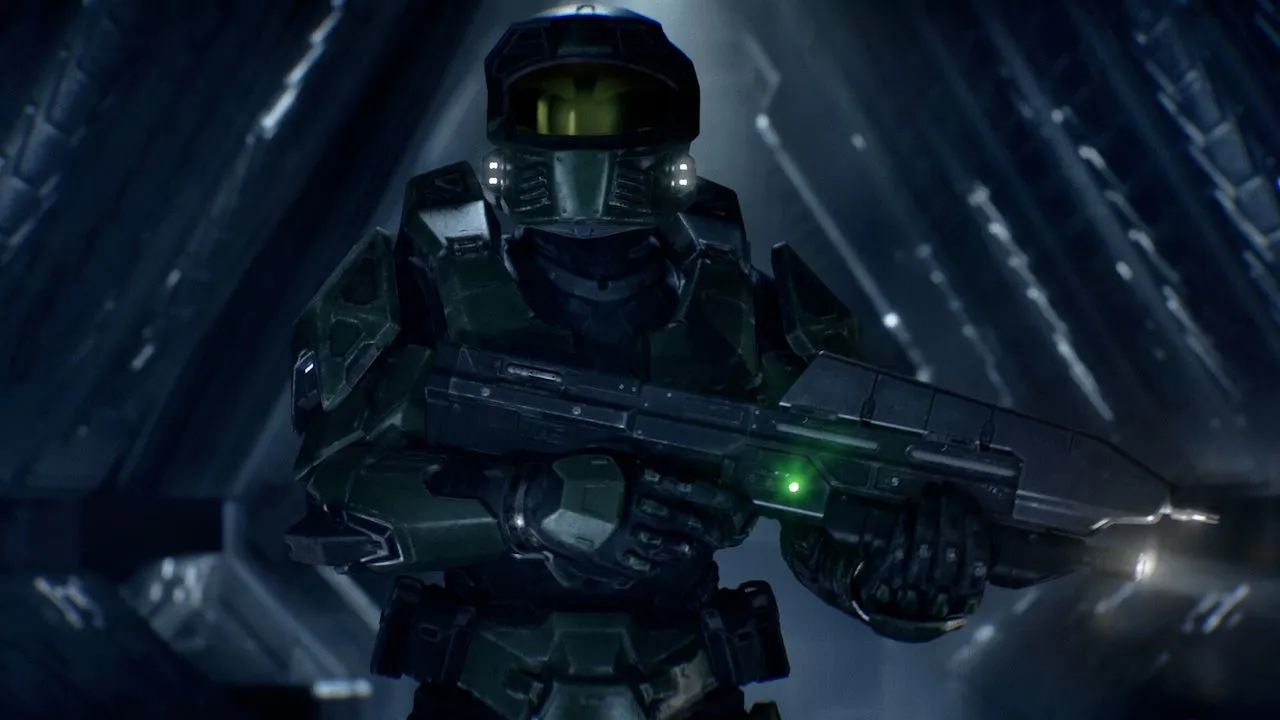
During Summer Game Fest weekend, the only clear “forever game” on show was Halo, with Halo: Combat Evolved highlighted as a repeatable legacy experience. The message for decision-makers: the live-service bet on endless retention is wobbling, while classic single-player formats look more durable.
The most telling thing about this summer’s showcase is not what got announced. It’s what barely showed up. Across Summer Game Fest and other big presentations, live-service future plans felt sparse, cautious, and in some cases stuck in time. Meanwhile, the one “forever game” that cut through was Halo, positioned as a classic single-player story that keeps coming back, now with a new redo: Hello, Halo: Campaign Evolved.
The disconnect is especially sharp when you remember how loudly the live-service era promised stability. For years, Fortnite was the Polaris for CEOs and shareholders, the idea that you could steer toward steady success with one game and a ready audience. That daydream curdled in the post-pandemic era when Fortnite became the center of metaverse mania, a broad philosophy for digital shopping malls that inspired plenty of grand executive essays, yet failed to coalesce into anything tangible. The follow-on is a harsh industry contraction: studios collapsed left and right, and Epic itself was forced into painful staffing changes after Fortnite engagement took a downturn. IGN’s source recounts that Epic laid off 1,000 employees following a significant downturn in Fortnite engagement, and notes that Tim Sweeney told staff at the time, “We’ve had challenges delivering consistent Fortnite magic with every season.”
This is why Halo’s presence lands so hard. It is not just a nostalgia moment. It’s an admission without a press release: a “forever game” does not have to mean “forever live-service.” In the IGN piece, the event is framed through the lens of where the money is going and who it is meant to serve. The article ties the pivot away from the metaverse hype and toward large-language models to a broader reshuffling of investment priorities. At the same time, it points out that the end-user demand being chased by these bets is not showing up in the way companies hoped. Even in Fortnite’s orbit, the content engine needs constant attention because story conclusions are hard to deliver when you’re always stringing players along with new activities.
Fortnite, for all its success, is being used as a cautionary tale about narrative endings. The article suggests that one of the greatest mistakes Bungie made with Destiny 2 was releasing The Final Shape, a well-loved expansion that tied off many long-running plot threads and gave players a natural stepping off point. The game, per the source, never recovered, and it is soon to enter life support after its final major update. That sequence matters because it reveals the underlying tension boards wrestle with: the better the ending, the more it risks shrinking the platform. Live-service wants infinite runway. Players want closure. When those collide, both engagement and development momentum get stressed.
Now look at what else the source says was missing. During last week’s Summer Game Fest show, the live-service announcements that did appear were, “in the main, ancient survivors of the MMO wars.” Jagex showed up with Dragonwilds, described as a RuneScape survival spinoff, and Guild Wars 3 was positioned as ArenaNet’s “next evolution of the MMORPG,” with the genre characterized in the article as having “stagnated.” The broader point is not whether those games will be good. It is that the pipeline for entirely new, convincing live-service franchises looks thin. And thin pipelines do not just mean fewer headlines. They mean more studios rushing to make “forever” promises under tighter constraints, which the article frames as a recipe for wasted spend and cut material.
In the background, the article argues, cutbacks are smothering new studios and forcing clearer scoping. Even when developers survive, the surviving projects often look like games with beginnings and ends. That shows up in several examples cited: That’s No Moon’s Crossfire, revealed at SGF with a third-person shooter and a cover mechanic; Remedy represented by Control Resonant, described as blending an architecturally-impossible Manhattan with mind-bending mystery, after its own live-service effort FBC: Firebreak was put to bed just a year after launch; and Nintendo’s direction, where Rayman Legends Retold focuses on couch co-op only and Vampire Survivors scales battle royale maxes out at eight players, explicitly framed as a rebuttal to the steep server-filling demands that once dominated charts. The article also notes DayZ and Final Fantasy 14 appeared with no obvious successors “jostling for their crowns.” That’s a pipeline story as much as it is a genre story.
Even the systems that once anchored the “forever” model are shifting. The IGN source says Nintendo’s flagship competitive live-service game, Splatoon, has been redirected toward single-player storytelling. With Splatoon Raiders, the company emphasizes overwhelming combat encounters fought against seaside wildlife with pots and pans, rather than sweaty online showdowns. Over on the Xbox side, the article uses Fallout 76 and Sea of Thieves as reminders of how messy live-service can be in practice: Fallout 76 had a transformative turnaround beginning during the pandemic after Bethesda repopulated its wasteland with NPCs and gained momentum with the arrival of Amazon’s TV show, but “before that expensive resuscitation,” many believed it was dead-on-arrival. Sea of Thieves, Rare’s only publicly known live-service project after nine years of development on Everwild ended in cancellation, is framed as having strengths that were buried under repetitive loops and progression grind until the team embraced its piratically themed hangout identity.
And then there is the regulatory-shaped warning hiding in the middle of the strategy. The source recalls The Elder Scrolls Online and notes that stealing mechanics were once impossible, causing enough player upset that Zenimax made sweeping changes to the fundamentals of the game, in hopes of winning over Skyrim diehards. The “lesson,” in the article’s phrasing, is that years of fumbling and catastrophe are inherent to building a live-service game to last, and that few publishers can spare the funding to endure sustained periods of review bombings and near-empty servers. That matters to executives because it reframes risk as not only operational, but reputational and financial. A long-lived live-service model is a marathon with potholes, and not every company can keep paying for the ambulance.
So what does this summer’s Halo moment mean for decision-makers? The article ends by framing the healthiest option as accepting that the perfect perpetual chart-topper “forever game” might not exist. But in the absence of healthy thinking, it argues the industry is finding a different sort of forever: the classic single-player story. Halo: Campaign Evolved, specifically with Halo Studios not building a multiplayer mode this time around, is the clearest signal in the entire cycle. If even Fortnite cannot live up to the promise of “Fortnite,” the strategic center of gravity moves to experiences people can complete, revisit, and return to without requiring a never-ending content conveyor.
Executives and boards should treat this as more than a pivot in taste. It is a capital allocation warning. When live-service contracts get expensive and uncertain, legacy formats look sturdier, because they do not demand infinite narrative supply or infinite server promises. Halo on show is not just “what players like.” It is what developers are willing to bet their future on when the live-service future feels less like a forever plan and more like a fragile bet on staying afloat.
This story's Key Insights and Take-aways are locked.
Create a free account to unlock Executive Actions for one credit.
Register to UnlockAlways free for Executives Club members. Join the Club
More in Business

Elon Musk became the world’s first trillionaire after SpaceX IPO lifted him past $1T
SpaceX shares jumped, and Musk’s $800B pre-IPO value crossed a trillion, reshaping how investors price “moonshots.”

SpaceX IPO priced June 12 at $135: Elon Musk crosses $1T as funds pick up the tab
The SpaceX IPO values the company around $1.77T and estimates Musk’s stake at $866.5B, with broad investor ripple effects.

SpaceX IPO values it at $1.77tn, and Nasdaq fast-tracks its index entry
Forced buyers and tracker funds could amplify buying pressure as SpaceX joins the Nasdaq index on a rule tweak.