
Justice Department approves Paramount Skydance’s $111B Warner Bros. Discovery deal, report says
Regulators reportedly cleared the merger without divestitures, behavioral remedies, or concessions, removing a major holdout.
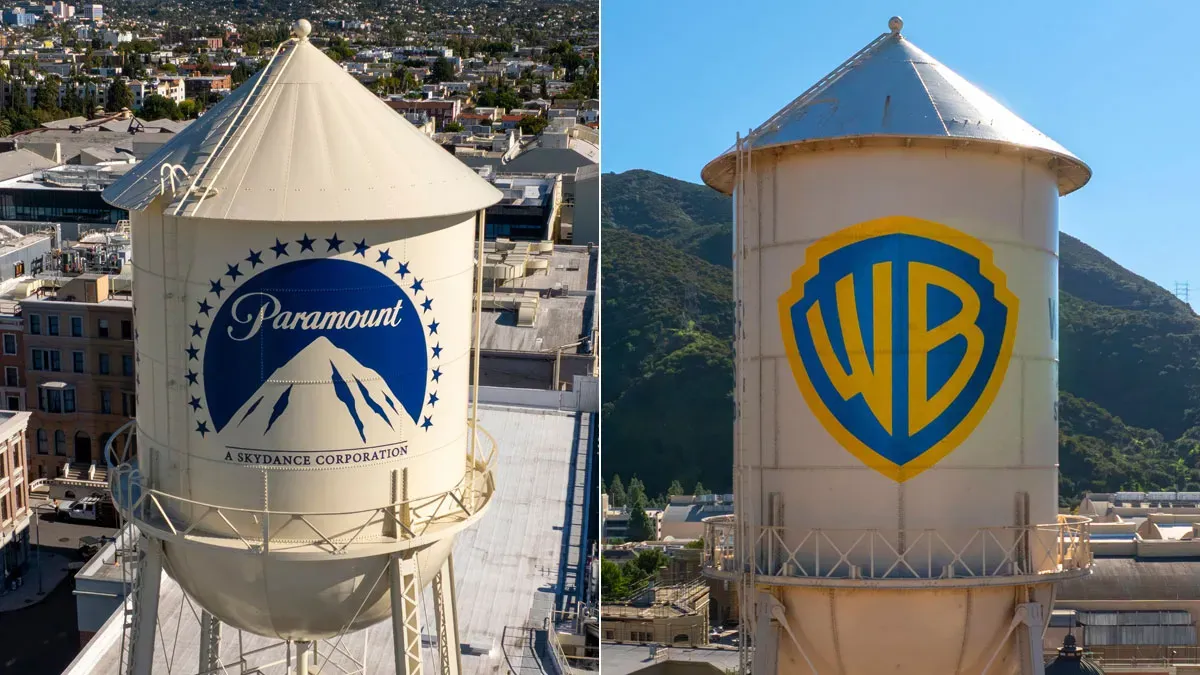
The Justice Department's Antitrust Division has approved Paramount Skydance's reported $111 billion acquisition of Warner Bros. Discovery, For dealmakers, that means one of the biggest regulatory obstacles appears to have evaporated, reshaping timing and bargaining leverage.
The Justice Department's Antitrust Division has given the green light to Paramount Skydance’s reported $111 billion acquisition of Warner Bros. Discovery, according to Politico. And crucially, the reported approval did not come with requirements for “divestitures, behavioral remedies or concessions,” which is a rare kind of regulatory clean bill of health for a transaction of this size.
If you are a board member, a general counsel, or anyone living inside a corporate development function, this matters because it changes the deal’s risk math overnight. A merger this big normally triggers a long runway of negotiated fixes: selling overlapping assets, imposing conduct limits, or agreeing to operational concessions. The report’s framing suggests the U.S. government concluded there was no need to force those kinds of remedies.
To understand why executives should care, zoom out to what these companies actually represent in the U.S. entertainment ecosystem. Paramount Skydance and Warner Bros. Discovery are not just media brands. They are portfolios of content, distribution relationships, and monetization pipelines that span streaming, linear TV, cable, and licensing. In practice, consolidation can shift negotiating power with platforms, advertisers, and carriage partners. Regulators typically scrutinize whether that power can translate into higher prices, reduced choice, or foreclosure of rivals. The reported absence of remedies implies the Antitrust Division did not see the kind of competitive harm that typically forces a breakup or behavioral constraints.
That reported outcome also has a second-order effect that often gets overlooked: speed and certainty. Deals do not merely compete on valuation. They compete on regulatory timelines and the probability-weighted path to closing. If the Justice Department approval did not demand divestitures or concessions, the merging parties likely avoided one of the most time-consuming portions of the process, namely redesigning the deal structure and lining up buyers for spun assets. For investors and executives, that can translate into less schedule risk, fewer surprise renegotiations, and potentially more stable funding plans.
It also affects how other stakeholders model their own leverage. When remedies are required, the government effectively becomes a co-author of the transaction, and that can slow down integration plans. When remedies are not required, the integration conversation can move faster and more directly to execution, including cost synergies and distribution strategy. Even if executives cannot assume the rest of the process will be frictionless, a favorable federal posture tends to reduce the number of moving parts that can break a deal.
For the industry, the signaling is bigger than one transaction. The entertainment business is currently wrestling with the tension between expensive content and uncertain subscriber economics, while platforms and distributors constantly rebalance bargaining power. In that environment, consolidation can be a survival strategy, a growth strategy, or both. When antitrust authorities approve a blockbuster merger without the usual guardrails, it sends a message about how regulators may view market outcomes when the parties are reshaping under competitive pressure rather than seeking to freeze rivals out.
Executives at peer companies should treat this as a prompt to revisit their own board-level risk assumptions. The question is not just whether regulators can approve large media deals. It is what the “approval without remedies” scenario suggests about where the competitive line is being drawn. If you are managing a similar transaction or evaluating partnerships, you will want to understand how regulators are thinking about overlaps, market dynamics, and whether harm can be addressed through the structure of the deal instead of ongoing behavioral oversight.
The immediate takeaway for decision-makers is straightforward: one less obstacle appears to stand between Paramount Skydance and closing its reported $111 billion acquisition of Warner Bros. Discovery. For anyone underwriting valuation, timeline, or integration capacity, that reported Justice Department clearance reduces regulatory tail risk at the exact moment those bets are usually at their most fragile.
This story's Key Insights and Take-aways are locked.
Create a free account to unlock Executive Actions for one credit.
Register to UnlockAlways free for Executives Club members. Join the Club
More in Business

SpaceX debuts Friday on Nasdaq at $135, surges to $160.95, valued near $1.8T
A Nasdaq opening pop turns SpaceX into a public company overnight, forcing new money questions fast.

SpaceX shares jump 11% after its IPO, signaling a rush of AI mega-offerings
The biggest IPO ever in a crowded market just re-priced risk for the next wave: OpenAI and Anthropic.
Elon Musk became the world’s first trillionaire after SpaceX IPO lifted him past $1T
SpaceX shares jumped, and Musk’s $800B pre-IPO value crossed a trillion, reshaping how investors price “moonshots.”