
Kristi Edleson uses an AI chief of staff at Yutori. She draws a hard line on finances
The chief of staff who helped build the agent says the real challenge is deciding what belongs in your head versus your inbox.
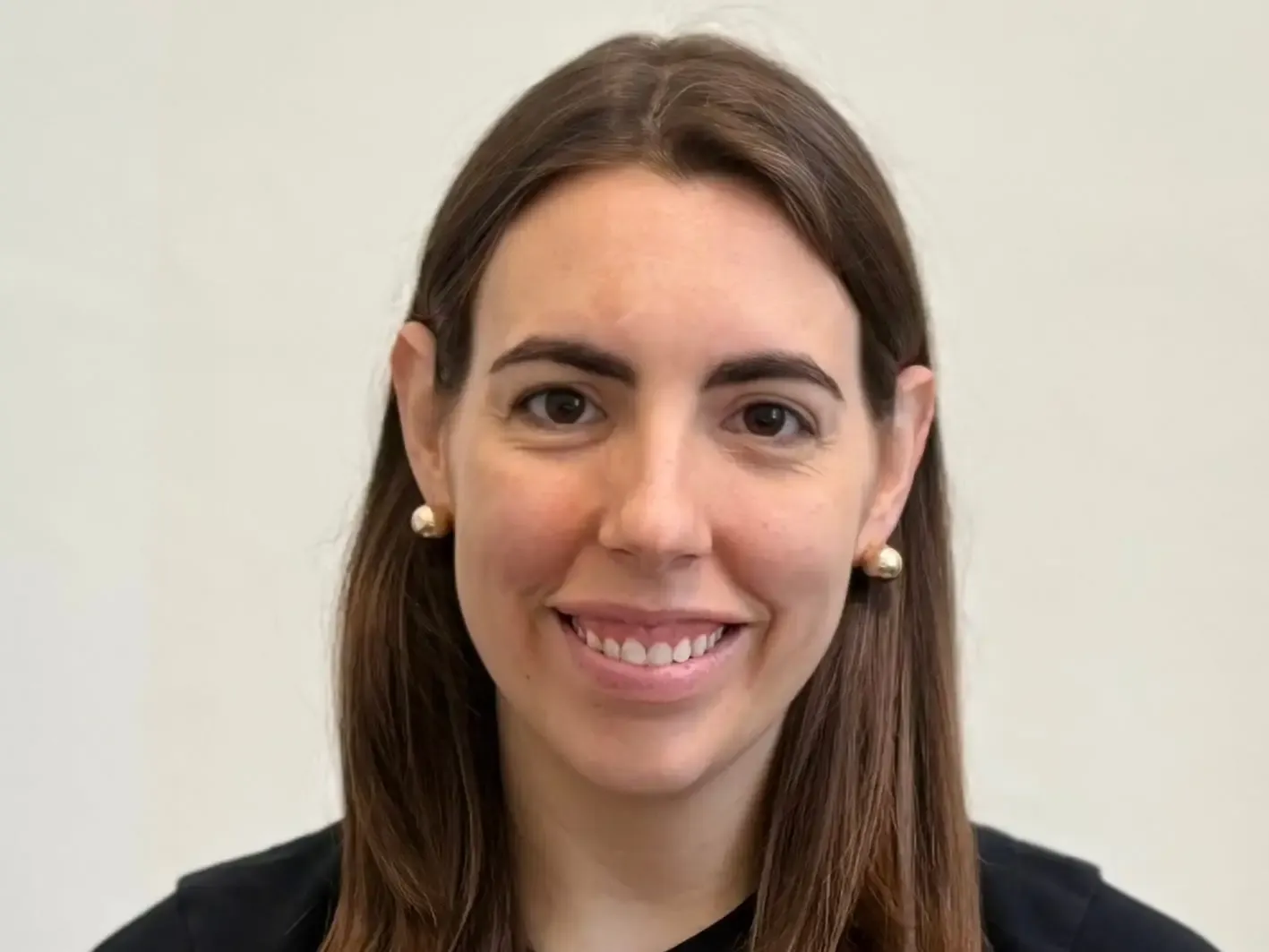
Kristi Edleson, chief of staff at Yutori, says she relies on an AI version of herself to triage work across email, Slack, and project tools. But she refuses to let the agent handle financial tasks, arguing some mistakes are impossible to undo.
Kristi Edleson has an AI chief of staff. She is the chief of staff at Yutori, and she says the hardest part is not building trust in the agent. It is knowing exactly when a task should stay with her, and when it can be safely outsourced to the machine.
The line she will not cross is finance. She is not using the AI chief of staff agent for financial tasks “right now,” and she connects the decision to risk, saying finances are where she and “a lot of people” draw the line. Her logic is blunt: a bad email is annoying and fixable, but you “can't un-spend $500.”
That distinction matters because it is basically the blueprint for how the “Tiny Teams” era will work in practice, not in demos. Edleson’s job description reads like the connective tissue of a startup: daily operations, finance, HR, compliance, vendor conversations, negotiating contracts, and reading contracts. She is also explicit that she is the only non-technical person at the AI company she works for, having previously worked in recruiting for “the past 10 years” after a longer connection to the founders from when she was a recruiter at Meta. When she pivoted into this role in spring 2025, the founders did not even have a named job title yet. As the need grew and conversations evolved, they settled on “chief of staff.”
So what does her AI agent actually do? She says it is connected to her work tools, including email, Slack, Linear, and Granola, so it can pull in context. It also reads her calendar to alert her to what else is on the plate. From there, she decides what to hand off. Before AI agents, she would look at her task list and know she had to do everything. Now the question flips: what can she delegate so she can find more meaningful problems to solve, which means she has to go looking for the work that only a human can own.
The operational workflow sounds simple, but it is doing something subtle. In the mornings, she uses voice mode to do a brain dump, unloading everything “in any order of chaos” without relying on “set prompts.” Then the agent drafts work she might otherwise do manually. She likes “reach” over blind automation: the agent can draft emails or Slack messages, and she approves most items before they hit send. She says there have not been major mistakes, but the approval step is there as a safeguard, because she recognizes that an agent can still get things wrong even when it is helpful.
On the vendor side, she is using AI as a preparation and de-risking tool, not as a replacement for her judgment. One of her core tasks is negotiating vendor contracts for technical infrastructure needed to run models, like compute or inference. She says she is non-technical, and she uses the agent to avoid asking “silly questions” or slowing the timeline. About 30 minutes before a call, she asks the agent, “What's the latest? What's the sentiment from the team on this tool?” She then uses the agent’s output as a shortcut to both how the company uses the tools and what other teams have been saying publicly in shared channels. She also points out a psychological benefit: it helps her arrive at vendor conversations with authority, and it gives her a way to ask questions she might feel embarrassed to ask internally.
For executives and boards, the bigger takeaway is that Edleson’s “AI chief of staff” is not a sci-fi replacement story. It is a boundary-setting story. She keeps writing and handling many tasks herself, then uses agents as a gut-check, especially for anything strategic. She also describes the personal cost of relying on automation: she is working on how to keep a mental map of everything she is working on when AI takes over some attention. That is a second-order issue organizations often miss. When machines take care of the execution layer, humans can lose the “always-on” awareness that used to come from doing the work line by line. The cure is not necessarily more automation. It may be better information design so leaders still understand what is happening even when the agent moves faster than their brain.
There is also a governance signal here. When she refuses to let the agent handle finances, she is implicitly defining risk classes for what a company should automate. That framing is especially relevant in startups where controls and audit trails are still catching up to ambition. Her example also contrasts with the broader buzz about full automation or the end of certain roles. She says she feels “happily surprised” by how empowered she feels instead of replaced, describing AI as “basically the world's most patient tutor.” If you are running a tiny team, the message is: start by delegating the work that benefits from scale and pattern matching, keep humans in charge of irreversibility, and build review steps so the system can move quickly without moving recklessly.
Edleson’s job is high-impact because it sits at the intersection of coordination, operational speed, and decision-making. Her refusal to automate finance is not a rejection of AI. It is a clear statement that not every task can be made reversible by software, and that leadership still means choosing where accountability lives.
This story's Key Insights and Take-aways are locked.
Create a free account to unlock Executive Actions for one credit.
Register to UnlockAlways free for Executives Club members. Join the Club
More in Business

SpaceX IPO priced June 12 at $135: Elon Musk crosses $1T as funds pick up the tab
The SpaceX IPO values the company around $1.77T and estimates Musk’s stake at $866.5B, with broad investor ripple effects.

SpaceX IPO values it at $1.77tn, and Nasdaq fast-tracks its index entry
Forced buyers and tracker funds could amplify buying pressure as SpaceX joins the Nasdaq index on a rule tweak.

SpaceX’s $75B IPO: Japan retail got $2.2B, Nasdaq started trading today
The SPCX listing breaks records, but Japanese household investors quietly took a meaningful chunk of the biggest payday ever.