
RJ Scaringe says Rivian R2 avoids Model Y because EVs under $50,000 lack choice
In a Masters of Scale interview, Rivian’s CEO lays out two reasons the R2 stands apart from Tesla.
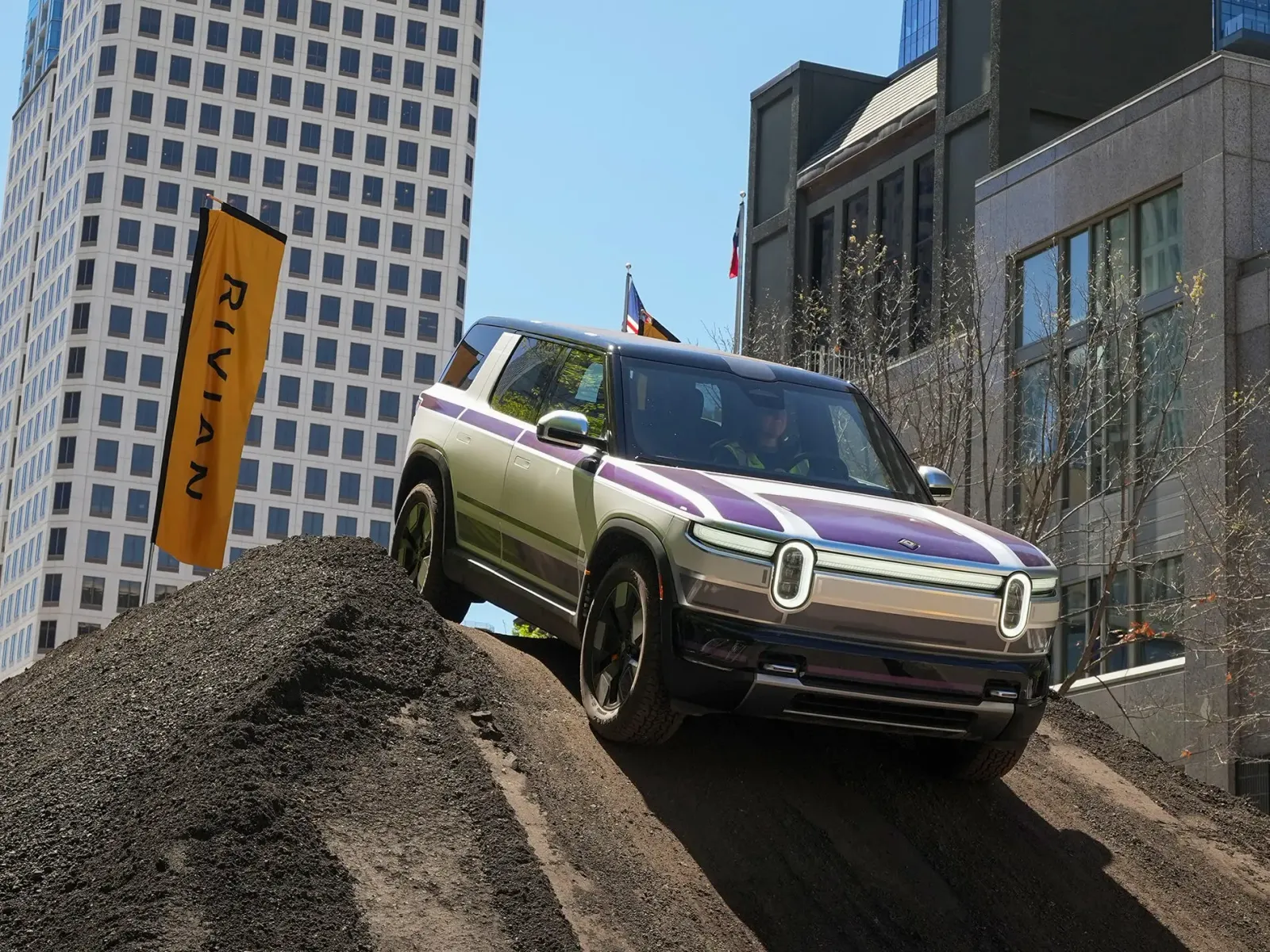
Rivian CEO RJ Scaringe told an audience in a “Masters of Scale” interview released Thursday why he didn’t want the company’s R2 SUV to resemble Tesla’s Model Y. He pinned the design strategy on improving choice for EVs under $50,000 and keeping Rivian’s product distinct rather than making “Model Y copies.”
Rivian is delivering its R2 SUV, and CEO RJ Scaringe is making one thing clear: he did not want the R2 to look like the Tesla Model Y. In a “Masters of Scale” interview released Thursday, Scaringe pointed to two reasons the R2 is intentionally different in shape and feel from the affordable EV that dominates US attention.
First, Scaringe said the United States is “wildly underserved” for EVs under $50,000, describing it as an “extreme lack of choice.” He argued that while Tesla’s Model Y and Model 3 are “great vehicles,” EV buyers still need alternatives. His framing was direct: “Not everyone is going to want that exact shape, that exact form factor, that exact look. And so Rivian can do a part in that.” That is the strategic center of gravity for the R2, even before you get into trim levels, pricing, or manufacturing timelines.
Second, Scaringe said Rivian wants the R2 to be its own product, not a clone that borrows Tesla’s blueprint. He told viewers he has seen other players fail when they compete by making “Model Y copies” instead of building something with “deep conviction around building a product that's linked to your brand.” The practical point he added is about buyer psychology: if a consumer wants a Model Y, they will buy the Model Y, not an “XYZ company’s version of a Model Y.” In other words, differentiation is not just aesthetic. It is a go-to-market bet on brand identity, product ownership, and the willingness of customers to choose something that does not look like a substitute.
This matters because Rivian is not selling the R2 as a one-off experiment. The company positions it as its cheapest electric car yet and is rolling it out in a way that suggests a longer-term push for scale, not a limited run. Rivian started deliveries of the R2 on Tuesday, according to the report, and the product line is split into three versions: “Standard,” “Premium,” and “Performance.” That segmentation is part of how automakers in general use product ladders to broaden addressable demand while protecting margins, and here it also serves Scaringe’s thesis. If the market below $50,000 is thin on options, Rivian can win customers in stages, starting with the configuration it can deliver now and expanding access over time.
The timing and pricing provide the concrete “how” behind Scaringe’s “why.” According to the automaker’s website, only the “Performance” version, starting at $57,990, is now being delivered. The $44,990 “Standard” version will start delivery in 2027, while the $53,990 “Premium” version will arrive later this year. Notice what that implies for the under-$50,000 choice argument: Rivian is making the case about a gap in the market, but it is also acknowledging that filling that gap is a phased rollout. The closest immediate entry point is above $50,000, then it moves downward with the Standard trim in 2027. That sequencing is likely about supply readiness, production learning curves, and ramp economics, even if Scaringe’s remarks are focused on consumer choice and brand conviction rather than factory math.
There is also an investor and competitive-structure angle hiding inside the design debate. Tesla’s advantage is not only its cars, but also the market gravity of its models, particularly the Model Y. When a new entrant copies the same external cues, it often ends up fighting over the same customer segment with similar mental associations, which can compress differentiation and force heavier spending. Scaringe’s comments basically argue that Rivian wants to avoid that trap. He is not denying Tesla’s quality. He is warning that imitation is a bad business strategy because customers do not buy “close enough” substitutes when they can buy the category-defining reference product.
For boards, leadership teams, and anyone tracking the EV landscape, this is a useful lens. The R2 story is not just “a new car is shipping.” It is a statement about how Rivian plans to participate in the next phase of the category: compete on meaningful choice rather than mimicry, and build a product identity strong enough that buyers do not have to ask, “Why isn’t this just a Model Y?” The second-order effect is that more EV challengers may feel pressure to justify their designs as part of a brand strategy, not as mere styling exercises, especially in markets where regulatory incentives, consumer credits, and charging infrastructure decisions keep shifting the demand curve. In that environment, every lever that reduces buyer confusion and supports clearer positioning can affect adoption, retention, and lifetime value.
Scaringe previously told Business Insider that the R2 would be Rivian's “inflection point,” shaping the brand’s future. If you are an executive at an automaker, an EV supplier, or an investor evaluating the next wave of mass-market electrification, the takeaway is simple: Rivian is trying to win the under-$50,000 choice conversation by offering a different vehicle experience, then pulling demand down the price ladder over time. The R2 is arriving in the real world on Tuesday, but the strategy behind it is designed to echo long after the first test drives.
This story's Key Insights and Take-aways are locked.
Create a free account to unlock Executive Actions for one credit.
Register to UnlockAlways free for Executives Club members. Join the Club
More in Business

SpaceX IPO values it at $1.77tn, and Nasdaq fast-tracks its index entry
Forced buyers and tracker funds could amplify buying pressure as SpaceX joins the Nasdaq index on a rule tweak.

SpaceX’s $75B IPO: Japan retail got $2.2B, Nasdaq started trading today
The SPCX listing breaks records, but Japanese household investors quietly took a meaningful chunk of the biggest payday ever.
SpaceX’s Nasdaq debut puts Elon Musk’s control structure under a microscope today
The IPO lands on Nasdaq as critics question Musk’s near-absolute ownership, and the filings force boards to look hard.