
SpaceX’s $135 IPO price target values it at $1.77 trillion, dwarfing Alibaba and Facebook
If SpaceX lands its record-breaking IPO math, it redraws the entire playbook for mega-IPOs, talent wealth, and capital markets.
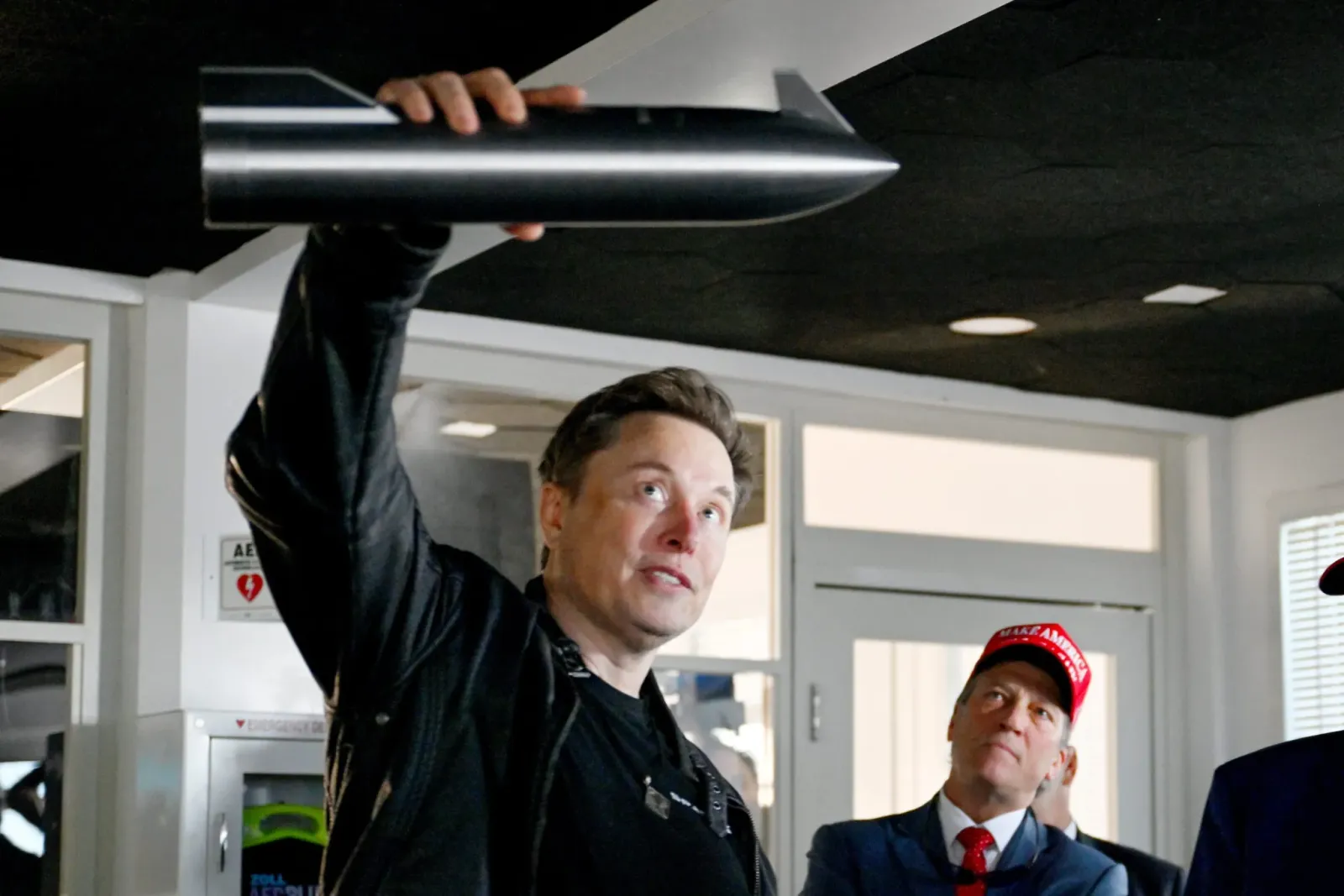
Fortune reports SpaceX is targeting a $135 per share IPO and a $1.77 trillion valuation. For decision-makers, that scale tests how markets price risk, how boards prepare for scrutiny, and how competitors react when the largest IPO in history becomes real.
SpaceX is targeting an IPO price of $135 per share that would value the company at $1.77 trillion. Fortune frames this as a record-breaking moment, but the really attention-grabbing part is the magnitude: that number would make SpaceX more than 7.5 times Alibaba’s inflation-adjusted valuation from 2014, the previous record-holder. In other words, we are not talking about a new “big” IPO. We are talking about a new category.
Fortune also puts the comparison in sharp, investor-relevant terms. At $1.77 trillion, SpaceX would be about seven-and-a-half times Alibaba’s inflation-adjusted 2014 valuation and 15 times Facebook’s IPO. It would also blow past modern service giants Uber and Airbnb “entirely,” underscoring how different the market’s risk tolerance and growth expectations can look when a company sits at the intersection of manufacturing, launch economics, and long-term space infrastructure. If you are on a board, in treasury, or advising capital markets strategies, these ratios matter because they influence everything from comps to liquidity to investor narrative.
What makes this feel even more immediate is that SpaceX reportedly already made history by raising $75 billion on Thursday, per Fortune. That matters because IPOs do not start at the first day of trading. They start earlier, when capital forms around a story, a balance sheet trajectory, and an investor base willing to take the ride. When a company has already mobilized that kind of money and attention, the IPO becomes less a “discovery” event and more a confirmation event. The question shifts from “can the company get funded?” to “can the public market underwrite the same valuation with the same confidence?”
For executives, the mechanics are the easy part. Fortune’s list also shows how $1.77 trillion fits among the top 20 biggest IPOs in the United States, effectively treating this as a benchmark exercise for the market. The scale helps explain why this would not only capture headlines, but also recalibrate what other companies think they can plausibly reach in valuation, especially when they talk to investors. The comparison points include Alibaba Group Holding Ltd at $236.53 billion, Facebook Inc at $118.48 billion, Uber Technologies Inc at $98.75 billion, and AT&T Wireless Services Inc at $133.33 billion. It also includes AT&T Wireless Services Inc, Rivian Automotive Inc at $80.18 billion, Didi Global Inc at $75.19 billion, United Parcel Service Inc at $119.79 billion, Coupang Inc at $76.11 billion, and several other familiar names and global issuers. Even without doing the full math, the list makes clear how far SpaceX would sit above the pack.
The second-order implication is talent and ownership. Fortune notes that pulling off the anticipated IPO “will make thousands of SpaceX employees millionaires.” That is not just a feel-good footnote. Big wealth events can change retention dynamics, employee risk appetite, and how quickly internal decision-making tilts toward longer-term growth rather than near-term optics. In the same breath, Fortune raises the question of Elon Musk’s personal wealth, stating it could push his net worth high enough to make him a trillionaire. Whether you care about personal finance or not, the governance consequence is real: in companies where founder and employee ownership are meaningful, the IPO can materially alter incentives and therefore behavior across teams.
Regulatory and market framing also sit in the background, even when the source headline stays laser-focused on valuation. A mega-IPO at this scale means regulators and exchanges will likely expect robust disclosure and risk communication, especially given the complexity of launch businesses and capital intensity. The “how” of an IPO is governed by rules and reporting expectations, but the “how much” is a function of investor appetite and perceived downside. When the valuation leaps so dramatically, the market becomes less forgiving of surprises, because there is less room for the story to be wrong by even a little.
So what should peers and board members take from this? Fortune’s comparisons to Alibaba, Facebook, Uber, and Airbnb are not just trivia. They are signals about what investors are currently willing to pay for growth narratives versus what they demand in cash-flow clarity. If SpaceX’s target is achieved, it does not only set a price. It sets a psychological floor for other IPO candidates and a new benchmark for how investors compare “platform” industries to “platform-ish” ones. In capital markets, narrative is leverage. And $1.77 trillion is leverage you feel even if you never touch the allocation list.
This story's Key Insights and Take-aways are locked.
Create a free account to unlock Executive Actions for one credit.
Register to UnlockAlways free for Executives Club members. Join the Club
More in Business
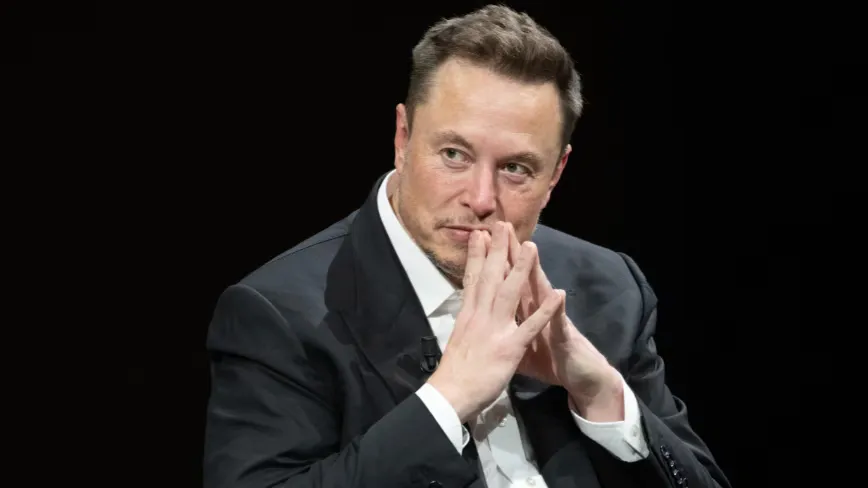
SpaceX IPO priced June 12 at $135: Elon Musk crosses $1T as funds pick up the tab
The SpaceX IPO values the company around $1.77T and estimates Musk’s stake at $866.5B, with broad investor ripple effects.

SpaceX IPO values it at $1.77tn, and Nasdaq fast-tracks its index entry
Forced buyers and tracker funds could amplify buying pressure as SpaceX joins the Nasdaq index on a rule tweak.

SpaceX’s $75B IPO: Japan retail got $2.2B, Nasdaq started trading today
The SPCX listing breaks records, but Japanese household investors quietly took a meaningful chunk of the biggest payday ever.