
State Street CTO Manoj Bohra: AI ROI can’t be judged like a one-year railroad bridge
Fortune Brainstorm Tech execs say the “first principles” foundation, not flashy pilots, is what determines whether AI pays off.
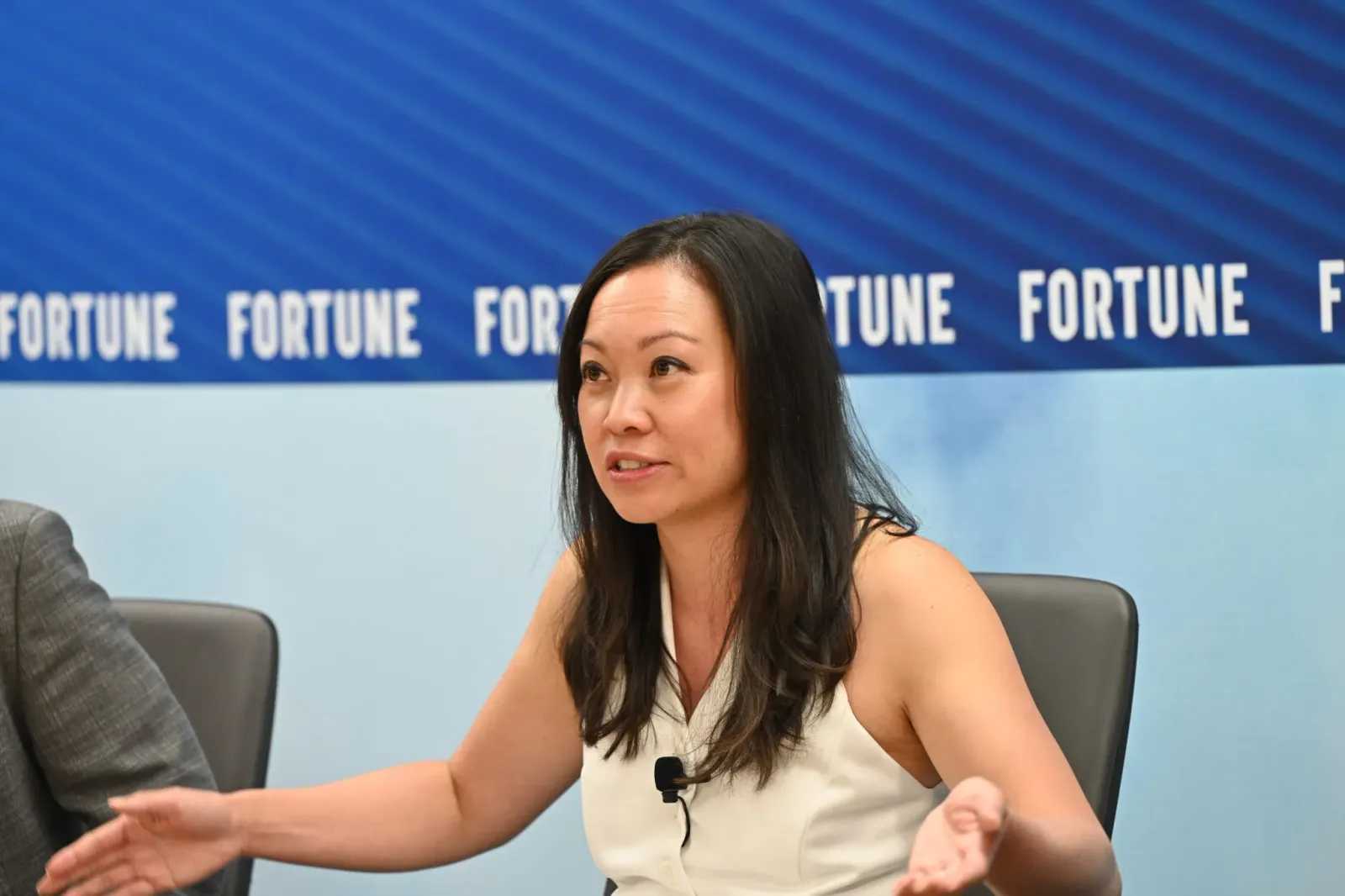
At Fortune Brainstorm Tech, State Street CTO Manoj Bohra and Deloitte CTO Bill Briggs argued that AI ROI fails when companies skip foundation work and process redesign. Executives also warned that measuring productivity gains, managing agent sprawl, and preparing for agent expansion in the next year or two are now board-level issues.
In Aspen at Fortune Brainstorm Tech, State Street CTO Manoj Bohra delivered a line that basically explains why so many AI rollouts disappoint: you cannot judge AI ROI on a one- or two-year timeline.
Bohra, speaking about “foundation work” required for AI projects to succeed, said regulated industries especially need the right data, in the right places, with the right governance controls. Then comes the less exciting part: mapping workflows and processes before automating anything. The mistake, he argued, is expecting ROI “in just one or two years.” He compared it to a railroad bridge, saying no one judges the investment return on a railroad bridge in a single year. That analogy lands hard because a lot of companies are still treating AI like a launch checklist, not an infrastructure and operating model change.
And Bohra was far from alone. Deloitte CTO Bill Briggs said many businesses failed to do the hard first-principles work of deciding what they were actually trying to achieve strategically with AI. Instead, firms often rushed to scale use cases just to look AI-savvy, even when those deployments did not move firm-wide revenues or profits. Briggs also pointed out a classic failure mode: dropping AI into existing processes rather than re-engineering workflows from the ground up in an AI-native way. His warning is blunt. The result is that inefficiencies already inside the organization can get “weaponized at scale” by AI agents. Translation: if the process is broken, AI does not fix it. AI can accelerate the brokenness, faster, cheaper, and at higher volume.
This is where the “first principles” argument stops being theoretical and starts becoming operational. Kathy Pham, head of AI at ReviveHealth, said companies often optimize for the wrong thing, and she used a bedtime story example to make the point. Whether parents should allow AI to read bedtime stories depends on what story time is for. If it is just about getting a child to sleep, AI reading could be fine. But if the purpose is intentional, focused parent-child time, then using AI defeats the real goal. Her broader critique applies cleanly to enterprises: when the intended purpose of a workflow drifts over time, inserting AI into the workflow can deliver outputs while missing the actual outcome the organization cares about.
Other executives added a second layer to the ROI problem: readiness and capability timing. Stephen Balaban, cofounder and CTO of AI infrastructure firm Lambda, told attendees he did not think AI was ready for many use cases outside of software development, and that pushing AI agents into other parts of a company could be a mistake. But he also noted the timeline is moving. Until six months ago, AI agents were not capable of autonomous software development; now they are. His implication is practical for operators: companies need to start preparing for the coming year or two, when AI models become capable enough to power agents in other domains, even if they are not fully ready today.
Meanwhile, CFO-adjacent questions about value measurement are getting louder. Faraz Shafiq, chief AI product officer at Wells Fargo, described how the bank tried to build fundamental horizontal “building blocks” for multiple lines of business, including a unified AI agent platform and AI governance infrastructure. Then, for each business line, the bank reinvented processes end-to-end with domain experts. The hard part is valuing the returns from productivity gains. Shafiq gave an example of the easy metric first: the bank saw a 25% increase in new account openings thanks to AI tools. But he asked a bigger measurement question: if bankers spend more time with customers, what is that human relationship worth? Sometimes it is not obvious in immediate revenue. The goodwill created by personalized service might compound into revenue over years or decades. This is the kind of CFO dilemma that can stall AI budgets: boards want proof now, but some of the value is long-cycle and relationship-driven.
Beyond the workshop talks, the “AI agents everywhere” reality is already shaping how teams work. In an on-stage chat with Anthropic’s Head of Claude Code, Boris Cherny, Cherny emphasized the importance of in-person time for building trust and esprit de corps, especially in a world where engineers are spending their time supervising AI agents. He said his team often has hundreds of AI agents running tasks in parallel. That tells you something about operational risk and talent strategy: agent scale changes what engineering leaders actually do all day, and it increases the need for mentorship and coordination.
The broader competitive and policy signals are also not subtle. In interviews with Hyatt CEO Mark Hoplamazian and Snowflake CEO Sridhar Ramaswamy, both suggested that restricting third-party AI agents from accessing platforms would ultimately lead to loss. Ramaswamy framed it as weakness among rivals considering it, and Hoplamazian said customers would not tolerate “toll gating.” At the same time, Mistral cofounder and CTO Timothee Lacroix said “AI sovereignty” is about countries seizing control of parts of the stack they can. Lacroix, who has built Mistral as a European alternative to American-headquartered AI labs and has started building data center capacity, also said Mistral has no plans, for the moment, to build its own AI chips. Daniela Braga, CEO of Defined.ai, and Lacroix both pointed to data as key to sovereign AI, including ensuring any public benefit from models built on public data and protecting culturally sensitive datasets, such as those containing stories and language of indigenous peoples, without exploitation without returns to those communities.
Put all of this together and the ROI mystery starts to look less like hype and more like systems engineering. The executives at Fortune Brainstorm Tech are converging on the same thesis: AI value comes from strategy, governance, workflow redesign, and timing, not just from plugging a model into a dashboard. For leaders trying to justify budgets to boards, hire the right operators, and avoid turning inefficiency into an always-on agent problem, the stakes are straightforward. If you treat AI like a pilot, you get pilot results. If you treat it like a re-architecture of how work happens, the ROI question becomes answerable, measurable, and scalable.
This story's Key Insights and Take-aways are locked.
Create a free account to unlock Executive Actions for one credit.
Register to UnlockAlways free for Executives Club members. Join the Club
More in Technology

OpenAI says 10,000 agents cracked a 90-year math problem in 88 hours
The company's claim is audacious, but one mathematician is pushing back. Here's what it means for AI-driven discovery.

Meta still serves child sexual abuse ads on Instagram in India - BBC report
A new report following the BBC Eye investigation says the ads are still there - what it signals for every platform with a self-serve ad engine.

White House yanks 'Build the Wall' game after Tetris Company copyright warning
The administration's arcade game vanished in hours - and the takedown playbook every brand can learn from.