

Taylor Swift tells Songwriters Hall Of Fame: Sombr is the future, and “AI” has no clue
In a 21-minute induction at New York's Marriott Marquis, she praised Sombr, quoted Yellowstone, and thanked her family through tears.
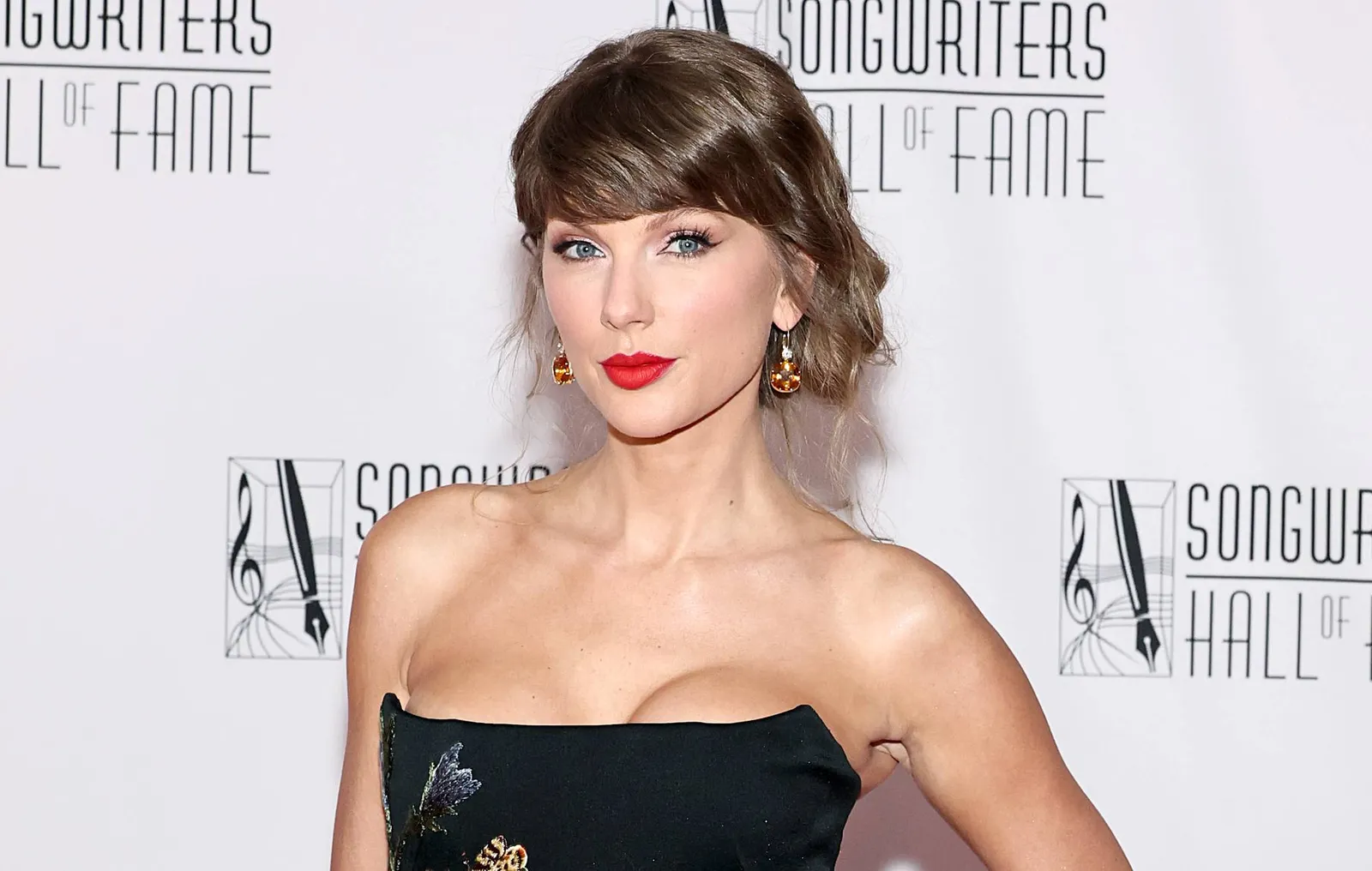
Taylor Swift, 36, was honored Thursday (June 11) at the Songwriters Hall Of Fame induction at New York's Marriott Marquis Hotel, where she became the youngest female inductee of all time and delivered a 21-minute acceptance speech. Her remarks included praise for Sombr, a Yellowstone quote, and a pointed critique of AI, with Steven Spielberg introducing her and also weighing in on AI’s limits.
Taylor Swift used her Songwriters Hall Of Fame induction speech to do two things at once: celebrate a peer and draw a bright line around what songwriting is supposed to be. At the event on Thursday night (June 11) at New York’s Marriott Marquis Hotel, the pop megastar, 36, became the youngest female inductee of all time, and in a 21-minute acceptance speech she specifically praised Sombr by saying, “His writing is so exceptional that it makes me actually envious, and I love that feeling.” She then doubled down with a modern, aggressively confident jab at the tech discourse that has been chewing up the music industry: “Sombr is the future, and he does it all on his own and he doesn’t need that AI! The kids are fine! The kids are fine!”
Swift also leaned into narrative and legacy, not just gratitude. She invoked the TV drama Yellowstone, telling the next generation, “It’s the one constant in life, son: you build something worth having, somebody’s gonna try to take it.” Then she got visibly emotional while thanking her family, including recalling how her parents relocated from Pennsylvania to Nashville when she was 14 so she could “hone my craft in the songwriting capital of the world,” adding, “It couldn't have been easy for my parents and my brother to just pick up and move our entire family,” before choking back tears. “You're the reason I'm here tonight.”
If you’re an executive, this matters because these aren’t throwaway remarks. They land inside an institution that effectively functions as a legitimacy machine for songwriting, and Swift’s presence turns the “artist vs. algorithm” debate into an audible, high-profile set of incentives. The ceremony itself was stacked with signals about where power sits in today’s music and media ecosystem: Swift asked Steven Spielberg to give her introductory speech, and Spielberg, whose film Disclosure Day was released this week, framed Swift as a cultural force that “defies AI.” That framing matters because it influences how boards and rights-holders think about creative value, not just as a vibe, but as something that can be defended in negotiations.
The structural context is that Swift wasn’t just inducted. According to the report, she became the second-youngest inductee in the history of the institution, behind Stevie Wonder, who was 33 at the time of his induction. She attended alongside her parents, her fiancé Travis Kelce and his mother, and Sombr was not only honored as part of the moment, but also participated directly by performing her songs ‘Cardigan’ and ‘Dear John’. That pairing is important for governance-minded readers: when an artist and a peer’s work are staged together in a formal setting, it reinforces shared norms about authorship. In other words, it’s not simply praise. It’s social proof.
Swift used her 21-minute speech to turn authorship into a mission statement. She said Spielberg could not be replaced by a machine, but she made it personal through Sombr. She also told the room she had been having late-night debates with friends about the state of the music industry, then declared, “Sombr is the future, and he does it all on his own and he doesn’t need that AI! The kids are fine! The kids are fine!” That “friends debate” detail, small as it sounds, suggests a cultural argument already happening off-stage, with a consensus forming among people who actually build music for a living.
Spielberg’s introduction added another layer, because it ties entertainment-era blockbuster credibility to a specific critique of AI’s limits in measuring creative output. Spielberg said he was “honoured” to “introduce the youngest female ever to be inducted into the Songwriters Hall of Fame,” describing Swift as “a woman who has no peer when it comes to shattering records and a writer, singer and storyteller.” He then escalated into the AI angle: he said he asked AI how many words have been written about Taylor Swift, then asked how many words have been written by Taylor Swift, and claimed it “couldn’t tell me” either. Spielberg concluded that “something that starts with ‘artificial’ wouldn’t have a clue,” and that “no algorithm can replace the soul of a true original who defies the status quo.”
That’s a story board members should care about, even if your job is licensing, distribution, or platform strategy. When the most recognizable names in songwriting and mainstream film publicly challenge AI’s ability to understand or replicate “soul,” it doesn’t only affect public perception. It can shape how contracts get written, how rights disputes are framed, and how executives assess risk around synthetic content and provenance. Swift’s Yellowstone quote, “somebody's gonna try to take it,” also reads like a direct acknowledgment of threat, whether that “taking” is cultural appropriation, industry consolidation, or automation that tries to capture creative labor without fully valuing the origin.
The speech is also part of a wider release cycle that keeps Swift’s presence anchored in current product and ongoing audience attention. Her new song ‘ I Knew It, I Knew You ’ was written specifically for Toy Story 5 and was released last week after weeks and months of speculation. She performed the song live for the first time at the premiere, and duetted with Randy Newman on ‘You’ve Got A Friend In Me’. Put together, the event looks less like a single night and more like the public stitching together of three things: craft, legitimacy, and immediate market momentum.
So what should other executives take from this? You have one of the strongest possible stakeholders, in one of the strongest possible symbolic venues, making a clean argument: the future belongs to those who write, not those who imitate. Swift’s tears and her specific praise for Sombr give the message weight. And Spielberg’s AI anecdote gives it a corporate-friendly “it doesn’t measure up” angle that gets repeated in boardrooms. In an era where every creative workflow is being questioned and retooled, the Songwriters Hall Of Fame moment effectively tells the industry what it should defend: the story of authorship, and the human judgment behind it.
This story's Key Insights and Take-aways are locked.
Create a free account to unlock Executive Actions for one credit.
Register to UnlockAlways free for Executives Club members. Join the Club
More in Entertainment

Entertainer Russell Brand denies 7 sex charges amid accuser's 'couldn't breathe' claim
The alleged victim's account sharpens the reputational and legal stakes for Brand, his platforms, and any business tied to a public figure under criminal scrutiny.

Russell Brand's accuser 'bewildered and confused' as he denies 7 sex charges
The criminal case against the comedian is a live test of how media companies manage talent risk when serious allegations go public.

'It's a Magic Trick': Ballet Experts Say Rosalía's SNL Pose Is Impossible
Three ballet experts tell Rolling Stone Rosalía's gravity-defying SNL stillness shouldn't be possible - and why the debate is now part of the show.