
Thena Capital closes its first £45m fund for UK medtech, marking a GP first
The London venture firm finishes fundraising at £45m after a £27m March 2025 close, backing early-stage British medtech.
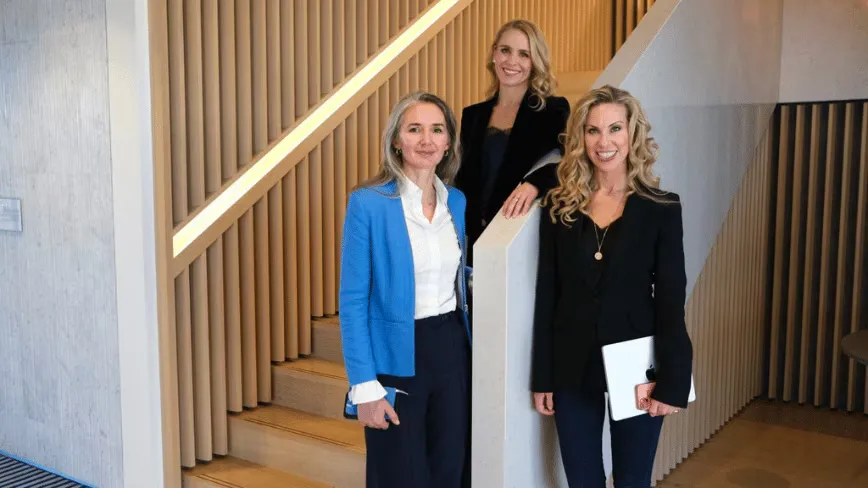
Thena Capital has closed its first fund at £45m ($60.4m), following a £27m first close in March 2025. For decision-makers, it signals momentum in early-stage UK medtech and a notable leadership milestone: the first all-female general partner team to win.
Thena Capital has closed its first fund at £45m ($60.4m), the London venture firm announced this week, after a £27m first close in March 2025. The fund is now fully closed, and it is earmarked for early-stage British medical-technology companies.
That £45m number matters because medtech is rarely “just another seed.” Even when a product looks promising, it usually has to clear a thicket of clinical evidence expectations, regulatory pathways, manufacturing realities, and reimbursement uncertainty. So when a new venture vehicle gets to a fully closed check size like this, it is effectively telling founders something practical: there is at least one serious pot of capital willing to underwrite the early grind that typically comes before big commercial traction.
And the milestone is not only about money. Thena Capital is described as the first all-female general partner team to win, which adds a second, leadership-focused signal to the fundraising ecosystem. In plain English, that means more than representation at the pitch stage. It suggests that networks, limited partners, and deal pipelines are increasingly willing to bet on teams based on track record, thesis fit, and execution, not just who looks like the default in venture. For founders, a “first” like this can also change how boards think about the management makeup that will run future rounds, hire operators, and steer portfolio companies through complex go-to-market choices.
Zoom out for a second to what a “fully closed” fund usually implies. Fund managers do not stop at a first close because they are optimistic. They stop because they have reached the minimum commitments needed to start investing with confidence and governance clarity. A £27m first close in March 2025, followed by a final close that brings the total to £45m, indicates a fundraising runway that extended, but did not stall. That matters in early-stage medtech where timing can be everything: clinical timelines are long, trials cost money, and regulatory feedback loops can move slower than normal startup cycles.
For decision-makers at limited partners, boards, and executives in adjacent sectors, the bigger question becomes: what does the capital structure enable once deployments begin? In early-stage medtech, the “risk” is not only technical. It is also operational and regulatory. Early capital can determine whether a company can afford to pursue the right evidence strategy, build relationships with clinical and technical partners, and maintain momentum while awaiting regulatory milestones. A fund that closes at £45m is positioned to back multiple companies, rather than being forced into a narrow, too-conservative selection that can slow category growth.
There is also a subtle second-order effect on how other UK health-tech and medtech managers may approach fund strategy. When a fund like Thena’s reaches full close, it tends to validate both the market narrative and the investment thesis to other capital sources. That can make subsequent fundraising easier for peers with similar theses, particularly if they can point to early portfolio traction. Even if you do not track medtech daily, venture markets work like ecosystems: when one player proves demand exists for a specific segment, the rest of the field gets more room to raise, partner, and compete for deals.
The regulatory context is worth stating carefully, without pretending it is easy. Medical technology is one of the most compliance-heavy categories in startups. Companies often spend significant time mapping their product requirements to the regulatory steps needed to progress. That is why early-stage investors cannot be purely financial spectators. They need to understand what the capital buys, how to measure progress, and how to avoid the classic trap of fundraising timelines that ignore medical evidence timelines. Thena’s focus on early-stage British medical-technology companies, combined with a full fund close, suggests it is prepared to play that long game.
Ultimately, Thena Capital’s £45m first fund close is a two-part story for the people who run money, companies, and boards. First, it is a concrete signal that there is enough committed capital to fund early-stage UK medtech through the messy middle. Second, it is a leadership milestone, described as the first all-female general partner team to win, that reinforces a broader shift in who gets to build and lead venture institutions. For executives watching their own fundraising windows or thinking about future board compositions, the takeaway is straightforward: the category is attracting real capital, and the leadership models behind it are evolving.
This story's Key Insights and Take-aways are locked.
Create a free account to unlock Executive Actions for one credit.
Register to UnlockAlways free for Executives Club members. Join the Club
More in Business

Elon Musk became the world’s first trillionaire after SpaceX IPO lifted him past $1T
SpaceX shares jumped, and Musk’s $800B pre-IPO value crossed a trillion, reshaping how investors price “moonshots.”

SpaceX IPO priced June 12 at $135: Elon Musk crosses $1T as funds pick up the tab
The SpaceX IPO values the company around $1.77T and estimates Musk’s stake at $866.5B, with broad investor ripple effects.

SpaceX IPO values it at $1.77tn, and Nasdaq fast-tracks its index entry
Forced buyers and tracker funds could amplify buying pressure as SpaceX joins the Nasdaq index on a rule tweak.