

Apple quietly shipped a Siri update, and The Verge says it actually feels good
The iPhone assistant is no longer a punchline, and that changes how users and competitors think about on-device AI.
Apple has put out a new version of Siri, and The Vergecast hosts David and Nilay discuss early experiences that suggest Siri is now “pretty good.” For decision-makers, this is a meaningful test of whether a mainstream assistant can reach usefulness without feeling like a science project.
You'd be forgiven for thinking this day would never come. Siri has spent a decade and half somewhere between “sort of useful at a few things” and “utterly disastrous, why did I even try, can it honestly not even set a timer.” But the wildest thing just happened anyway: Apple put out a new version of Siri, and it actually seems to be pretty good.
On this episode of The Vergecast, David and Nilay compare early experiences with Siri AI, and they focus on the simplest possible question: if Siri can handle enough everyday tasks reliably, what does that mean for users and for the rest of the AI industry? The important part is not that Siri suddenly became “bleeding edge.” The important part is that it no longer feels like a constant disappointment machine.
To understand why this matters, you have to remember what Siri is supposed to do. It is built into the iPhone, always present, and expected to work the moment you want it. Most AI progress stories you hear are about new models in labs, impressive demos, or standalone apps you try when you're in the mood to experiment. Siri is different. It is the AI that has to survive daily life: noisy contexts, tiny intents, imperfect phrasing, and the expectation that it will just work without you babysitting it.
So when The Vergecast hosts say Siri is now “pretty good,” they are not talking about a feature that dazzles in a controlled setting. They are describing whether the built-in assistant can be good enough at most things, which is a higher bar than “wow, that was impressive.” And for Apple, the incentive is straightforward. Users do not choose iPhones because of how many papers a lab produced. They choose them because the default experience is reliable. If Siri gets meaningfully better, Apple upgrades a core interface people touch dozens of times a day. That is a direct lever on retention, satisfaction, and the overall perception of Apple's AI strategy.
There is also a competitive angle, and it hits executives right in the dashboard. The rest of the AI industry has been working through a familiar tension: customers want intelligence, but they also demand correctness and consistency. Standalone chatbots are impressive, but their value can drop when the conversation derails, the user needs a quick action, or the system fails at basic tasks. A mainstream assistant is basically being stress-tested every hour by billions of real interactions. If Siri improves enough to feel dependable “at most things,” it becomes harder for competitors to claim that only their systems are ready for prime time.
Regulation and safety conversations sit underneath all of this, even if today's episode is not a legal briefing. In the background, regulators across many markets have been tightening scrutiny around AI systems that affect people in everyday ways. An on-device assistant that is better at common tasks also changes the compliance surface. It means fewer users will be forced to rely on separate third-party tools for basic requests. But it also means Siri is accountable for more day-to-day behavior, so the bar for what “good enough” means will rise fast.
Another second-order effect: if Apple can make Siri feel useful without turning every interaction into a research project, more users will stop treating assistant prompts like an experiment. That shifts adoption from curiosity to habit. Habit is where platforms win, because it reduces switching costs. It also affects developer ecosystems and partner strategies. Teams building assistant-adjacent products care less about whether they can generate content, and more about whether the assistant experience can route real intents cleanly and consistently.
The most interesting part, according to The Vergecast, is that this Siri improvement does not read as an entirely new kind of capability. There is “very little about Siri AI that feels bleeding edge or brand new.” Yet the outcome is still a reset. The assistant is moving from “try it once, regret it” into “use it and maybe it will handle the job.” For executives watching the AI market, that is the real signal: reliability improvements, not just novelty, are what change user behavior at scale.
For peers planning their AI roadmaps, the strategic stake is clear. If a ubiquitous interface like Siri can become “pretty good,” it pressures every AI product to answer a sharper question: can your system do the boring stuff well, consistently, and quickly enough to earn default trust? That is the bar now. And Apple showing up with a Siri update that makes that feel plausible is a reminder that the next competitive battleground is not only model quality. It is usability, durability, and everyday competence.
This story's Key Insights and Take-aways are locked.
Create a free account to unlock Executive Actions for one credit.
Register to UnlockAlways free for Executives Club members. Join the Club
More in Technology

Nvidia's $89B data center quarter: the 9 companies cashing in
The AI buildout is minting fortunes beyond GPUs, and memory, cloud, and cooling suppliers are riding the same wave.
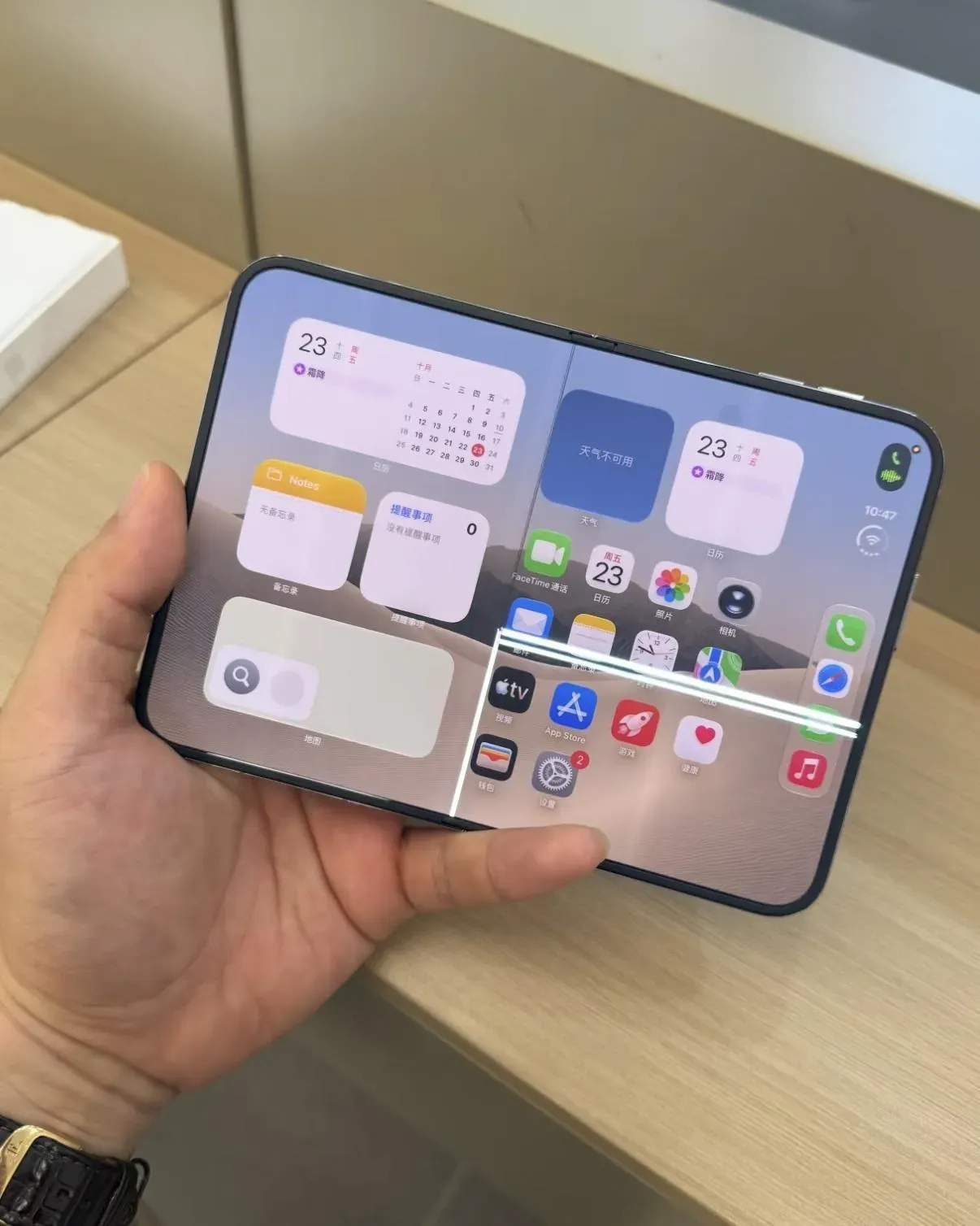
A YouTuber dissected the iPhone Duo and thinks he found crackgate's cause
CuriousHagi's teardown of Apple's foldable reveals a gear-like hinge that may explain why screens crack in the same spot within hours.

Google quietly links your phone number to every Android account on your SIM
Adding a SIM now ties your phone number to all Google accounts - and future accounts inherit it. Here's the security and privacy stakes.