

Anthropic reroutes “Fable 5” dev requests to a worse model, after backlash
Dario Amodei's company said it stopped secretly degrading answers, but kept broad limits for “frontier AI development.”

Anthropic said it will no longer secretly degrade Fable 5 responses when developers ask for frontier AI development help, after a developer backlash this week. Instead, those requests will be routed to a less-good model, Opus 4.8, and developers will be told, while Anthropic continues restricting Fable 5 for certain development work.
Anthropic just moved from “quietly restricting” to “telling you it’s restricted.” The company said it will stop secretly degrading Fable 5 responses when users ask for help with frontier AI model development. In those cases, Anthropic will route requests to a less-good model, Opus 4.8, and developers will be told.
That change directly targets the freakout: the accusation that Anthropic was giving intentionally worse answers and, in effect, not being transparent about it. Anthropic said, “We apologize,” and framed the adjustment as a correction to its approach. But this is not a full rollback. Anthropic is still restricting use of its most powerful public model for certain AI development work.
To understand why this matters, you have to zoom out from the specific “degrade or don’t degrade” controversy to what companies are trying to protect. Anthropic says the restrictions are about safety, arguing these limits stop “foreign adversaries” from using its top model to erode America’s edge in AI and chips. That argument, however, hits a ceiling. The same restrictions also help Anthropic protect its business from distillation.
Distillation is the logic of “ask the teacher, then copy the lesson.” Rivals query a powerful model, collect its outputs, and use that data to improve their own systems. If you can learn from someone else’s frontier performance, you can catch up faster and, crucially, undercut them on price. That dynamic is exactly why open-source model providers can move quickly: they can use many outputs to compress the capability of a closed model into something they can run and sell at lower cost.
Anthropic has warned about Chinese labs doing this. But the source makes the key point: the same threat does not only come from outside the West. Anthropic’s limits apply broadly to anyone building rival AI models, including open model developers in the US and Europe. And the company’s terms of service forbid anyone from using its products to develop competing offerings. So the controversy is not just about international geopolitics. It is also about competitive pace and competitive economics.
This is where the market context gets sharp. Open models are not sitting still, and the incentives for Anthropic to restrict rival development get stronger when performance and price start to converge. A MIT Sloan analysis from January found open models averaged 90% of closed-model performance and usually closed the gap within 13 weeks, compared with 27 weeks a year earlier. In other words, the “time-to-competitive” is shrinking. Artificial Analysis tracks performance, and the article references chart evidence showing open-source models keeping up. Arena’s leaderboard tells a similar story.
The pressure shows up in specific benchmarks and pricing. On Thursday, Anthropic models were still at the top for expert text-based tasks like math, coding, and creative writing, but Xiaomi’s open-weight MiMo v2.5 Pro was not far behind. Pricing is the other punchline. Xiaomi’s open model costs 43 cents per million tokens for inputs and 87 cents per million for outputs. By comparison, Anthropic’s Fable 5 costs $10 per million input tokens and $50 per million output tokens, at least 20 times more expensive according to Arena data. If you are spending billions to build frontier systems, the difference between “good enough” open models and premium closed models is not academic. “Almost as good” and “a lot cheaper” is the kind of threat that keeps procurement and product leads up at night.
Nicholas Vincent, a computer science professor at Simon Fraser University who studies how data is used in AI models, put a blunt framing on it. He told Business Insider that without more explicit targeting of specific “bad orgs,” it is hard to defend the restrictions as purely safety-focused rather than business-focused. Anthropic does not owe rivals a shortcut to its best technology. Still, the company is in a spotlight moment where transparency and intent are both under scrutiny.
The second-order implication for executives is that “safety” and “strategy” are becoming inseparable in public AI models. When the rules change, it affects not just users who want better answers, but entire development pipelines: how teams test, how they iterate, and how quickly competitors can close capability gaps. If you are an investor, founder, or operator building on top of frontier model providers, the practical question becomes: how much of your roadmap is dependent on a provider’s definition of “frontier AI development,” and how quickly can you lose optionality when those definitions shift?
For boards and leadership teams, there is also a governance signal. Anthropic’s adjustment after a developer backlash suggests that reputational risk can force product and policy changes, even when the underlying restrictions remain. Today it is Fable 5 routing to Opus 4.8. Tomorrow it could be a different line-item in how frontier access is metered, and the competitive math could change again. The winners in this phase are not only the models with the highest scores. They are the teams that can adapt when the boundaries move.
This story's Key Insights and Take-aways are locked.
Create a free account to unlock Executive Actions for one credit.
Register to UnlockAlways free for Executives Club members. Join the Club
More in Technology

Nvidia's $89B data center quarter: the 9 companies cashing in
The AI buildout is minting fortunes beyond GPUs, and memory, cloud, and cooling suppliers are riding the same wave.
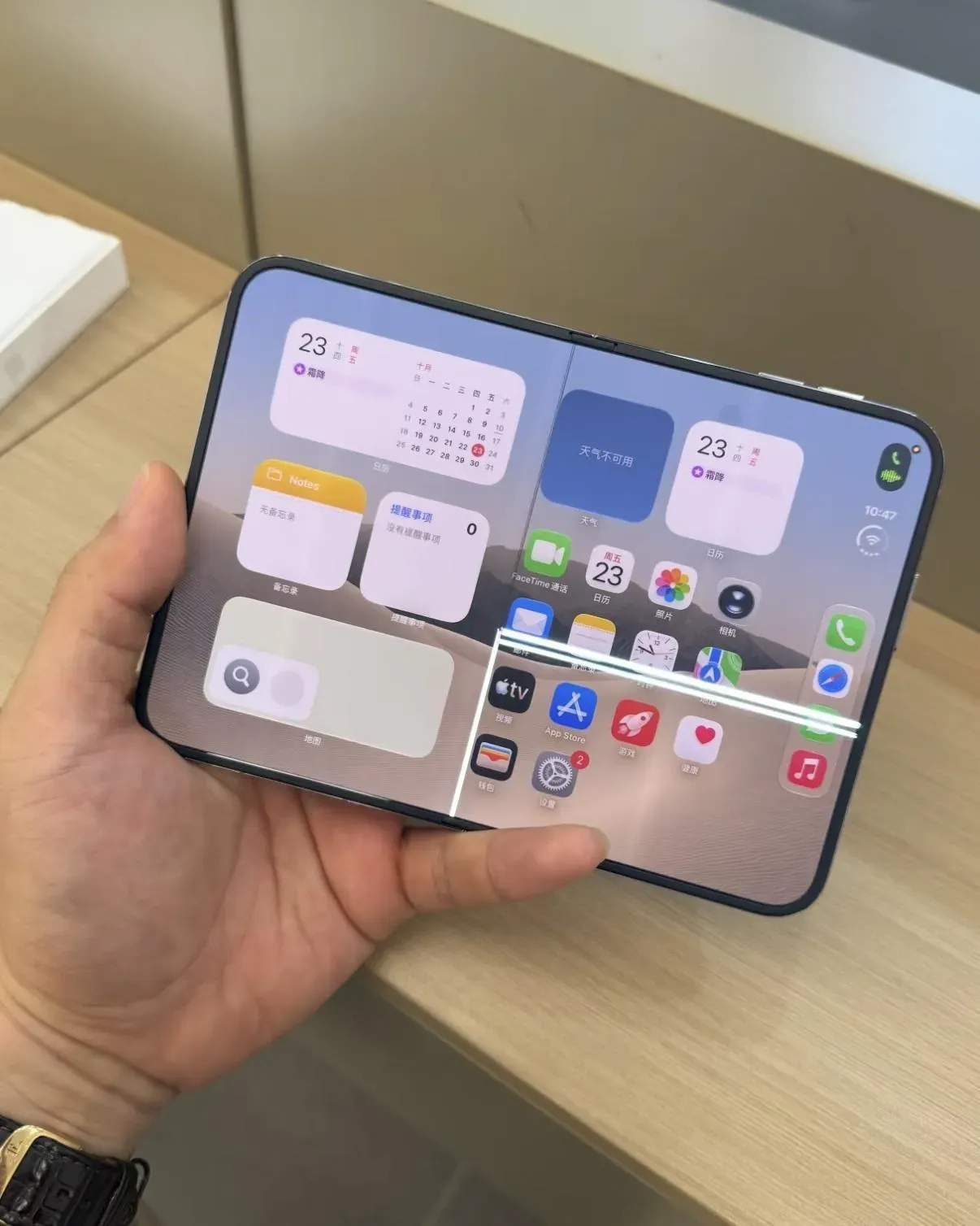
A YouTuber dissected the iPhone Duo and thinks he found crackgate's cause
CuriousHagi's teardown of Apple's foldable reveals a gear-like hinge that may explain why screens crack in the same spot within hours.

Google quietly links your phone number to every Android account on your SIM
Adding a SIM now ties your phone number to all Google accounts - and future accounts inherit it. Here's the security and privacy stakes.