
Barclays buys GoHenry kids debit card app from Acorns, keeping GoHenry’s US arm
Barclays is paying to expand into young money education, buying GoHenry’s UK business from US fintech Acorns.
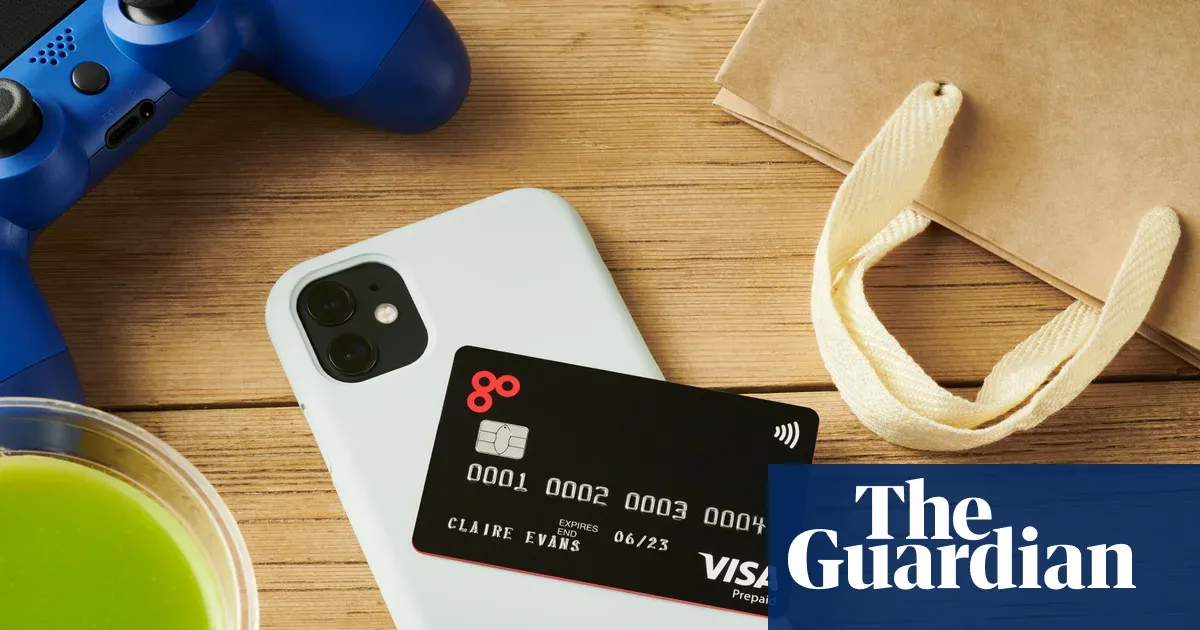
Barclays has agreed to buy the UK business of GoHenry, the kids’ debit card and money app. The deal targets young people in affluent families, while Acorns retains GoHenry’s US branch.
Barclays is stepping closer to kids and families with a deal that transfers GoHenry’s UK business from US fintech Acorns to the high street bank. The purchase centers on GoHenry’s personalised debit cards, which carry a child’s name, and an app designed to help children understand and manage money. In plain terms, Barclays is buying a ready-made product that starts teaching financial behavior at the exact moment many households are already thinking about allowances, budgeting, and “how money works” without turning it into a lecture.
For decision-makers, the key detail is geographic and structural: Barclays will take GoHenry’s UK business, while Acorns will retain GoHenry’s US branch. That split matters because it signals this is not a simple roll-up of a brand everywhere. It is a regional strategy move, one that lets a bank with a massive UK retail footprint integrate a youth-focused proposition without taking on the complications of simultaneously owning the US operation. It also clarifies where each party’s future focus sits: Barclays for UK growth, Acorns for the US continuation.
Why does a bank like Barclays care so much about kids’ money products? Because the earliest financial habits tend to stick, and banks have long treated early engagement as an investment in future customers. A kids debit card and companion app is a controlled on-ramp: parents can set rules, children can learn through experience, and the bank can attach itself to a household’s financial life earlier than it would through adult account opening alone. Barclays is explicitly targeting young people in affluent families, which is a classic retail strategy for capturing higher lifetime value consumers sooner. Even if most kids never become “mass market” banking customers, the families behind them often do.
From GoHenry and Acorns’s perspective, the sale of the UK business is a way to simplify the business and concentrate resources. Acorns is described as a US fintech company, and the source specifies Acorns will retain GoHenry’s US branch. That means the transaction is structured so Acorns keeps exposure to its side of the operation. In board and portfolio terms, this kind of carve-out can reduce operational complexity and sharpen product focus, especially when a youth fintech is trying to balance growth, compliance, and product iteration across markets.
There is also a regulatory and risk lens here, even if the source does not dive into specific approvals or licensing mechanics. Kids’ debit cards and money apps live at the intersection of consumer regulation, payments rules, and child-related protections. Banks tend to have mature compliance systems and established regulatory relationships for retail products. That can make a partnership or acquisition more appealing for the bank side because it reduces some unknowns of embedding a youth fintech into a regulated banking framework. For fintech sellers, selling to a bank can mean fewer regulatory implementation burdens on their balance sheet and operating model.
This is also a competitive signal in UK retail banking. High street banks have been trying to defend and differentiate their consumer propositions as digital-first competitors win mindshare. Acquiring a product built for young users can function as a brand and product upgrade at the same time. GoHenry is not merely an account: it is a personalized debit card experience and money learning tool. In a world where fintech distribution can be hard for incumbents to replicate, buying a working consumer offering is often faster than building from scratch, especially when the product is already designed for a specific demographic and use case.
For executives overseeing corporate development, product, or retail growth, the strategic stakes are broader than one youth app. If Barclays integrates GoHenry’s UK business successfully, peers will feel pressure to respond with similar youth-oriented offerings or partnerships. The reason is simple: youth financial education products can become sticky, and “sticky” can translate into retention and cross-sell later in life. Meanwhile, if Acorns keeps pushing GoHenry in the US, the company’s continued growth could also demonstrate that the youth card and app model is durable across geographies, not just a UK niche. That raises the bar for anyone considering alternatives, whether through build or buy.
The deal therefore reads as a calculated bet on the next generation of retail behavior. Barclays is not just entering a category at the margins. It is buying an app and personalised debit card proposition aimed at children, from a US fintech that will retain the US branch. The immediate implication is product and distribution in the UK. The longer-term implication is customer relationship depth that can extend for years, potentially decades, well beyond childhood allowances.
This story's Key Insights and Take-aways are locked.
Create a free account to unlock Executive Actions for one credit.
Register to UnlockAlways free for Executives Club members. Join the Club
More in Business

SpaceX IPO priced June 12 at $135: Elon Musk crosses $1T as funds pick up the tab
The SpaceX IPO values the company around $1.77T and estimates Musk’s stake at $866.5B, with broad investor ripple effects.

SpaceX IPO values it at $1.77tn, and Nasdaq fast-tracks its index entry
Forced buyers and tracker funds could amplify buying pressure as SpaceX joins the Nasdaq index on a rule tweak.

SpaceX’s $75B IPO: Japan retail got $2.2B, Nasdaq started trading today
The SPCX listing breaks records, but Japanese household investors quietly took a meaningful chunk of the biggest payday ever.