
Portland Leather cut social response time to about one hour with Nectar Social
A five-person team handled 70,000 monthly messages by centralizing inboxes and using AI drafts with human approval.
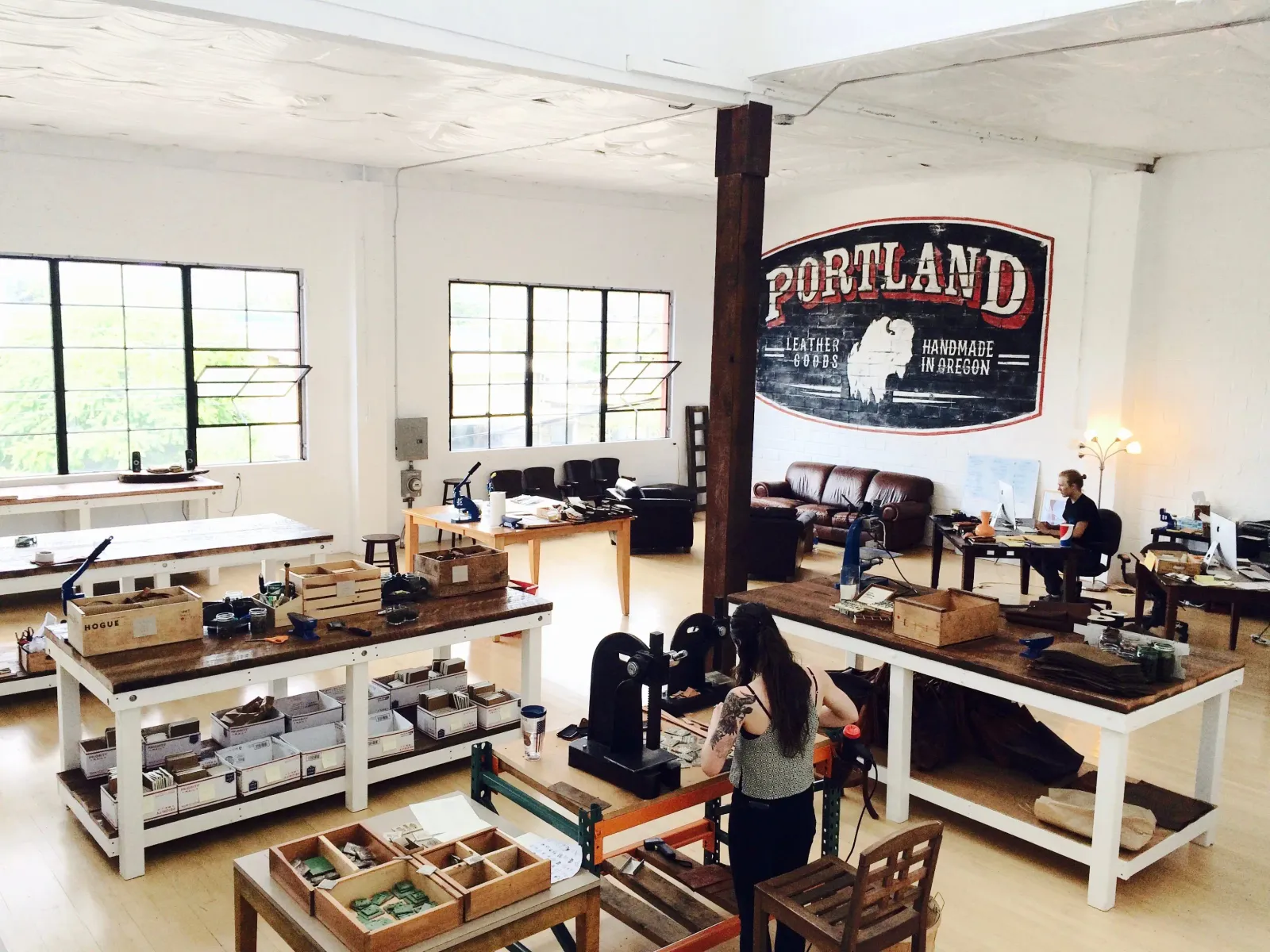
Portland Leather Goods, led by CMO MacCoy Merkley, used Nectar Social to consolidate social engagement across platforms and deploy AI-assisted drafting. The result: response times dropped to a little over one hour, even as the brand fields high volumes of DMs, comments, mentions, and tags.
Portland Leather Goods had a numbers problem and a workflow problem at the same time. The company’s social team got roughly 70,000 monthly messages, comments, and mentions across social platforms, and it could take up to nine hours to resolve them, with some backlogs stretching to 48 hours. That is what happens when conversations are fragmented across multiple apps and inboxes, especially when you have a five-person team trying to keep up.
The fix, according to Portland Leather Goods’ CMO MacCoy Merkley, was not hiring more people. It was using Nectar Social, an AI-assisted platform, to centralize those conversations and generate initial response drafts that a human approves. Merkley says typical response times during business operations are now a little over one hour, after the brand fully deployed Nectar Social’s tools in September 2025.
To understand why this matters beyond social media, zoom out to how engagement has shifted. Nectar Social’s CEO Misbah Uraizee says she observed at Meta that people spend less time posting and more time responding, including through direct messages. That shift turns comment sections and DMs into “where purchase decisions happen,” especially on platforms like TikTok, where the brand can see buying behavior tied to conversations. In other words: speed is not just customer service. It can be a conversion lever.
Portland Leather Goods, an 11-year-old manufacturer specializing in handbags, wallets, passport covers, and other leather products, has nearly one million followers across Facebook, Instagram, and TikTok. Until this past summer, that follower base came with a logistical tax. Social media managers toggled between several software tools just to find and respond to direct messages, comments, mentions, and tags. Merkley describes the core issue plainly: “All of these conversations are very fragmented.” The operational pain was clear; the business impact likely was too, particularly as social platforms became more commerce-adjacent.
The company started looking for a centralized AI-enabled solution after a leadership push to infuse more AI into the business processes. The source describes that as a daily necessity plus a mandate across the Oregon-based workforce of 75. Portland Leather Goods had already tried lower-stakes AI use cases, including using Google’s Gemini to record meeting notes and help the marketing department speed up creation of visual and copywriting assets. So when director of social media Scarlett Stack was tasked with rethinking vendor relationships, she went hunting for a tool that could consolidate social conversations and responses, not just accelerate marketing production.
They evaluated multiple vendors, but chose Nectar Social because it supports a wide variety of social platforms and communication styles. Nectar Social can work across direct messages, comments, responses to Instagram Reels, and content creator-generated videos for products listed on TikTok Shop. It keeps humans in the loop and, per Merkley, does not require full automation. That design choice is a big deal for brand safety and customer experience. For many companies, the question is not whether AI can draft, it is whether the system can match tone, handle edge cases, and still preserve a human “final say” when customers are complaining, praising, or asking specific questions.
Nectar Social’s approach also relies on data partnerships and APIs across platforms. The platform acts as a community manager, with connections to Instagram, TikTok, Facebook, YouTube, X, and, most recently, Reddit in April 2026. By plugging into social networks, its AI can identify brand-specific conversations and track when online engagement leads to a direct sale. It can also generate reports that help brands understand how they are discussed. This is why the tool is positioned as more than a help desk. It is trying to measure the link between social engagement and outcomes, which is where executive attention usually goes once the novelty wears off.
Portland Leather Goods and Nectar Social worked through training and governance. In August 2025, Nectar Social launched a one-month pilot to upload Portland Leather Goods’ brand guidelines so AI could craft responses that mirror the brand’s voice and tone. The source gives a concrete example: some companies accept only lowercase, while others can be restrictive about emoji use. The pilot period was also described as key for deciding how and when AI should operate autonomously versus when it should require human review, a policy that may differ across brands.
After the pilot, Merkley says the team fully deployed Nectar Social’s tools in September 2025. In practice, the system scans content before the social media team sees it, consolidates it into a dashboard, and crafts initial responses or comments that the team approves. Merkley emphasizes the philosophy: “We are not interested in having a team of robots come in and do work for us.” That stance is likely meant to protect both quality and trust. If the goal is faster time-to-response, the method still has to feel like the brand, not like a bot.
The proof, at least for Portland Leather Goods, showed up when the engagement volume spiked. The source highlights a March 2026 moment: more than 4,000 TikTok videos mentioned the brand within a 36-hour period, driven by content creators who earn commissions by promoting and selling products on the platform. Merkley calls “previously, that’s a nightmare,” because a sudden wave like that can overwhelm even well-staffed teams. With Nectar Social, the brand could more rapidly engage with consumers and answer questions in the comments section of those videos.
For executives and boards watching this category, the second-order lesson is that “customer service” is becoming “real-time operations.” If social channels are where conversations fragment, AI orchestration can reduce response lag without scaling headcount. But governance still matters: the tool’s value depends on how well it reflects brand guidelines, how reliably it routes work to humans, and how transparently it measures engagement outcomes. The bar is not “can it draft.” The bar is “can it consistently help a small team keep up with a growing, commerce-connected social audience.”
This story's Key Insights and Take-aways are locked.
Create a free account to unlock Executive Actions for one credit.
Register to UnlockAlways free for Executives Club members. Join the Club
More in Technology

OpenAI says 10,000 agents cracked a 90-year math problem in 88 hours
The company's claim is audacious, but one mathematician is pushing back. Here's what it means for AI-driven discovery.

Meta still serves child sexual abuse ads on Instagram in India - BBC report
A new report following the BBC Eye investigation says the ads are still there - what it signals for every platform with a self-serve ad engine.

White House yanks 'Build the Wall' game after Tetris Company copyright warning
The administration's arcade game vanished in hours - and the takedown playbook every brand can learn from.